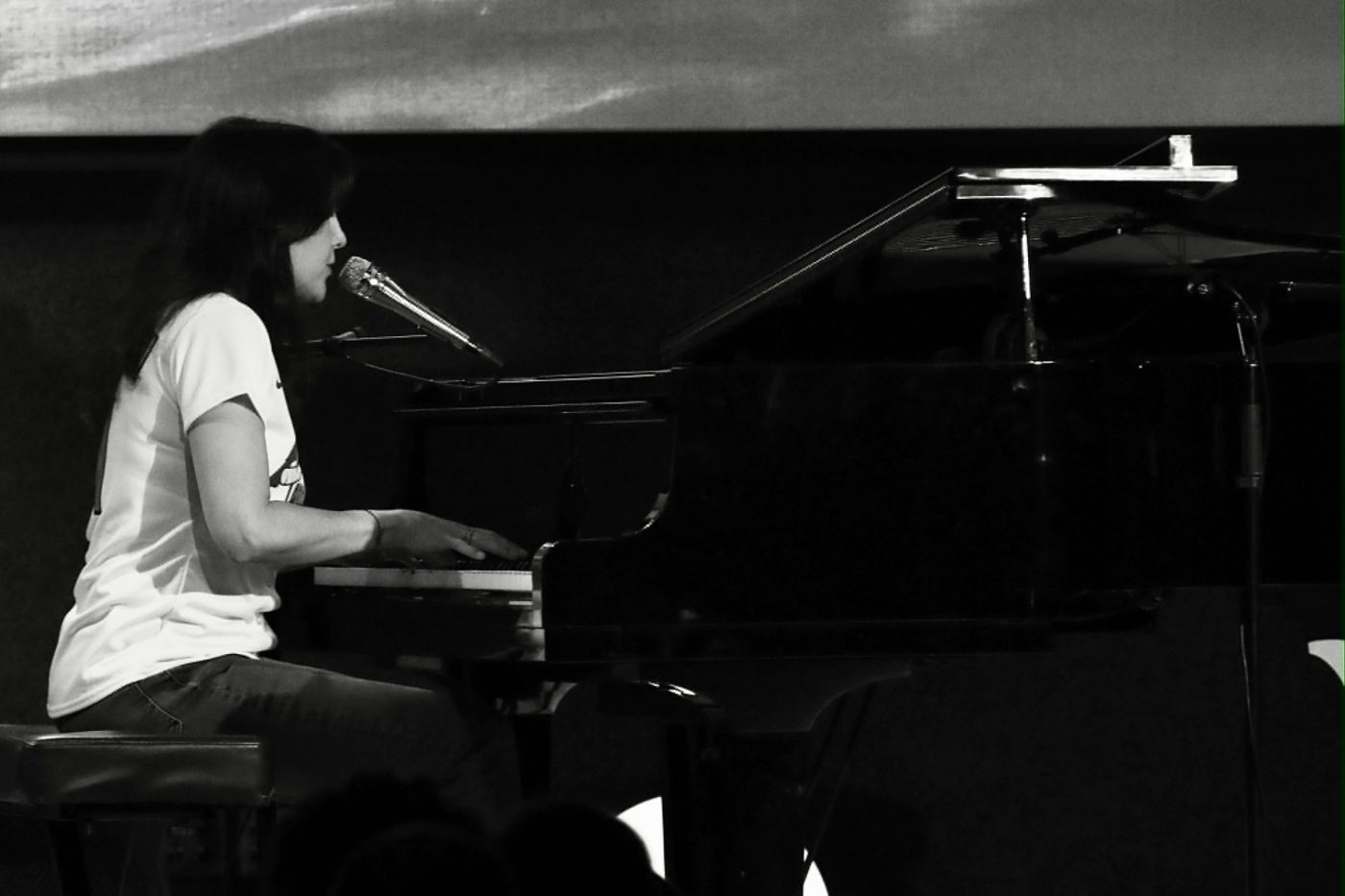
There was a warm sense of connection floating through the room at the sold-out two-night engagement by Vanessa Carlton at City Winery St. Louis this past month. But on May 1st, the evening took an unexpected turn almost immediately. Fresh from throwing out a ceremonial first pitch at Busch Stadium earlier that evening, Carlton arrived at the venue and wasted no time getting started. As concertgoers were still making their way to their seats, she had already taken the stage nearly five minutes ahead of schedule and launched directly into her signature hit, “A Thousand Miles.”
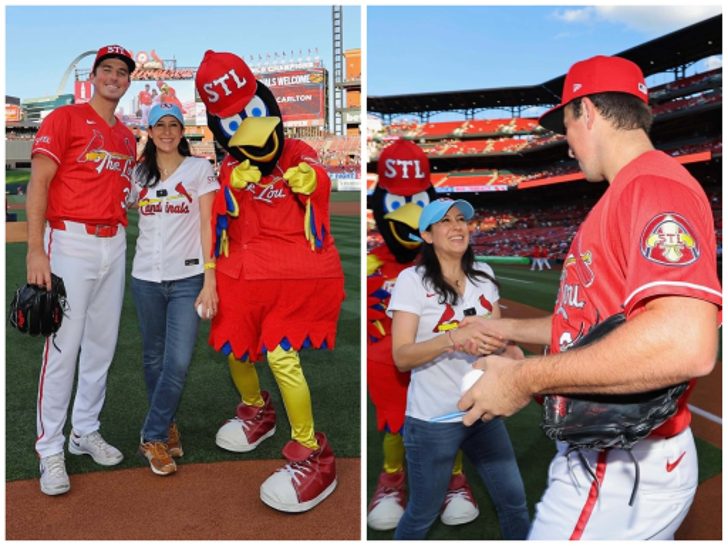
Vanessa Carlton. Courtesy of the St. Louis Cardinals
More than two decades after its release, the song still carries the same emotional spark that made it a cultural phenomenon. From dominating radio airwaves in the early 2000s to gaining an entirely new life through the unforgettable comedy film White Chicks starring Marlon Wayans and Shawn Wayans, “A Thousand Miles” remains one of those rare songs that instantly transports listeners back to a moment in their lives.
As I began preparing to photograph Carlton during the performance, management approached and informed me that photography would not be permitted due to death and bomb threats connected to the current tour. While unexpected, the situation brought a sobering reminder of the reality many public figures continue to face, even during celebrations centered around music, creativity, and community.
Yet Carlton’s legacy stretches far beyond one iconic piano melody.
A proud bisexual woman, Carlton has long shared a deep bond with the LGBTQ+ community. In 2010, while headlining Nashville Pride before a crowd of 18,000 people, she publicly came out as bisexual in a heartfelt and spontaneous moment inspired by seeing young women in the audience. It was a defining moment, but for Carlton, allyship and queer community have always been deeply personal.
Long before fame found her, Carlton moved to New York City at just 13 years old to attend a professional dance school, where she immersed herself in queer circles that became her chosen family. Throughout her career, she has intentionally used her platform to champion inclusion — from featuring a gay couple in her “Pretty Baby” music video to supporting the Human Rights Campaign’s Americans for Marriage Equality initiative before same-sex marriage became legal nationwide.
Even during live performances years before publicly coming out, Carlton often dedicated “Who’s to Say?” to her LGBTQ+ fans and adjusted pronouns in songs to make them more inclusive for all relationships. That authenticity continues to resonate deeply with audiences today.
At City Winery, Carlton’s performance felt intimate, vulnerable, and refreshingly genuine. Her vocals were elegant and emotionally grounded, while her piano work reminded audiences why she remains one of the most respected singer-songwriters of her generation. Between songs, there was a calm confidence about her presence — an artist no longer chasing expectations, but fully embracing creative freedom.
That evolution is becoming even more evident with her upcoming seventh studio album, Veils, released earlier this month. Produced by Dave Fridmann, known for his work with MGMT and The Flaming Lips, the project follows her critically praised 2020 album Love Is an Art. Carlton describes Veils as an exploration of contradiction, identity, and stoicism — themes layered with introspection and emotional honesty.
She recently released the album’s first single, “Animal,” a haunting meditation on surrender, survival, and the uncontrollable forces that shape us. The song asks difficult questions about human nature: Are we the hunter or the hunted? Who is the animal within us?
Those questions seem fitting for an artist who has consistently challenged expectations throughout her career. Discovered after a demo cassette reached legendary music executive Ahmet Ertegun, Carlton quickly rose to fame with Grammy-nominated success, but she has never allowed herself to remain creatively stagnant. From making her Broadway debut as Carole King in Beautiful: The Carole King Musical to recently composing her first film score alongside husband John McCauley for Wish You Were Here directed by Julia Stiles, Carlton continues to evolve in ways that feel fearless and authentic.
For many in attendance, the evening was more than a concert. It was a celebration of growth, identity, resilience, and music that continues to connect across generations — all led by an artist who has never been afraid to live openly, love honestly, and keep reinventing herself along the way.