No other road has captured the American imagination quite like Route 66, the iconic 2,400-mile corridor stretching from Chicago to Los Angeles and running directly through our region. “Growing up in St. Louis, we heard as much about Route 66 as we did the Mississippi — the lore of both is embedded. Both promise adventure beyond,” says St. Louis author Jeff Truesdell, who wrote for People magazine for 18 years.
But the promise of the open road has always meant something deeper for LGBTQ travelers.
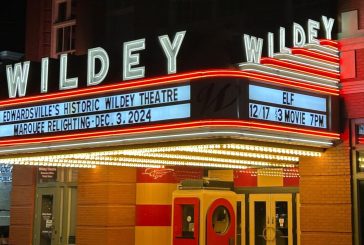
Neon artist and glass blower Jeffrey Dunn restored this marquee along Route 66 in Edwardsville, Illinois.
“Those who are different, for whatever reason, often wonder where they might fit in better, where they might find people who are similar to them,” says Rodney Wilson, founder of LGBTQ+ History Month. “This wondering often leads to wandering. For the LGBTQ, it often means leaving, temporarily or permanently, the geography of upbringing. Highways like Route 66 create an opportunity for removal from one’s place of origin and the possibility of discovering a community of like-minded people where one feels even more at home, with a new set of friends who often become closer than genetic family. Route 66 represented freedom, possibility, and opportunity — to start over, to remake one’s life, to find one’s tribe.”
There are countless travel guides to the Mother Road, especially as the highway approaches its centennial, but we are interested in something different. We are honoring the road as Mother: A force that has pulled generations of queer travelers westward with the promise of reinvention, community, and adventure. We reflect on how Route 66 winds through our everyday lives — and how, when sterile interstates diverted mainstream motorists, the old highway found a second act as an LGBTQ corridor in places like St. Louis, Oklahoma City, Amarillo, and Albuquerque.
Chicago
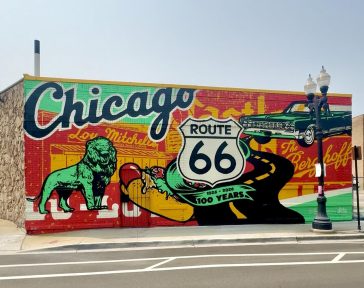
Courtesy of Choose Chicago
At its modern centennial starting point near Navy Pier, Chicago launches Route 66 into the world with unmistakable
big-city swagger.
The city’s LGBTQ legacy is equally foundational. Neighborhoods like Northalsted and Andersonville — both just a few miles north of Route 66 — offer one of the country’s densest concentrations of queer nightlife, history and culture, setting the tone for the journey ahead.
St. Louis
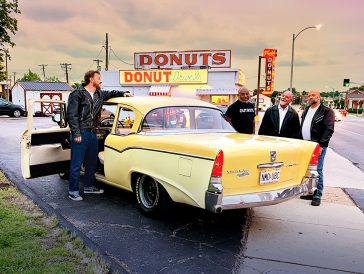
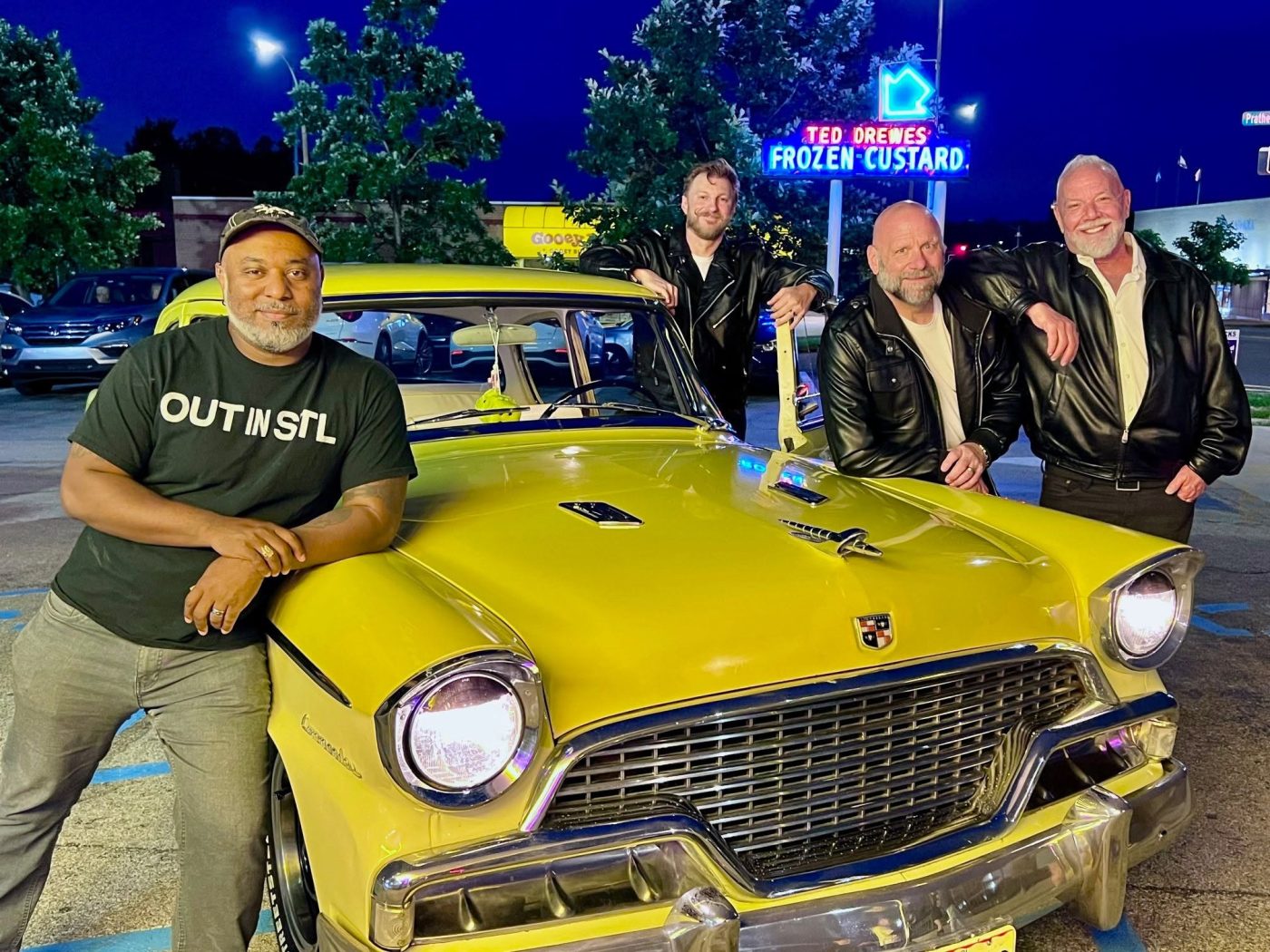
Cameron Young shows off his 1956 Studebaker to Kage Black, Rick Roth and Christopher Grau. Photo credit: Scott Lokitz
St. Louis is where Route 66 eventually became an LGBTQ nightlife and shopping corridor. The Grove is our premier LGBTQ nightlife district, anchored by institutions like Just John, Prism, and Rehab Bar & Grill — all directly along the 1923–1932 Route 66 alignment on Manchester Avenue.
Not long ago, Manchester was a corridor of boarded-up brick buildings and fading storefronts. LGBTQ-owned
businesses helped transform it into one of the city’s most vibrant urban districts.
Farther south, the 1932–1972 alignment follows neon-lined Chippewa Street and Watson Road. There, travelers will find T.F.A. The Future Antiques, the gay-owned mid-century wonderland beloved by collectors and preservationists alike. Guy Crouch and Justin Tommeraus regularly make the 340-mile round trip from Evansville, Indiana, searching for pieces for their meticulously restored ranch home. “Owner Claude Denis is a nice guy, and they have quality items at very reasonable prices,” says Crouch, who also collects vintage automobiles.
The Ozarks
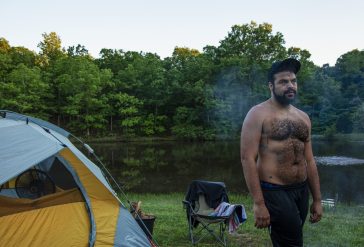
Dustin Neighbors at SIRenity Farms. Photo credit: Zachary Linhares
Leaving St. Louis, Route 66 stretches into the Ozarks and beyond — territory not often associated with LGBTQ visibility. Yet some of the most meaningful stops emerge precisely in these unexpected places.
SIRenity Farms, located just a half-mile off Route 66 near Sullivan, has become one of the nation’s largest and
fastest-growing gay campgrounds.
Farther southwest, Springfield — Missouri’s third-largest city — has quietly built a notable LGBTQ presence along its Route 66 corridor, including venues such as Mix Ultralounge, Martha’s Vineyard, and Hour House.
Tulsa
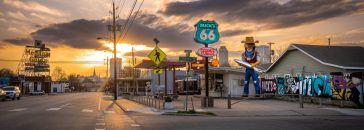
Tulsa’s Meadow Gold District. Courtesy of Visit Tulsa
Perhaps more than any other city, Tulsa has fully embraced its Route 66 identity.
“Tulsa, the official Capital of Route 66, is a true destination along the Mother Road,” says Ken Busby. “We’re home to more than 90 new or refurbished neon signs along the 28 miles of the Main Street of America that run through Tulsa. You will find a Land of Giants — Muffler Men like Meadow Gold, Mack, Buck Atom, and Rosie the Riveter — along with Mother Road Market, gift shops, art galleries, restaurants, and so much more.”
Downtown, drag and dancing fill the palatial Club Majestic, featured in the FX series The Lowdown.
Oklahoma City
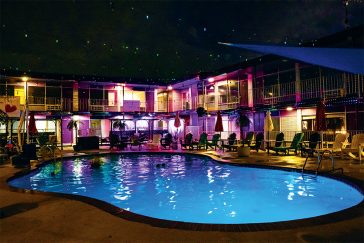
The District Hotel. Courtesy of The District Hotel
Here, in “the Queer Capital of the Plains,” neon meets nightlife. Drag shows, dance floors, and rainbow-painted murals coexist with vintage roadside architecture. It is a place where Route 66 nostalgia and queer culture do not simply overlap — they amplify one another.
At the center of it all stands District Hotel, a sprawling complex with 170 rooms, multiple clubs and two heated pools, one of which hosts parties until 4 a.m. Built in 1968 as the Habana Inn for cross-country motorists, the property became obsolete as Interstate 44 redirected travelers away from Route 66. Its proximity to the Strip, however, made it a magnet for LGBTQ guests, and by the early 1980s the owners had fully embraced that identity, branding it “The Southwest’s largest gay resort.”
Today, the reimagined District is gay-owned, and remains one of the most prominent LGBTQ destinations in the central United States.
Amarillo
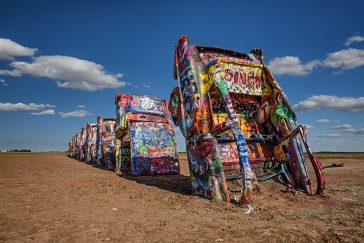
Cadillac Ranch in Amarillo. Photo credit: Nick Fox
In Amarillo, Route 66 history survives most vividly along the 13-block commercial corridor on Southwest 6th Avenue between Georgia and Forrest avenues. This stretch served as the city’s primary westbound Route 66 corridor from 1926 until 1953 and today remains Amarillo’s most intact collection of vintage roadside architecture.
The district is listed on the National Register of Historic Places, and its neon glow now frames one of the Texas
Panhandle’s enduring LGBTQ institutions: The 212 Club, home to drag performances since 1998.
Albuquerque
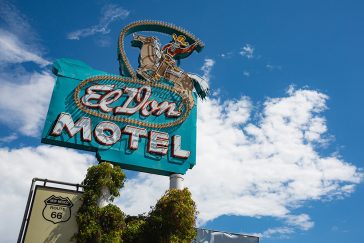
Albuquerque, New Mexico. Photo credit: Logan Bush
Albuquerque has one of the strongest overlaps between LGBTQ life and Route 66 culture anywhere along the highway, especially in the neon-rich Nob Hill district along historic Central Avenue.
Sidewinders Bar and Grill, one of the city’s best-known gay bars, sits directly on the historic Route 66 alignment. Nearby, Salt and Board, a queer-owned wine bar and eatery, offers another reminder of how seamlessly LGBTQ spaces have woven themselves into the Route 66 landscape.
Flagstaff
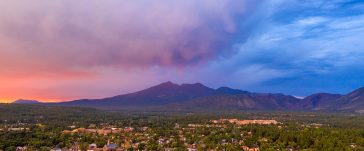
Flagstaff Arizona. Shutterstock
Flagstaff remains one of the premier stops on Historic Route 66. The city boasts 14 miles of original alignment, classic neon motor lodges, vintage diners and towering ponderosa pines that give the mountain town a distinctly different atmosphere from the desert communities farther west.
Trans activist Claire Louise Swinford lived in Flagstaff for years before eventually moving back East and still speaks warmly of the city.
“Great town, very welcoming. NAU has a queer dorm, and they have a really good Pride for a small town. And while not purely a gay bar, the Rendezvous inside the Hotel Monte Vista is pretty damn queer. The hotel is great too — if you like classics.”
Los Angeles
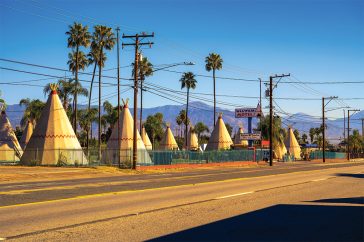
The Wigwam Motel in San Bernardino is a retro landmark on historic Route 66, featuring cozy teepee-shaped rooms for a unique travel experience.
The journey ends at the Pacific Ocean in Santa Monica, where Route 66 concludes near the pier.
Nearby Los Angeles offers one of the nation’s most expansive LGBTQ landscapes, from the nightlife of West
Hollywood to queer arts communities spread across the metropolitan region. After thousands of miles, the road delivers travelers to a place where queer identity is not simply visible, but celebrated at scale.
Why Route 66 Matters for LGBTQ Travelers in 2026
Route 66 has always been about more than asphalt. It is about movement, reinvention, and the search for belonging —themes deeply embedded in LGBTQ history.
Long before the internet connected isolated communities, the road linked people searching for somewhere they could finally feel at home. It offered anonymity, escape and possibility to those leaving difficult circumstances behind. Today, it connects a patchwork of queer spaces stretching from urban nightlife districts to rural sanctuaries hidden in the Ozarks and desert Southwest.
At 100 years old, Route 66 is no longer just “The Main Street of America.” It has become something more nuanced and more human: a corridor where LGBTQ travelers can trace both the past and future of queer life across
the United States.