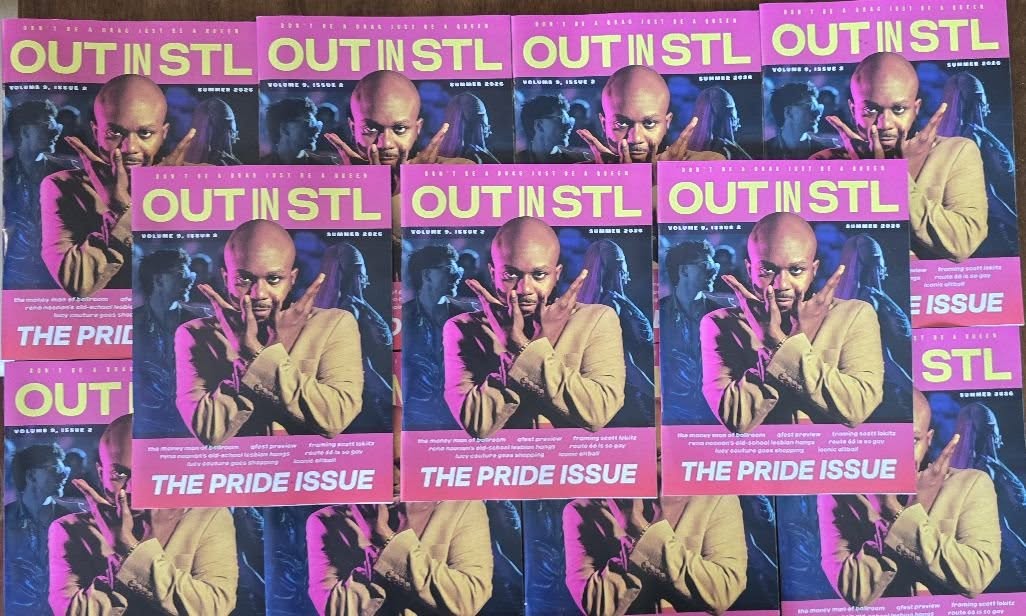
30-year-old Hezekiah Williams III is an influencer and a life coach for those newly diagnosed with HIV, and his words have reached millions.
He’s the project coordinator at Project THRIVE, a culturally affirming health program. In partnership with Southampton Healthcare, Project THRIVE provides mental health services, HIV/STI testing and prevention, and community-based support, all in one space.
Known as “the money man of Ballroom” for finding ways to bring in resources, Williams was honored at the Missouri Honors Ball last month for his ten years of community impact. And as big as he already is, Williams seems primed to go global and give the world his talents.
We two have known each other for years, so it was a joy to get to have this conversation. This interview was conducted in his house as a relaxed and laid-back concept — just two friends kiki-ing, an interview with someone who possesses a true authenticity unique to himself.
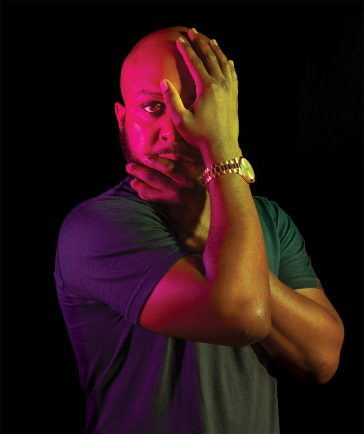
Hezekiah Williams. Photo credit: Geoff Story
Lee: So, first off, I just want to say that I’m so happy that I can be doing this interview with you right now because this is a long time coming, and it’s time for a real icon to get his flowers.
The first time I met you was around four Christmases ago. My friend Atem Richardson invited me over to your house on Christmas Eve night because I was alone and not with family that year, and you like to cook on holidays for people with no family in the city.
Williams: Absolutely! I remember that because that’s when I really started trying out new recipes for people! I can’t believe that was four years ago, time flies.
So: where did you grow up? Where were you born?
I was born in North City in the Blu Meyer. Shout out to Grandma Betty and Kelley and the women in the community —my grandmother the most.
Upbringing was on the west side at Mitchell E-mints Academy, where I felt like I learned to be “blackity black,” and honestly, the school was very revolutionary for that time. I lived in North County on Normandy and Bellfountaine, which is where I grew up through my teenage years.
What I can say now, honestly, is that I lived quite a fulfilling life already when I was in my twenties, and now that I’m in my thirties, I can take all those lessons and live this new, fulfilling life now.
Hold on now. We’ve got a lot of interview left, don’t let everything on the table just yet!
[laughing] Yeah, true true.
So I’ve noticed that you have this insatiable need to help people, and it’s really interesting that you have that need to help animals as well. Do you remember when we went to see your cousin down in Pine Bluff, Arkansas? You saw a pack of homeless dogs on the corner and without hesitation said, “Aww, those dogs are homeless and starving,” and with your hands launched the extra pizza we had out the car to feed them. It happened so fast! I always wanted to know where you inherited that need to just help.
It stems from the values and traditions I was taught from my mom and dad and family. If I had to pick one from each I lean on, I think it would be Papa Prentice and Grandma Betty. They are the heavy hitters in my family.
Grandma Betty because she taught me about toughness, grit, how to give it to people straight, and clarity. Papa Prentice is where the uncanny butchness comes from.
So, when did you actually come out?
I was 17, watching American Idol with my mom, and she was just looking at me cause she could tell I wanted to say something to her, so when I finally spoke up, I said, “Mom, I have something to tell you, I’m bisexual,” and she laughed right in my face. She said, “You’re not bisexual. The only girls I see you come over here with are your friends. I already knew, and I was waiting on you.”
That actually gagged me. [laughs] Mother always knows and my mother has always been my best friend. I did feel some way at the time because I feel like, as a parent, if you know your child might be LGBTQ, you shouldn’t feel afraid to open that conversation up and take the first step with your child. But I do understand our parents are teaching us from their experiences and what they know. So grace is a thing I value and learned to give myself but also my parents.
Honestly, I feel she was giving me space and no pressure to tell her, and I feared from what TV and others’ experiences were that mine would be the same, despite the love my parents showed.
Do you feel like your coming-out story is relatable in some sense? Mind you, I didn’t come out ’til I was 24.
I definitely think my story is relatable. I do think about how most people start out having a family, being a DL [“down low”/closeted] queen, and then come out later in the process. And even for people like that I feel it’s important that, if that is the path they choose, that it’s important to live your truth and do it for you.
That’s why I want kids, so I can raise them in love and not survival.
Yeah, last time I checked you don’t have any kids, do you?
I don’t have biological kids, no, but I do have gay kids in the community that are my children. I raised a lot of the “gurls.”
You’re coming up on the 10-year mark since coming out with HIV. How was that moment? Did you feel like since you had HIV that you didn’t want that to become your whole personality and shape your life?
OMG, you just gagged me because I’m on the shot or injectable, either or [laughs] and I keep forgetting that I had it. Shout out to Cabenuva!
I still remember it like it was yesterday. I was laying in my bed, and those who know me know I have a close relationship with God, and a little voice was telling me, “You are living with HIV.”
And about two weeks later, the Tuesday after Memorial Day, I went to this place called The Spot, and every Tuesday night was T.N.C. — Tuesday Night Crew — a place where black gay men and those with trans experience would kiki and learn more about health and lived experiences in the community.
Me being naive and a virgin at the time, I would come and get tested knowing I ain’t had no sex but sat on my friends’ toilet seat who I deemed as hoes. Which I thought was a possible way of contracting STIs.
So one evening I came in and got tested, no longer a virgin, and my life changed. The test came back positive. And I felt like I failed. I did the one thing you don’t do as a gay person, especially black and gay, and that’s become HIV positive.
I took a step outside and screamed and cried, wanting to denounce my faith and not give a fuck anymore. But that voice came back louder, and reminded me I needed my faith and family more than anything right now. Lawrence held me and asked, “What can I do to support you know?” I said, “Take me to FroYo and White Castle.”
Shortly after he got me calm, I reentered the group to an argument of a late older queen referring to a younger gay man as a “sick fag” as a response in an argument, and that’s when reality kicked in. I hid my status from my close friends and family for the next three to four years.
Wow, that’s powerful. So what made you come out about your status to your parents?
My mentor, Nicole Carr, took me to get donuts and she said, “You don’t talk to your mother as much as you used to, and ever since your diagnosis I feel like something died in you that day because of how outgoing and bright your spirit was. So now is the time to tell your mom and save that relationship, because I can see it waning.”
Me, now gagged with a chocolate Long John in my mouth and feeling tricked, laughed, and right after we left the donut shop, we went to my mother’s house and told her. And again, Mother knows best: she told me, “Baby I already knew. I had a dream about it, that something was wrong with you or you were fighting something.”
And then after having a cry with my mom in September, I came out to my gay kids and my best friend. Then on World AIDS Day 2019, Harold Lawary convinced me to do a speech after I came out to him about it. The same night of the speech, I was offered the opportunity to speak on the radio, giving the same speech to millions of people all over the world.
When did you really get into Ballroom and helping the community?
I used to be the bullies’ bully in high school. I don’t play that, so I was always fighting for justice amongst my peers and people.
When I started hanging out with my friends in the community, people were talking about who was gay — you hung out with the girls, and the girls knew who was gay and the gays knew all the girls. Clock it.
And back in the day, everyone would be mingling and having a goood time. It was some shady and reedy times but overall, it’s family. So when I got into Ballroom, I started out just watching, recording from friends, doing some practices, then eventually coming out and hitting the floor.
Nowadays, I really just run the background to make sure the folks have they coin, know they status, get a LSS [Legend, Statement and Stars] or even a nasty battle.
For someone who wants to get into Ballroom and is looking for that sense of connection, not only to the LGBTQ scene but also with their gay Black roots and heritage, who should they follow and meet?
My father Jihuz Ijbha, who is not in Ballroom but took me in and showed me just as much about the community as my mother Mariah Ebony has. My auntie Vanessa Alpha Omega, Jariya Ebony, JD Balmain, Denim Balmain, Byron Miyake Mugler, Mechee Basquiat, Meko Ebony, Denise Gorgeous Gucci, Maven Lee, Kevin Brock, my daughter Seianna Garcon, ShDyna Lanvin, Katrina Ebony, Prince Mugler, Ming Chanel, Fame Gorgeous Gucci, Kellen Gorgeous Gucci, Cameo Balenciaga and Trell Chanel.
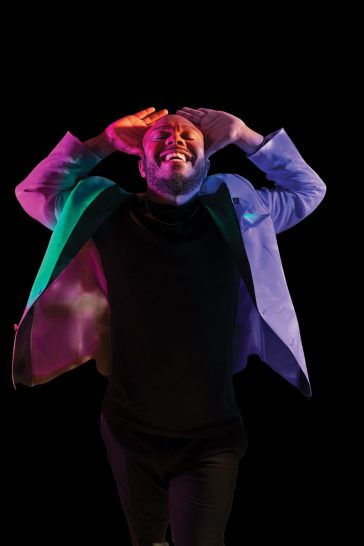
Hezekiah Williams. Photo credit: Geoff Story
These are the people who are the heavy hitters that were out coming up, and who I looked up to when I was just a kitten. These are also some of the people who watched me transform into the community leader I am today.
Honorable mentions for those not in the scene: Nicole Lomax, Baba Fadesiye, Hezekiah Williams, Jr., Lawrence Lewis, Patricia Williams, Dail Chambers, Simone Phillips, Iya Bibi and Baba Sunshine.
Tell me a little about your House Mother.
Mariah is dangerous! She is that girl. The it girl, from this moment she has won over more than $20,000 in Ballroom. She has never been in another house. She’s an Ebony through and through.
Her category is Legendary Femme Queen Performance, and her story is powerful as well. She was an up-and- coming butch queen who was — and since her transition still is — supporting, empowering and inspiring the community. She is known for her sex appeal and jawdropping performance, but she also struggled with the ideals of transitioning in front of the limelight of the community and being ridiculed. But she stayed authentic and genuine to herself and did it. So I’m proud to be her child. Her and my mother literally call each other sisters. So, that’s the beauty and blessing I have in my bio family and chosen family as well.
So, can you tell me a little bit about Project THRIVE?
Project THRIVE is an entity that came about through Quantum and Southampton Healthcare that wanted to bring change to mental health awareness, substance abuse and misuse, resource accessibility, obtainable knowledge and overall primary care and medical care.
How did you get involved?
I got involved because other leaders in my community saw my work ethic, authenticity and genuine love for people. By showing up as myself and doing the work, I was able to build strong relationships and a network of people who extended their hands to me and like-minded individuals.
So now, in the leadership roles I hold, I have the opportunity to do the same for others. My grandmother Arnetta Kelley, AKA Miss Kelley to most, created the Jesus Gang in the late ’80s early ’90s, when the word “gang” was used as a negative description for any group of black youth hanging together. So she created the Jesus Gang for St. Louis youth and teens living in North City.
Her mission was to not only empower the youth but also the family with the power of faith, community and love for each other. The Jesus Gang would sing Negro spirituals and advocate for safety for families and their environment. They got so famous they sang at Carnegie Hall in New York City. From that she continued to advocate for community in youth by creating a summer daycamp where mothers and aunts and family and the community took a huge role in helping out.
I know you still feel like you have so much to give to the community. What do you think St. Louis deserves right now?
Transparency and accountability. That’s why I’m continuing to keep the torch burning that my ancestors lit.
How does it feel now that you know you’re beginning to get your flowers in the community?
I mean, it’s been really nice! My flowers are the seeds I planted in the people who I inspired and now get to watch blossom to who they have become. So to be getting honored at the Missouri Honor Ball, for my 10+ years providing overall community care feels amazing.
What do you think is a hot-button issue right now that most people aren’t talking about? Something that needs to be talked about and addressed?
“Party and Play.” The methamphetamine crisis is getting out of hand. With the benefits of long highs and sexual pleasure, the body and the mind is taking a huge impact of accelerated mental psychosis and body deterioration.
If you could have any gay celebrities bring attention to issues and problems in the LGBTQIA+ community in St. Louis, who would you talk to?
Niecy Nash. She has been a powerful advocate for the LGBTQIA+ community and I admire how authentically she shows up. With Black women continuing to be disproportionately impacted by HIV I’d love to sit down and kiki with my good auntie to talk about HIV awareness, prevention, romantic relationships and breaking stigma within our communities.
And lastly, if you can say one thing to the people in your community, what would it be?
Long live Ross Demetry Harris, Jr!