Trigger Warning: This column discusses suicide, homophobia, addiction, and trauma. Please take care while reading.
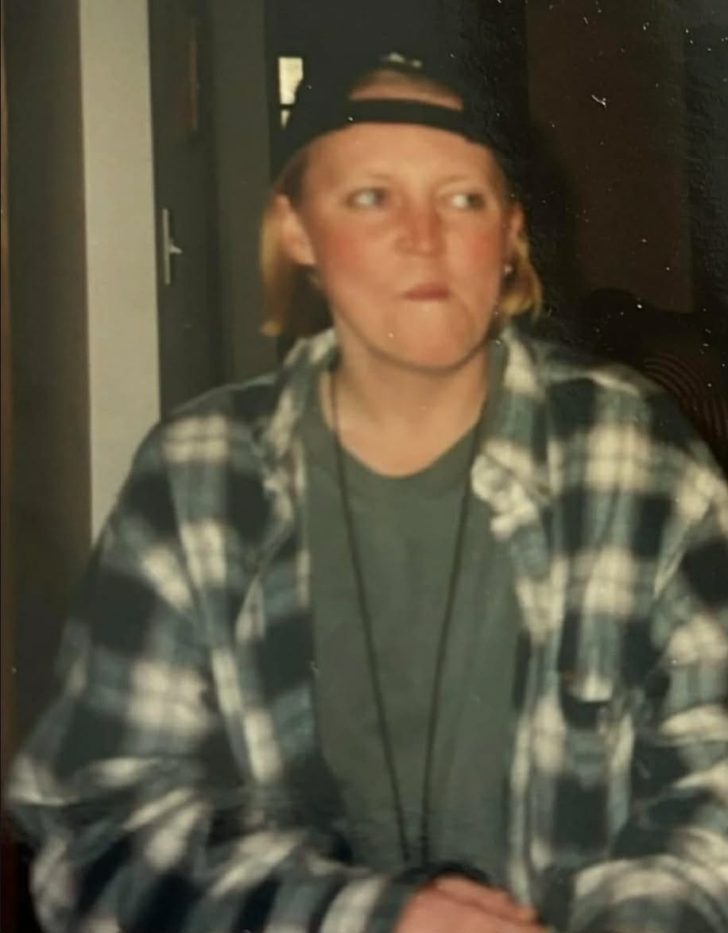
Lori Blue, 1993. Courtesy of Rena Noonan
As I cross over the Kingshighway viaduct—what we all just call “the bridge”—heading toward the south side, I start to think. This drive always freakin’ triggers me. The older I get, the more I understand how deeply those triggers shape my everyday life.
Before I came out—sometime around 1993—I met a wonderful man who promoted local musicians here in St. Louis. He kept talking about a wild lesbian drummer. He said she was insanely talented, magnetic, impossible to ignore.My ears always perked up when he said her name. How could you ever forget a name like Lori Blue?
I remember the first time I met her. It was at a straight rock ’n’ roll bar—Mississippi Nights—down on Laclede’s Landing. I met her wife that night. Back then, Missouri wasn’t a place where people like them could exist freely. The constitutional ban on same-sex marriage would come later, in 2004, and we wouldn’t see legal marriage until 2015—but even in the ’90s, we already knew what the world thought of us.
Lori stood there in a long, baggy flannel shirt, a backwards Sub Pop hat, and a presence that said everything without trying. I knew instantly—she was my kind of people.Then this tiny person, somehow larger than life, sat behind the drums and played “In the Air Tonight” by Phil Collins.
I felt that sound check in my throat.
Afterward, she walked right up to me and said only, “Leave that man and come out of the closet.”
That was it. That was the introduction.
And somehow… it was everything.
Soon, we were living fast—caught in a cycle of confusion, alcohol, drugs, and women who, back then, we jokingly called “bye-bi bitches.” It was messy, chaotic, and, if I’m being honest, a way to cope with something we didn’t yet have the language or safety to face: we were gay.
Lori never forced me out of the closet.
What she did was more powerful—she showed me I could be myself. That little butch drummer had something I needed. And somehow, I had something she needed too.
Then I met my person.
A guitar-playing, adorable woman—I’ll call her Ramey—and it was electric. There was no doubt anymore. No confusion. No hiding.
I was a lesbian.
For the first time, I had a word for what I was feeling. Falling in love didn’t just change me—it freed me. I didn’t care that the world wasn’t safe for two women to love each other. I didn’t care that I would lose family, friends—everything. What I cared about was that feeling—being completely, wildly, undeniably in love.It was a gamble. But freedom from the lies I had hidden inside myself? That was worth everything.
Ramey and I built a life together—while somehow still living completely separate lives. I bought a coffee shop in the Central West End. She bought a two-family flat in South City. And we struggled. Badly. Nine years of financial stress. Emotional exhaustion. Trying to prove something—to ourselves, to our families, to a world that didn’t want us to exist. We paid for it in ways I’m still unpacking. Coming out wasn’t just a moment.
It was a cost.
My mother didn’t hear the news from me. She found out after her boyfriend—who was my age—caught us together. Her response?
“It’s the work of the devil. It’s just a phase.”
Thirty-three years later… still a phase, I guess.
She always called my partner “your friend.”
I spent years correcting that—years fighting for language that felt like truth. Because labels do matter. Not to everyone—but to some of us, they carry history. Pain. Pride. I will always identify as a lesbian. As gay. And I wear that with everything I fought through to get here.
My father found out through a rumor—passed along like a telephone game—from a police officer about “two women in a car in a field.” That’s how news traveled back then. Faster than social media ever could. He called Ramey over. We had no idea what was coming. I will never forget what my father said: “I should beat the faggot out of her.”
That word stayed with me.
It still does.
Ramey and I stayed together nine long years—some beautiful, some brutal. Looking back, I understand now: we were trauma-bonded. I stayed to prove something—to my family, to society, to myself. But the truth is… I wasn’t strong enough yet to see clearly.
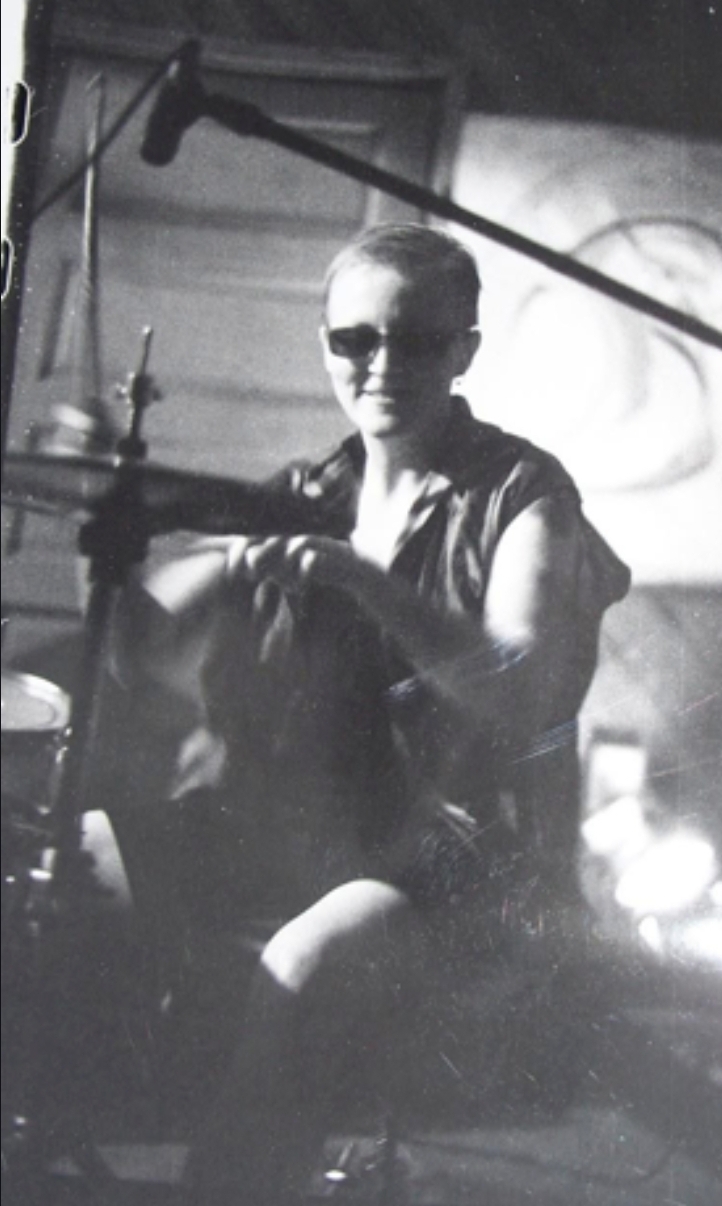
The final photo of Lori Blue, 1999. Courtesy of Rena Noonan
I saw it all clearly on Father’s Day, 1999.
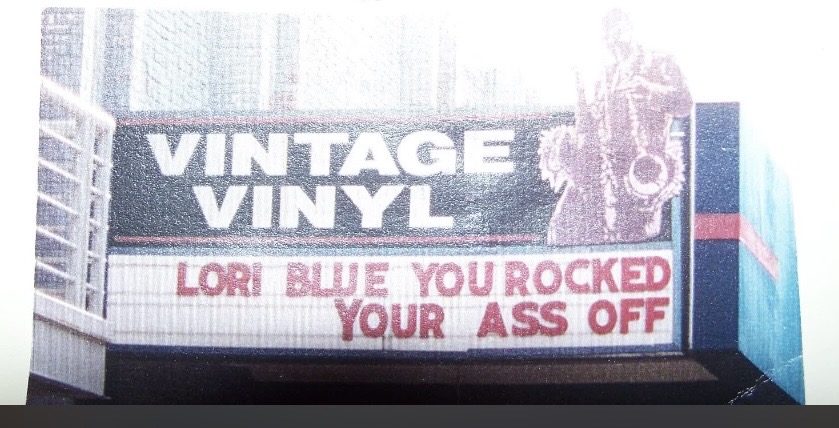
The landline rang—no cell phones back then. Lori’s girlfriend asked me to check on my best friend. Lori had missed work at Vintage Vinyl. She never missed work—especially not on her father’s big day.
I knew something was wrong.
Ramey and I got in the car. We headed down Kingshighway—over that same bridge—and I suddenly started throwing up. I said, “This is going to be the worst day of my life.”
We drove in silence to Soulard, to Lori’s apartment. Her blue truck was there. Before the car even stopped, I ran to the window—but couldn’t see inside. We couldn’t find the key. What we did find was that Lori had taken her own life.
She couldn’t carry it anymore.
Not the pain of feeling like a boy.
Not the pain of being gay.
Not the weight of family trauma.
Not the voice in her head.
I screamed—at her, at God, at the world, at everything we had been living. And something in me broke that day. I lived for many years with PTSD. Depression that felt endless. No medication touched it. No quick fix existed.
Ramey and I soon fell apart.
I left—and she had every right to go on. I had nothing left. I didn’t know how to swim anymore. I only knew how to drown myself. I was trapped in the same prison Lori couldn’t escape.
Years later, I learned something that shook me—Lori’s closest friend, Kathy, had died the same way. Oddly, Lori never spoke of it.
And I kept asking myself:
How did we all end up here?
I isolated.
I pushed people away.
I stayed angry. Numb. Closed off.
But slowly… I started doing the work.
Therapy.
Co-dependency meetings.
Sobriety.
Facing my childhood. Facing my triggers.
Learning how to rise again.
And then—Sammy.
A young queer therapist who would change everything.
Sammy Stayton, an LCSW specializing in EMDR. When I first met her, I thought, “There’s no way this queer kid can help me.”
I was wrong.
In 12 weeks, she helped me understand something no one ever had:
Coming out is trauma.
She helped me face Father’s Day—the day I spent years running from.
She helped me see that I wasn’t just grieving Lori—I was trauma-bonded to her, too.
She also made me see something I didn’t want to admit: I needed community. And I had something to offer it.
At the time, I was bitter at Sammy for believing I could take that on.
Today, I understand Lori differently. Under all that confidence was someone fighting a battle she couldn’t win alone. And I see myself in that.
I have no regrets.
Because without that pain, I wouldn’t understand others. I wouldn’t relate to the queer youth I now stand beside. I wouldn’t know what it means to survive something that wasn’t supposed to be survived.
What I am doing now is building something different.
A table.
A space.
A community.
Through the St. Louis Lesbian Queer Society, I’m making room—for you, for me, for all of us.
And in doing that, I’m healing, too.
This is the balance of grief, growth, and purpose: I don’t tell this story for sympathy. I tell it because too many of us didn’t make it out.
Lori didn’t.
Kathy didn’t.
And there were so many others whose names we don’t say out loud anymore.
But I’m still here.
I made it through the grief, the anger, the silence, and the years I spent trying to disappear from my own life. And now, I’m doing the one thing I didn’t have back then—I’m building community.
A place where you don’t have to hide.
A place where you don’t have to prove anything.
A place where you get to live—fully, loudly, safely.
Because we deserved that then.
And we damn sure deserve it now.
So if you’re reading this and you feel alone—pull up a chair.
There’s a seat at my table waiting for you.
Rena Noonan is with the St. Louis Lesbian Queer Society. Look for her Butch in the Streets column in Out In STL.