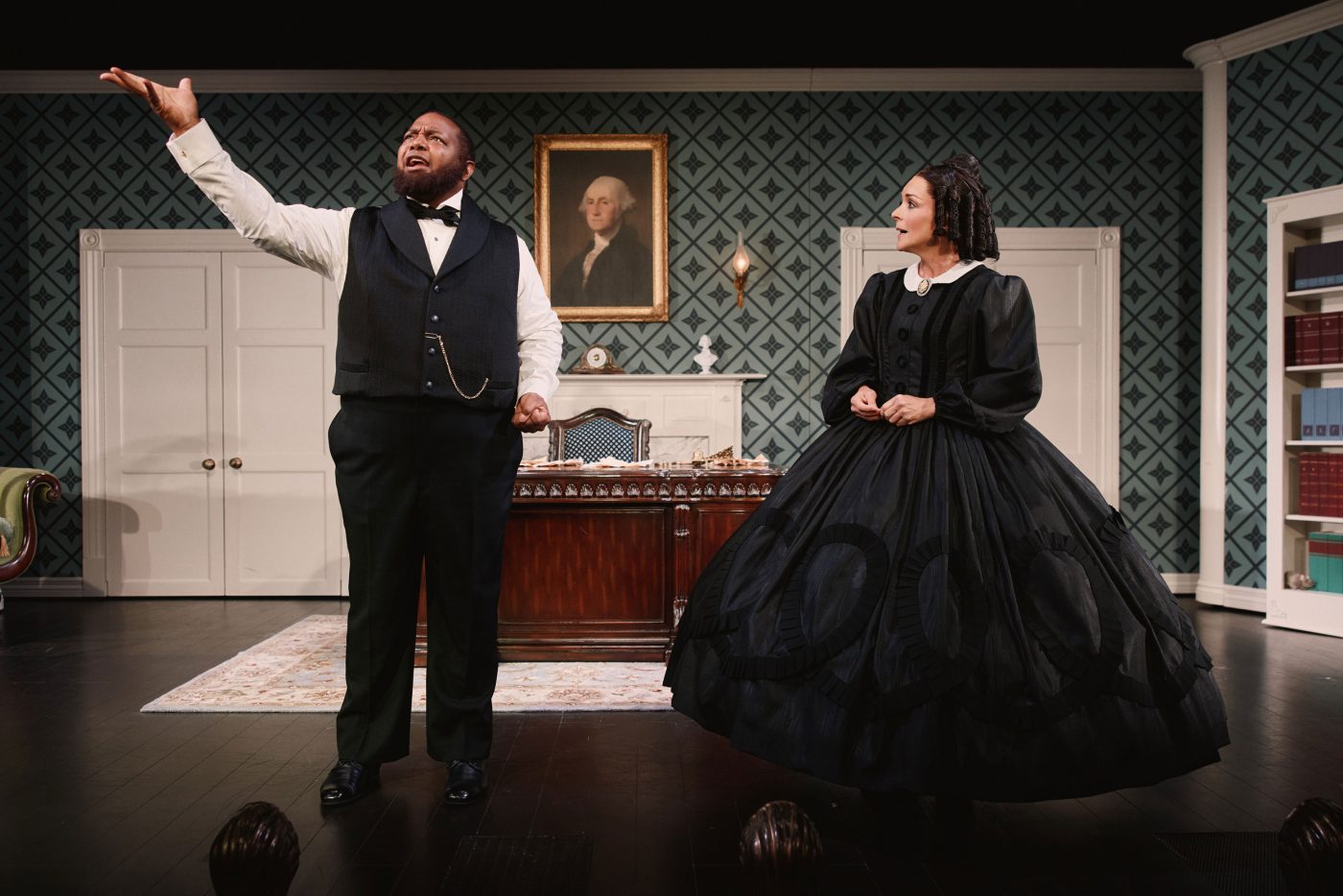
Mary Todd Lincoln is having a moment. Cole Escola’s gleefully unhinged portrait of the First Lady built a cult following off-Broadway before arriving on Broadway last season with Tony nominations and audiences already primed to laugh. The show’s success was confirmed at the Tony Awards, where Escola won for Best Actor in a Play and director Sam Pinkleton took home the Tony for Best Direction. The premise is irresistible: the most famously miserable First Lady in American history reimagined as a manic comic creation, rampaging through the White House in a whirl of theatrical ambition, self-pity, and bottomless appetite.
Whether Oh, Mary! works for you depends almost entirely on how you feel about that creation. If you fall in love with the Mary Escola invented and originally played, the evening becomes a parade of comic set pieces built to showcase her excesses. If you do not, the show’s comic engine can start to feel thin surprisingly quickly.
The comedy lives in broad farce. Much of the first act runs on a familiar cycle of jokes: Mary’s constant hunt for alcohol, her operatic boredom with life in the White House, and Abraham Lincoln’s exaggerated, almost adolescent awkwardness as he tries not to reveal how badly he wants to escape it all. The humor is loud, physical, and determinedly over the top. For many in the theater, that energy proves infectious.
As the evening unfolds, the plot keeps piling on complications. Mary decides she was meant for the stage and pursues a theatrical career with ferocious conviction, leading to a series of increasingly absurd encounters and revelations. The pleasures of the show lie less in narrative surprise than in watching Mary barrel through each new situation.
Jane Krakowski takes on the role with total commitment. A genuine Broadway singer, she dispatches the show’s musical epilogue with effortless polish and brings real flair to the cabaret-style performance Mary briefly imagines for herself, one of the few moments when the evening’s manic energy briefly sharpens into something more focused.
The role has already begun attracting a parade of first-rate performers, turning Mary into something of a coveted showcase. By the time many readers see the show, the First Lady on stage may well be someone other than Escola or Krakowski. The part is built to survive that kind of handoff, and in the right hands it remains a formidable comic workout.
Around her, the production is solidly built. Cheyenne Jackson’s gaunt, smoldering John Wilkes Booth makes a memorable foil, while John-Andrew Morrison’s Abraham Lincoln gives the long-suffering president a sly undercurrent of frustration. Director Sam Pinkleton keeps the pacing brisk and the tone knowingly absurd.
The staging helps. The Oval Office set is laid out with just the right amount of space and furniture to support the show’s physical comedy, while the bar that becomes an important gathering place in the second act allows for quieter confrontations and furtive eavesdropping.
Mary storms through the evening at full volume. The crowd roared. I was ready for the play to find its second joke.