A Newsweek cover forty years ago declared a “video generation,” with young and old and black and white Americans eager to record birthdays, weddings, and other significant events in their lives. There is no identifiable LGBTQ person included on that cover, but queer people in the 1980s were as eager as everyone else to document their stories, and over the following twenty years tens of thousands of video hours of LGBTQ history were recorded, then stored away in attics, trunks, and closets.
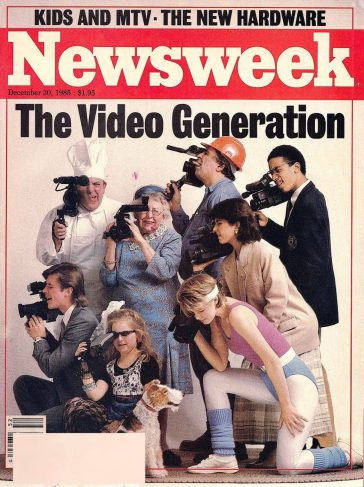
Newsweek cover story, December 1985.
A few years back, Kansas City (Missouri) artist and teacher Kendell Harbin Steinback (born in Connecticut in the early 1990s) recognized “a profound connection between the development of home video technology and the gay liberation movements.” Not only were LGBTQ people recording their regular lives, they also were pointing cameras at their queer lives: “They were the ones behind the camera and in front of the camera,” giving a “much more dimensional representation of queer life,” says Steinback.
She was also hit with the reality that VHS tapes from before the 21st century would soon disintegrate, erasing the LGBTQ history captured on them. To save that vanishing history, she founded the Roaming Center for Magnetic Alternatives (RCMA), constructed a mobile digitizing center inside a cargo trailer, and hit the roads of the Midwest, meeting up with LGBTQ folks who brought along old VHS recordings to be digitized, making it possible for a larger modern digital audience to experience “a look into queer life in the Bible Belt since the 1980s.”
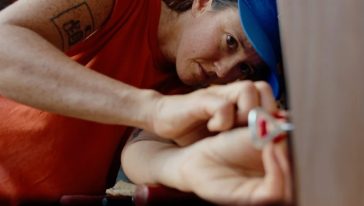
Kendell Harbin Steinback converting the cargo truck into a digitization center. Still from documentary.
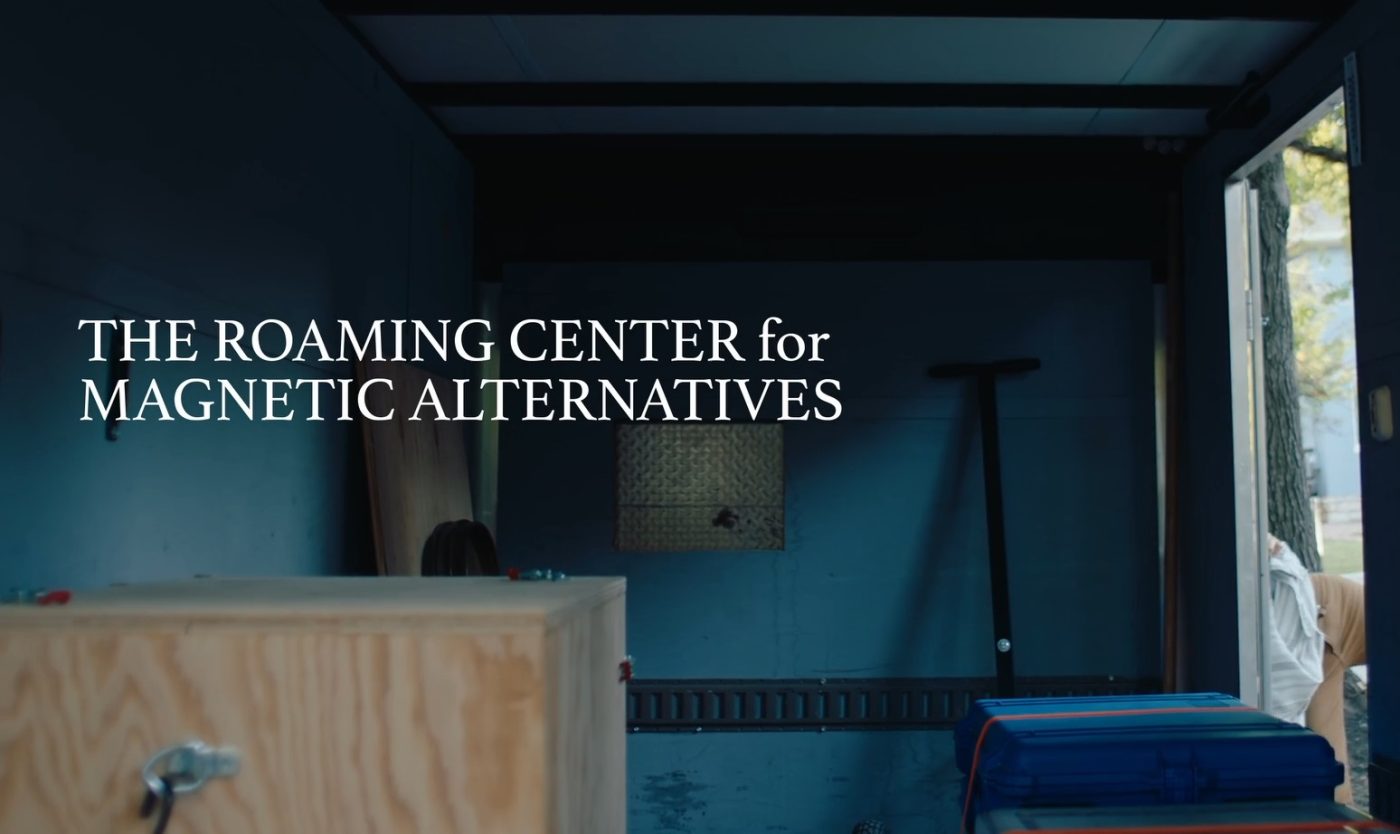
Last year, NYC-based filmmaker Brydie O’Connor (born in Kansas in the mid-1990s) produced a documentary-short about the project, called (fittingly) The Roaming Center for Magnetic Alternatives. This film gives viewers precisely what Steinback aimed for with RCMA: “A glimpse” into “what an ever-expanding queer archive looks like in the future.”
Three people who brought their VHS tapes to Steinback’s cargo trailer are profiled in this new documentary (in order of appearance, with images taken from the film):
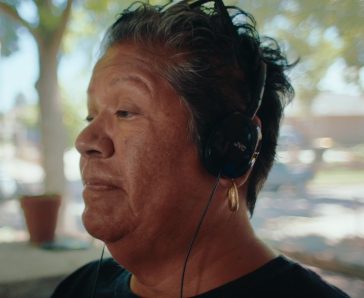 Sue Moreno (a birthday party with “a pack of crazy lesbians”);
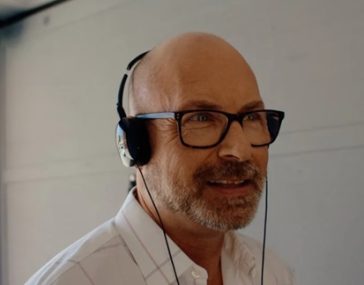 David Wayne Reed (a Kansas City “all-male troupe called Late Night Theater” performing Hitchcock’s The Birds);
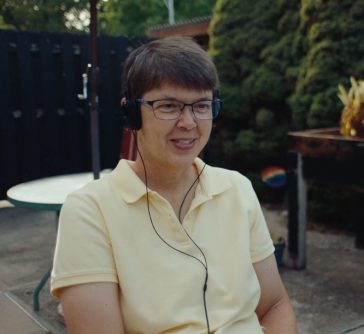 and my dear friend since 1989, Johnda Boyce, who shares a Halloween adventure video at a short-term Frank Lloyd Wright rental in Ohio–“ordinary people, ordinary lives”–with her late partner, Ronda King, who died in 2005.
According to a December 2025 profile of Steinback, she’s ready to turn over primary care for the RCMA project to others. In the meantime, the beautifully done 14-minute documentary about her important work saving the videotaped queer history of the Midwest in the 1980s and 1990s is available, for free, here.
Rodney Wilson has been an educator since 1990 and is the founder of LGBTQ+ History Month USA.