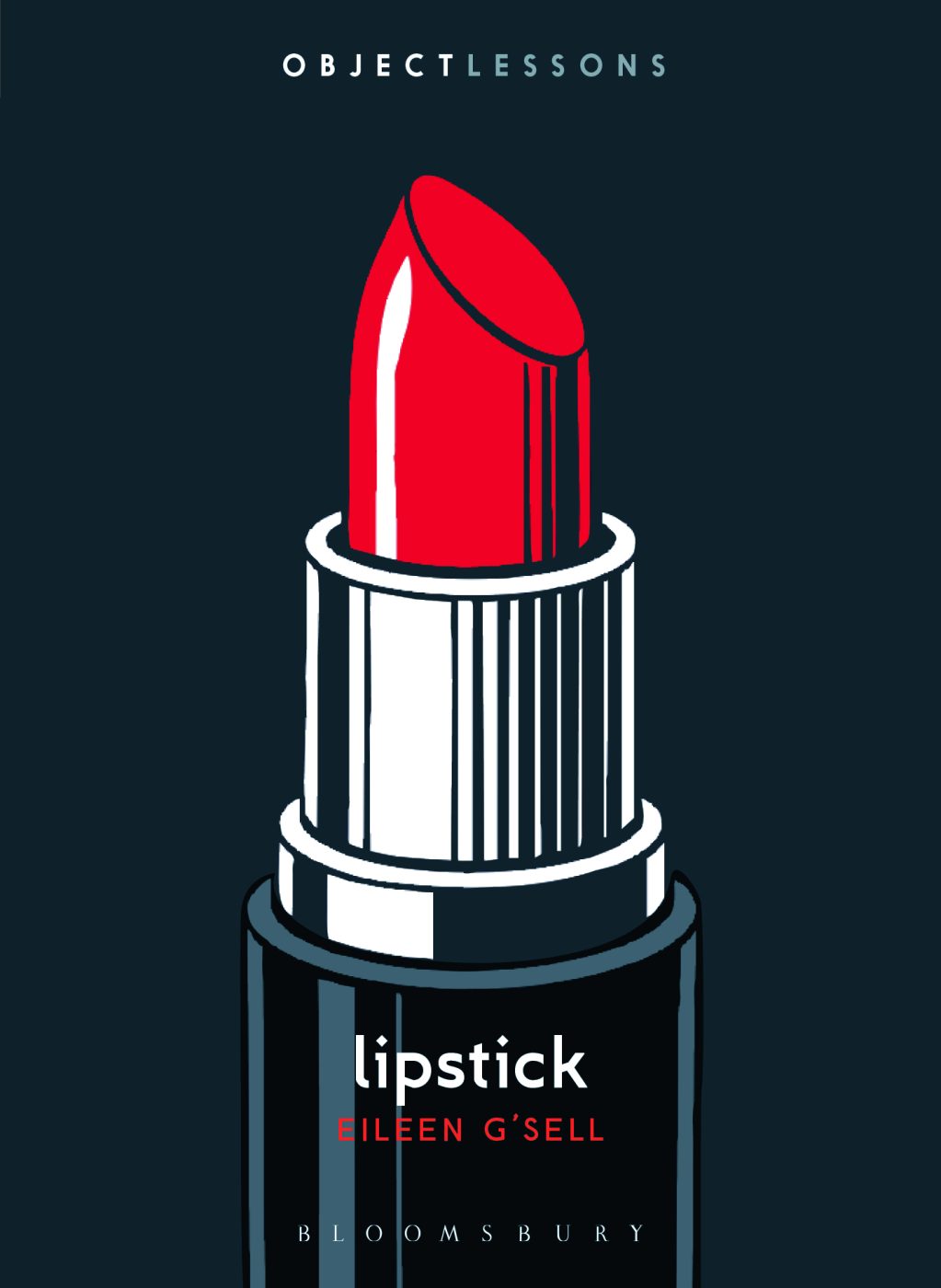
The new nonfiction debut by poet, critic and Washington University writing professor Eileen G’Sell, Lipstick, gets beyond the gloss. Through rigorous research and candid conversations with lipstick fans and haters alike, the book moves past what you’ve already read about the iconic cosmetic’s history, ingredients and occasional double duty as an economic indicator. It explores what lipstick has represented throughout history and into the present day in the context of sex, gender, class, race and more.

Poet, author, critic, and writing instructor Eileen G’Sell.
Lipstick opens with G’Sell’s own origin story as a lifelong lipstick stan. As a kid in the late ’80s, she was fascinated by the neighborhood Avon lady and the tomboy-transforming power she found in those little tubes being peddled door to door. G’Sell grew into a college student who was dismissed as too girly to be welcomed into some feminist spaces, and then into a professor and author who still experiences snap judgments about her intellect and capability based on her high-femme clothes and bright makeup.
The book takes us on a brisk walk through a vast swath of history, from lipstick’s Sumerian origins circa 3500 BC as an indicator of economic status regardless of gender to its eventual association with female sex work; from silent film stars vamping in painted lips to Madonna appropriating queer culture for the masses; and from brands like MAC and Sephora acknowledging that not all lipstick consumers are white or straight or female or male gaze-centric to Gen Z’s increasingly inclusive attitudes toward sexuality, presentation and adornment.
The research is supplemented with G’Sell’s own first-person accounts of her lived experience as a white, cisgender lipstick wearer, as well as interviews about lipstick with present-day folks across a wide range of demographics. We hear from heterosexual baby boomers and queer Gen Zs and millennials, Muslims and Latinx folks, those who eschew makeup altogether and those who wouldn’t dare leave the house with a naked face.
 Part of Bloomsbury’s Object Lessons series, Lipstick is a brisk read, and G’Sell’s voice — poetic and academic to be sure, but also a feminist and lipstick lover from way back — is peppy and engaging. You can read the book in one sitting, but you’ll be thinking about the provocative questions it raises for a long time afterwards. G’Sell sat down with Out In STL to talk about the book. Her lipstick, of course, was flawless.
OISTL: What does it mean to wear lipstick today?
EG: There’s so much evidence that adornment and aesthetics have political implications, but that doesn’t mean that someone is automatically scrutable in terms of their orientation, in terms of their sexual identity, in terms of their aesthetics. There’s more flexibility for what it means to appear as a queer person, or to appear as a feminist.
Some of the hostilities towards feminine adornment, and maybe even lipstick specifically, are not the same as they were when I was growing up. And I think that femininity specifically has become a bit more acceptable, not just among queer people or feminist people, but also within academia, for example, or within the professional realm.
We have this very persnickety relationship with anything decorative in not just Western culture, but specifically the United States. Like there really is a Puritanical distrust of color, flash, pattern, et cetera. And that still endures.
I’m guilty of it too — I’ve internalized misogyny all sorts of ways. If I meet someone who’s extremely feminine looking and extremely feminine behaving, kind of a Disney princess figure, I may not assume she is as intelligent, and that’s totally unfair, but it’s based on all sorts of things that I’ve ingested over my long life: You cannot be feminist, you cannot have these political ideas if you like painting yourself with color. Each generation is feeling less burdened by very strict gendered expectations for how they appear.
What about the choice not to wear it?
There is absolutely risk involved in presenting oneself in a feminized way, in all sorts of environments, and I don’t want to suggest that that’s not true. In the interviews and surveys I did for the book, a number of women who identify as queer, who did not want to attract the male gaze, like, specifically, the hetero male gaze — some of them said that’s why they did not wear lipstick, because they felt that wearing lipstick automatically attracted a hetero male gaze.
I think that’s fascinating, because what it suggests is that there’s something about painting one’s lips on the face that automatically suggests I’m attracting the male gaze, or attracting male sexual attention.
Usually it’s the male creatures that are colorful to attract attention. Humans have it flipped. Lipstick on men is still considered a really bold aesthetic act — it so overtly signifies queerness or drag.
A lot of your interview subjects are queer. Was that on purpose?
Three out of the four first-person handwritten testimonies that I include are from queer people. I chose the people for the stories based on, to some extent, the generational identities they represented. And I chose them also based on what they said in the surveys, what were the most interesting stories. It wasn’t choosing people based on sexual identity. But their voices are in the book at length. It anchors what I like to see as the heart of the book, which is challenging some of the preconceptions we have about femininity and adornment.
Femininity can be artificial, and that’s not necessarily a bad thing. That’s something I think is provocative—it’s unsettling for people across political lines, and I think that’s productive. When it comes to the human face and human beings, we have really fickle ways of responding to human adornment as either art or artifice. And a lot of that has to do with femininity, and a lot of that has to do with sex, a lot of that has to do with the fear of being deceived. I think the idea that whatever genes, whatever chromosomes we’re born with dictates who we are is just a kind of sad way of seeing the world, and I don’t understand why. It seems so joyless. So maybe that’s something I want people to chew on: femininity can be artificial, and that’s not necessarily a bad thing.
Eileen G’Sell discusses Lipstick with Aisha Sultan at Left Bank Books on Thursday, February 12th at 6 p.m.