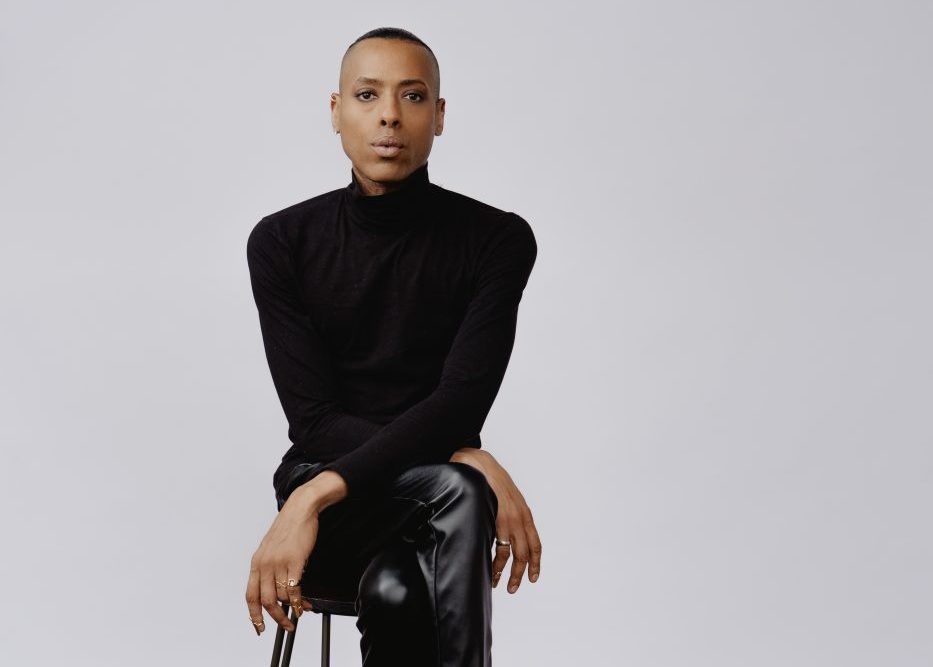
Black Pride’s Randy Rafter was sitting in church when something the pastor said stuck with him: “It’s no longer time for moments. It’s time for a movement.” A man of service, Rafter took that message to heart—and made it his organization’s motto.

Randy Rafter
In many ways, Rafter and Black Pride St. Louis are one and the same. At community events around town, you’ll often find the smiling, affable Rafter behind the group’s table, offering HIV testing and warm conversation in equal measure.
Born and raised in Little Rock, Arkansas, Rafter came out at 14. He began his leadership journey early, rising through the Boys & Girls Clubs of America from team staffer to program director to national trainer. By 18, he had joined the NAACP and soon became state youth president.
“Service is part of who I am,” Rafter says. “My dad is a social worker, and my uncle and great uncle were police officers.”
At 25, a friend in St. Louis recruited him to co-manage a bank branch. Initially, Rafter said no.
“It was intimidating—I didn’t know anyone there,” he recalls. But the offer was convincing, and the money was good. Then the 2008 financial crisis hit, and within a year of arriving in St. Louis, Rafter lost everything.
For 18 months, he was unemployed and homeless, sleeping on friends’ couches and even in a 24-hour laundromat.
When asked why he didn’t return to Little Rock, Rafter explains, “If it’s bad here, it’s going to be bad there. Plus, it’s a smaller city, so it would be even harder to find a job. I was raised to be independent, and I knew I needed to get through this on my own.”
One of the few possessions he kept was a camera. “I contacted everyone I knew and offered $40 photo shoots in Tower Grove Park,” he says. “With that money, I went to Goodwill and bought nicer clothes. I got hired at a gym, then at an Amex call center, and later became a project manager at the Community Wellness Project.”
In 2010, a friend asked him to help organize a Black Pride Masquerade Ball. “I walked into the space and saw they needed help,” Rafter recalls. He took notes, applied his skills, and soon was offered the position of secretary. Eighteen months later, when the president resigned and the vice president retired, Rafter stepped into leadership. Three years ago, he transitioned from president to executive director.
When Rafter first joined, Black Pride St. Louis was largely focused on hosting an annual event. Under his leadership, it’s evolved into what he calls “a 365 organization.”
“Being both Black and LGBTQ+ means facing double or even triple the disparities—whether that’s in education, HIV, domestic violence, or even breast cancer,” Rafter says. “We can’t just sit back and have a party.”
While celebration is still part of the mission, Rafter’s focus is on securing grants and creating safe, affirming spaces for youth—building a thriving community that supports and uplifts.
“I want to be the person I needed when I was 14,” he says.