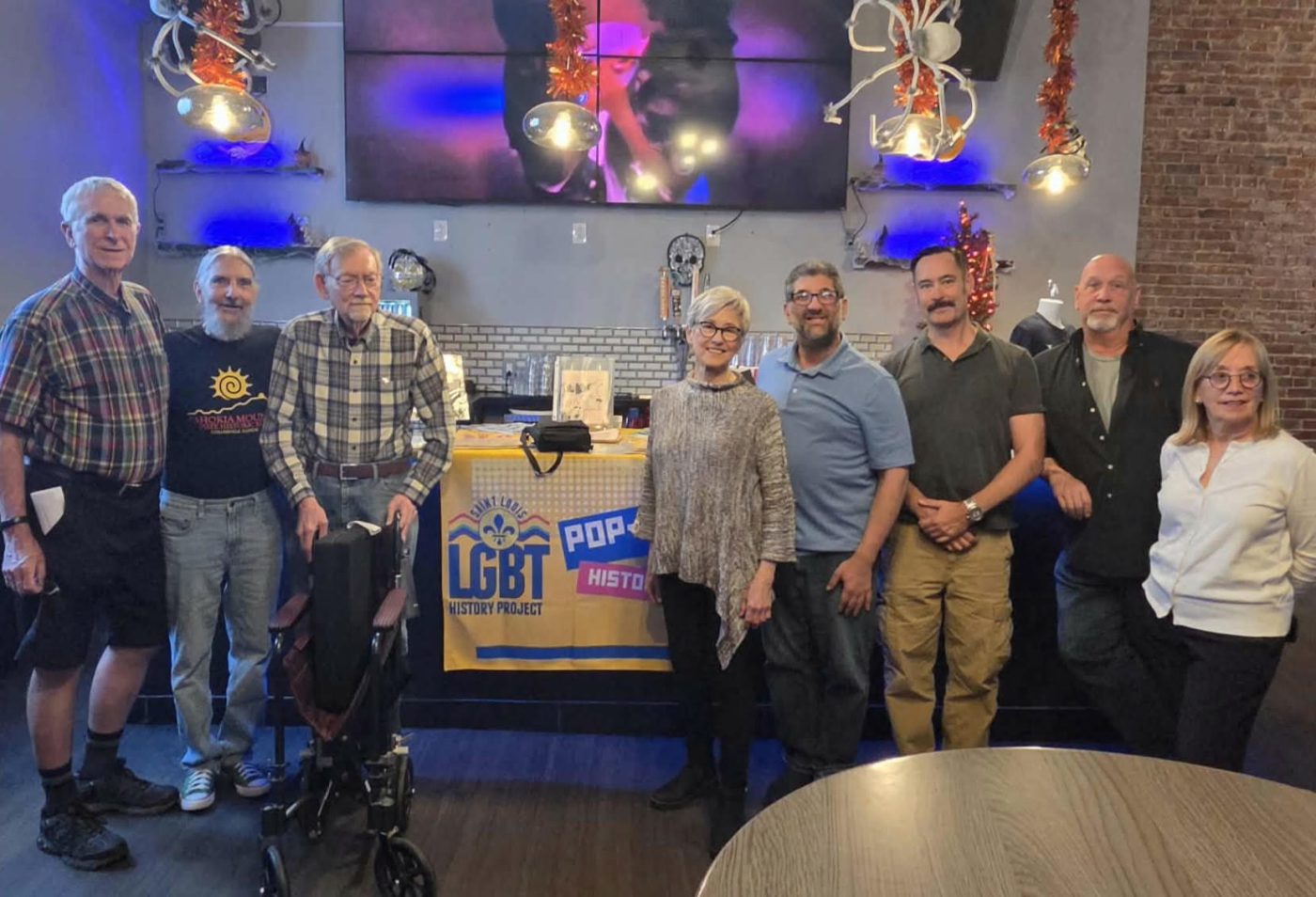
The Sixth Annual History Happy Hour, hosted by Just John on October 26 and benefitting the St. Louis LGBT History Project, brought together an extraordinary gathering of writers, editors, publishers, photographers, broadcasters, and community storytellers whose work documented decades of LGBTQ life in the St. Louis region. More than a reunion, the evening was a celebration of the individuals who ensured that community stories were recorded, shared, and preserved for future generations.
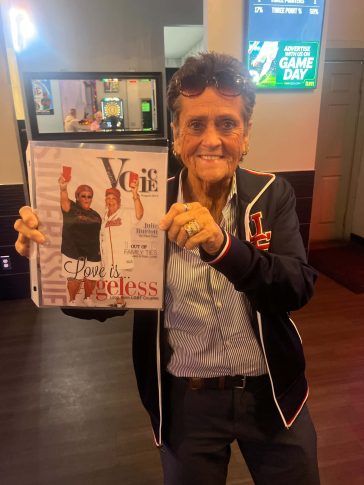
Cat Schmidt
Throughout the discussion, speakers reflected on the vital role community media played in creating visibility during a time when LGBTQ voices were largely absent from mainstream outlets. Kris Kleindienst of Left Bank Books recalled the deeper purpose behind the work, reminding attendees that, “Stories matter however they’re told. We need our stories and we need them to be preserved.” Her words set the tone for an evening focused on the power of storytelling and historical preservation. Kleindienst wrote for Moonstorm and Lesbian and Gay News Telegraph.
Ron Trucks of SLAM Magazine reflected on the publication’s personality and impact, noting, “We did document all that, but we also tried to raise a little bit of shit along the line while we were at it.” While often humorous and irreverent, publications like SLAM helped chronicle a rapidly changing community and provided readers with a sense of connection and belonging.
Radio pioneers shared equally powerful reflections on breaking barriers through the airwaves. Adam Rosen, co-host of The Gay ’90s Radio Show, recalled the courage required to become visible at a young age, saying, “We were not merely coming out to ourselves, but we were taking the opportunity and the risk of coming out to the entire city.” He later reflected on the program’s lasting impact, adding, “It is really humbling to know that we may have saved people’s lives as a result of being a visible presence as teenagers on the air.”
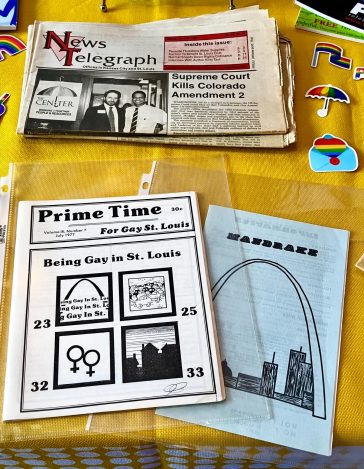 Jym Andris, another early radio voice, emphasized the importance of reaching listeners who often felt isolated. Looking back on those broadcasts, he simply noted, “We did find out that people were hearing us.” Decades later, his efforts continue to support historical research through archives and online resources documenting the community’s history.
Charles Koehler, co-creator of Lambda Reports, highlighted the unique accessibility of radio, explaining, “The power of radio is that you can be living in a family setting that is very hostile to LGBT folks, and you can listen to a radio program using headphones when you’re in privacy in your room.” His comments underscored how media often served as a lifeline for people seeking information and affirmation.
His partner in broadcasting, John Hilgeman, offered a message of resilience and hope. Reflecting on the many changes he has witnessed, he reminded the audience that “Having lived through some things and seeing changes, seeing opposition and then seeing how people progressed, things are going to get better.”
Pam Schneider, publisher of Pride Pages and Vital Voice, spoke about her vision for LGBTQ media. “My mission when I did it was to create something that if you had it on your coffee table and Grandma came in, you weren’t going to be nervous about having to try to hide.” Her publications helped normalize LGBTQ stories and experiences while reaching broader audiences across the region.
Representing a newer generation of LGBTQ journalism, Colin Lovett of Boom LGBT reflected on the responsibility facing community media today. “If we didn’t show up and tell these stories, then nobody would,” he said, emphasizing the importance of documenting local events, organizations, and people whose contributions might otherwise be forgotten.
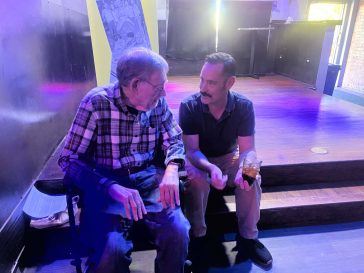
Jym Andris and Chris Andoe. Photo credit: Steven Brawley
Current Out in STL publisher Chris Andoe acknowledged the legacy of those who came before him, telling the audience, “I am deeply, deeply honored to be in a room full of giants.” He also shared advice that has guided his work: “Keep your community at heart.”
The evening concluded with reflections on the future of LGBTQ historical preservation. As the St. Louis LGBT History Project continues its work collecting archives, oral histories, and artifacts, the message from every panelist was clear: preserving community history is a collective responsibility. Through newspapers, magazines, newsletters, radio programs, photographs, and digital media, generations of storytellers have ensured that the experiences, struggles, achievements, and voices of St. Louis’ LGBTQ community will not be lost.
As attendees left the event, they carried with them a powerful reminder of why this work matters. In the words of Kris, the evening’s most resonant message was perhaps its simplest: “Stories matter however they’re told. We need our stories and we need them to be preserved.”