Anna Ziegler’s Antigone (This Play I Read in High School) at the Public Theater is a show you should see. It is a powerful, performance-driven piece that draws on the ancient tragedy to make a contemporary argument about bodily autonomy and state power. Directed by Tyne Rafaeli, the production grounds the story in recognizable, present-day spaces, trading marble for something more immediate. At its best, it is sharp, specific, and emotionally direct. At other moments, its structure and staging lose that precision, softening the impact of what is otherwise a compelling evening.
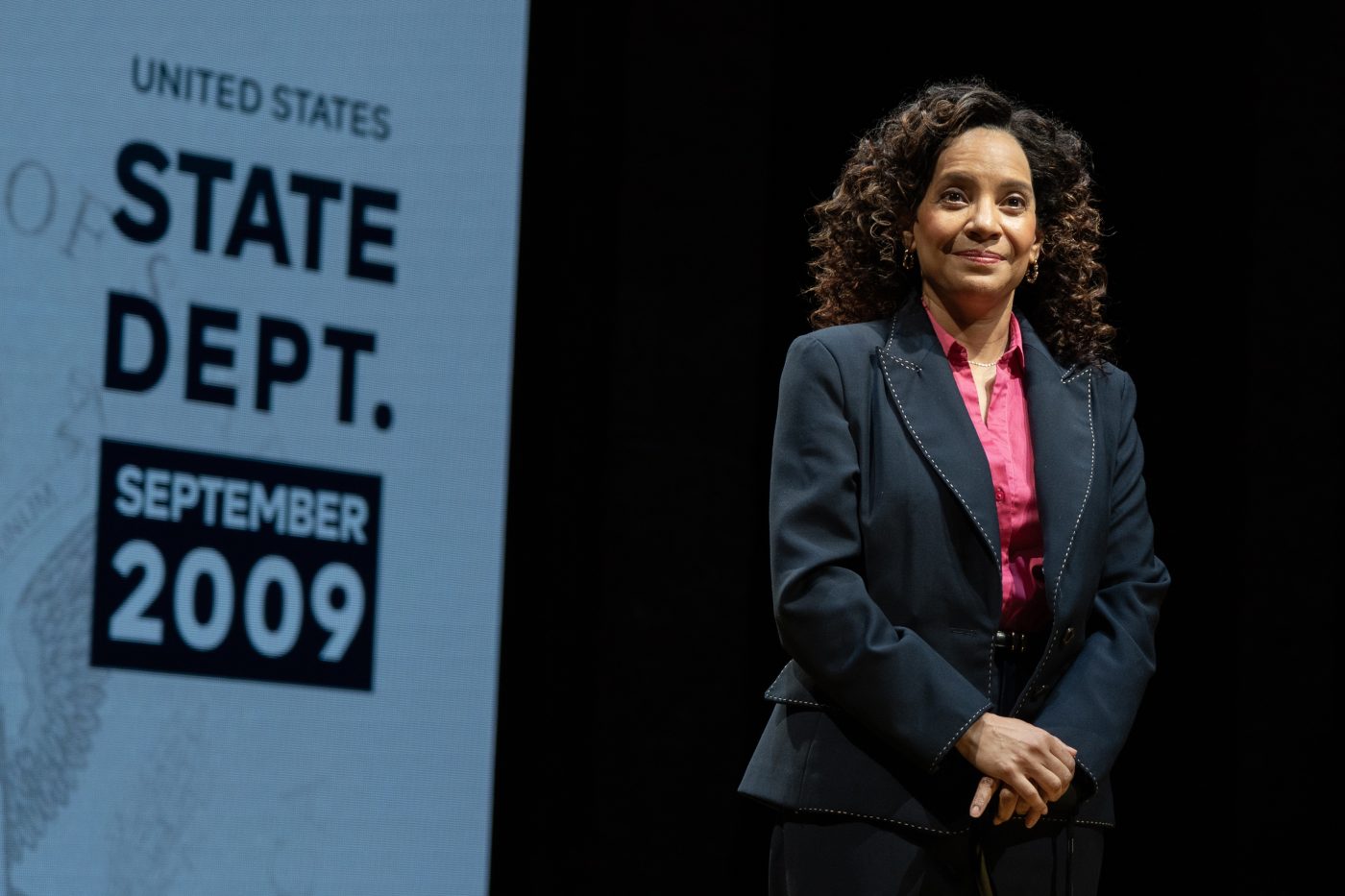
Ziegler introduces a contemporary Chorus, played by Celia Keenan-Bolger, who reflects on Antigone across time. After some early exposition, the device pulls away from the action rather than deepening it. The Chorus tracks a separate story about motherhood that rarely sharpens the conflict onstage, and just as the tension between Antigone and Creon builds, the play steps outside itself, and the momentum slips.
Susannah Perkins gives Antigone a fiercely physical performance. This is not a symbol of defiance but a young person making impulsive choices and refusing to let anyone else control the consequences. Perkins brings humor, volatility, and raw vulnerability to the role, and the production is right to trust them with its central argument. In the evening’s most startling moment, when Creon offers an escape through a public apology, Antigone refuses by stripping naked and cataloging the scars on her body. On the page, the gesture could feel overly constructed. In performance, it lands with force. Taken together, the gesture, the back-alley clinic, and her refusal to concede even strategically all point to the same argument: her body is the only ground she will not yield.
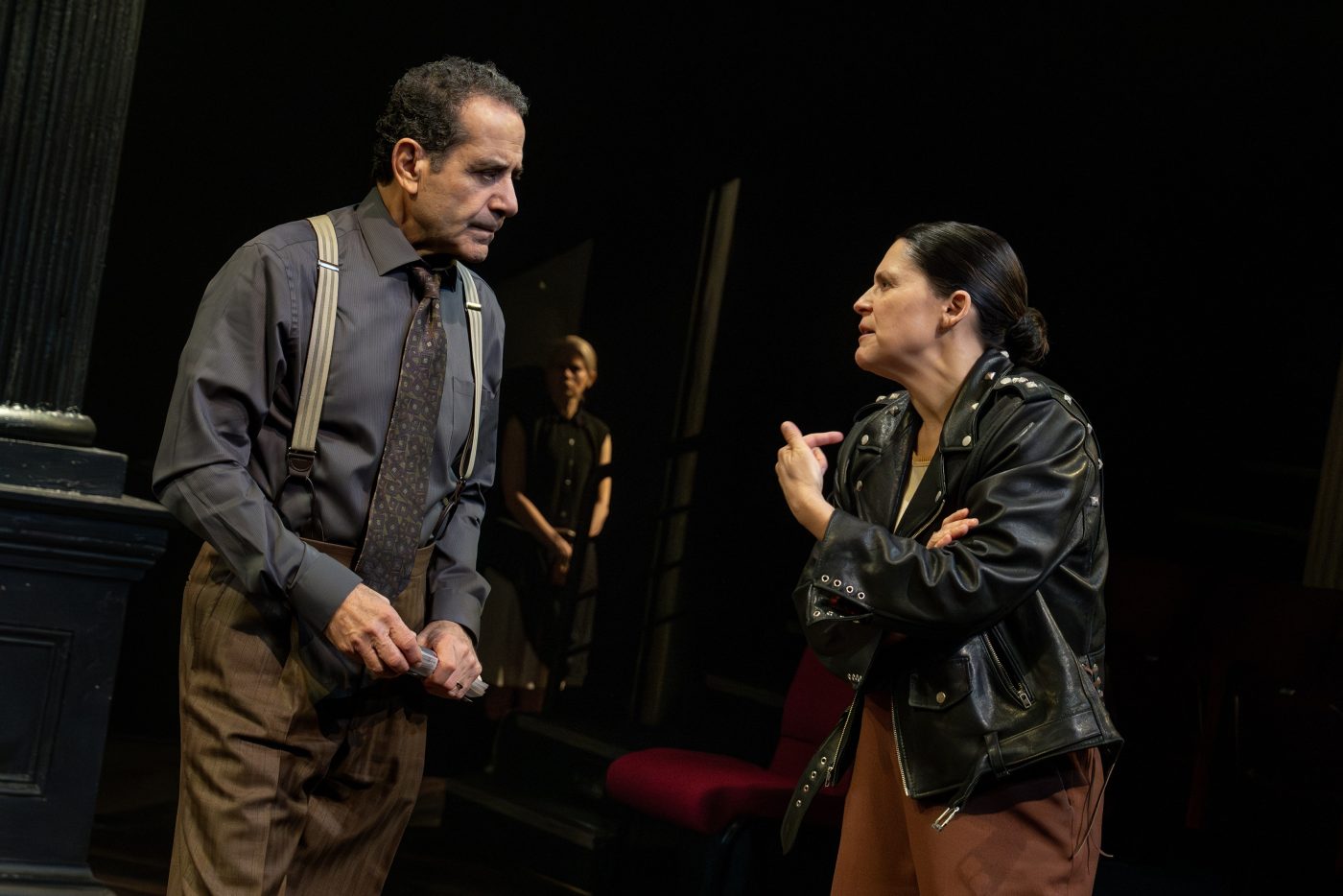
 Tony Shalhoub gives Creon an unexpectedly humane shape. Rather than a tyrant, he plays a man who understands the fragility of the system he now leads and fears being the one who lets it collapse. His hesitation is as important as his authority, and it gives the central conflict weight. The production also shifts the balance of the tragedy. Antigone becomes the clear emotional center, while Creon, though thoughtfully played, functions more as an obstacle than an equal counterweight.
The staging follows a similar pattern of strength and inconsistency. When the production leans into specificity, it works. The bar feels lived-in, grounded, and appropriately seedy. The clinic is rendered as a Manhattan bodega counter, smartly creating the back-alley world in which it operates. By contrast, Rafaeli gives Creon’s world far less specificity. Apart from a well-tailored suit, the actor is left to supply the sense of scale and authority on his own.
The play keeps reaching for a larger argument. It is strongest when it stays in the room.
Antigone (This Play I Read in High School)
By Anna Ziegler
Directed by Tyne Rafaeli
Venue: The Public Theater, 425 Lafayette Street, New York, NY
Run: February 26 – April 12, 2026
Performance Schedule: Tuesday–Sunday at 7:30 PM; Saturday and Sunday at 1:30 PM
Tickets: publictheater.org | 212-967-7555