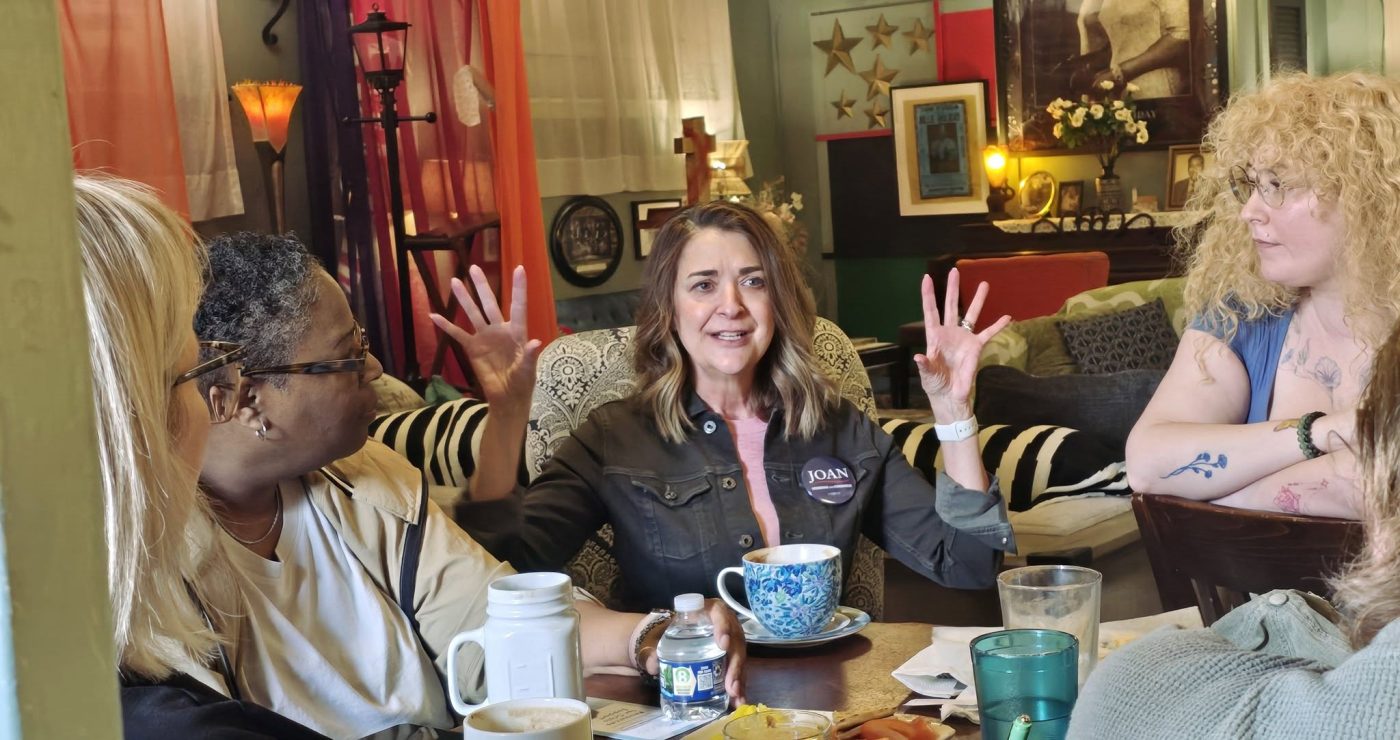
On the morning of April 8, Joan VonDras met with a group of LGBTQ+ Missourians over coffee to discuss her candidacy and to ask what was important to them. Missouri’s 2nd Congressional District—recently redrawn at the urging of Donald Trump and facing legal challenges—encompasses much of south and west St. Louis County, stretching toward Farmington, Rolla, and well into the region west of the metro area.
The district has long been considered safely Republican for incumbent Ann Wagner, who has faced little pressure to engage in town halls. That dynamic has left many voters feeling overlooked, and has opened the door for a more competitive Democratic primary than in past cycles.
The Candidates: VonDras vs. Wellman
The two frontrunners in the Democratic primary appear to be VonDras and Fred Wellman.
VonDras, a retired educator, is running on a platform centered on public education, civic engagement, and restoring trust in government. Her campaign emphasizes community-based politics, drawing on decades of experience in local schools and prioritizing direct outreach through town halls and small-group conversations, like the April 8 gathering.
Wellman, by contrast, enters the race with a higher national profile. A U.S. Army veteran and podcast host, he previously served as executive director of the Lincoln Project and has positioned himself as a pro-democracy candidate.
Both candidates are part of a broader Democratic field that includes professionals from medicine, education, and academia—an indication that the party sees an opening, however narrow, in a district that has historically leaned Republican.
Unity Through Civility & Sharing Stories
“Facts don’t change minds. Stories change minds,” VonDras says. “Listen to people’s stories and look for a way in.” VonDras has hosted more than twenty workshops since January 2025. “I’ve found the top three things people care about are healthcare, education, and housing. We discuss why a healthy nation is important. I don’t feel our nation is healthy right now.”
Her messaging consistently returns to the idea that political engagement should be rooted in listening rather than confrontation, an approach that appeared to resonate with attendees.
Among them was Christine Elbert, who described VonDras as attentive and deliberate. “I was impressed with her willingness to engage and actively listen to the concerns of the people she speaks with,” Elbert said. “Her answers to questions were thoughtful and precise, not preprogrammed.”
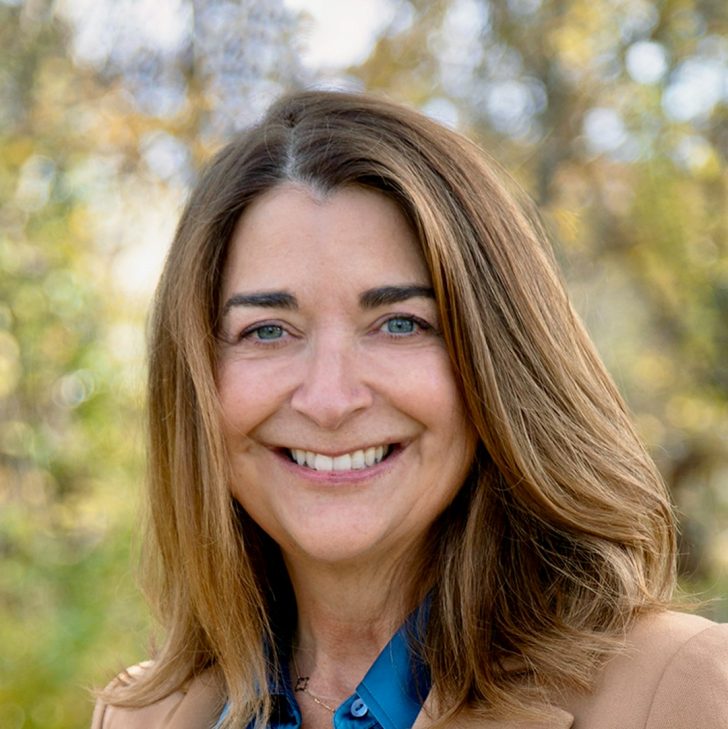
Joan VonDras
LGBTQ+ Issues and Representation
For LGBTQ+ voters in attendance, the conversation touched on concerns ranging from healthcare access and anti-discrimination protections to the broader tone of political discourse.
VonDras did not present a rigid policy checklist; instead, she asked participants to identify their priorities and describe how federal representation could better reflect their lived experiences. That approach—less scripted, more conversational—stood out in a political environment where candidates often rely on standardized talking points.
Several attendees noted that simply being asked directly what mattered to them felt significant in a district where such engagement has been rare.
Pam Schneider, who owned and edited the LGBTQ newspaper The Vital Voice from 1999 to 2009, said she is backing VonDras. “Joan has been a dear friend for more than two decades, and her integrity is unmatched. She doesn’t just hear people; she listens and finds the best ways to support them. Missouri needs the fresh perspective she offers. I know that LGBTQ Missourians, in particular, would finally have a true, unwavering ally representing them in D.C.”
The Challenges of Democratic Purity Standards in a Republican-Leaning District
The primary has also exposed tensions common in competitive Democratic races, particularly in districts that are not reliably blue.
VonDras said that Wellman had acknowledged voting for Trump in the past*. Meanwhile, Wellman’s backers have criticized VonDras over endorsements from individuals whose social media activity has drawn scrutiny.
The back-and-forth reflects a broader debate within Democratic politics: how to balance coalition-building with accountability, especially in districts where winning a general election may require appealing to independents and moderate Republicans.
A comparable dynamic has emerged in the Maine Democratic primary for U.S. Senate, where establishment-backed candidates and outsider campaigns have clashed over past statements, electability, and ideological alignment. The pattern underscores a recurring tension—how much weight to give to past actions versus present platforms when building a viable coalition.
A Ground-Level Campaign
For VonDras, the path forward appears to rely less on national attention and more on sustained, local engagement. Small gatherings like the April 8 meeting offer a glimpse into that strategy: listen first, respond directly, and build relationships incrementally.
Whether that approach can translate into primary success, and ultimately competitiveness in a general election, remains an open question. But in a district where many voters feel disconnected from their representation, it marks a distinct shift in tone.
As the race develops, the contrast between grassroots engagement and national-profile campaigning will likely define the Democratic primary—and shape how candidates attempt to navigate both party expectations and the realities of a Republican-leaning district.
The citizens gathered on April 8 simply appreciated being heard.
*Shortly after publication, Chelsea Rodriguez with the Fred Wellman campaign reached out asking for the following retraction: “The most glaring [inaccuracy] that we’d appreciate an immediate retraction on is that Fred ever voted for Trump. He did not. Fred has been such an anti-Trump voice that Mike Flynn sued him, and he needed private security while the admin was publicly attacking him. He was hired to run a program at the Lincoln project specifically to target veterans and persuade them against Trump, which was successful.