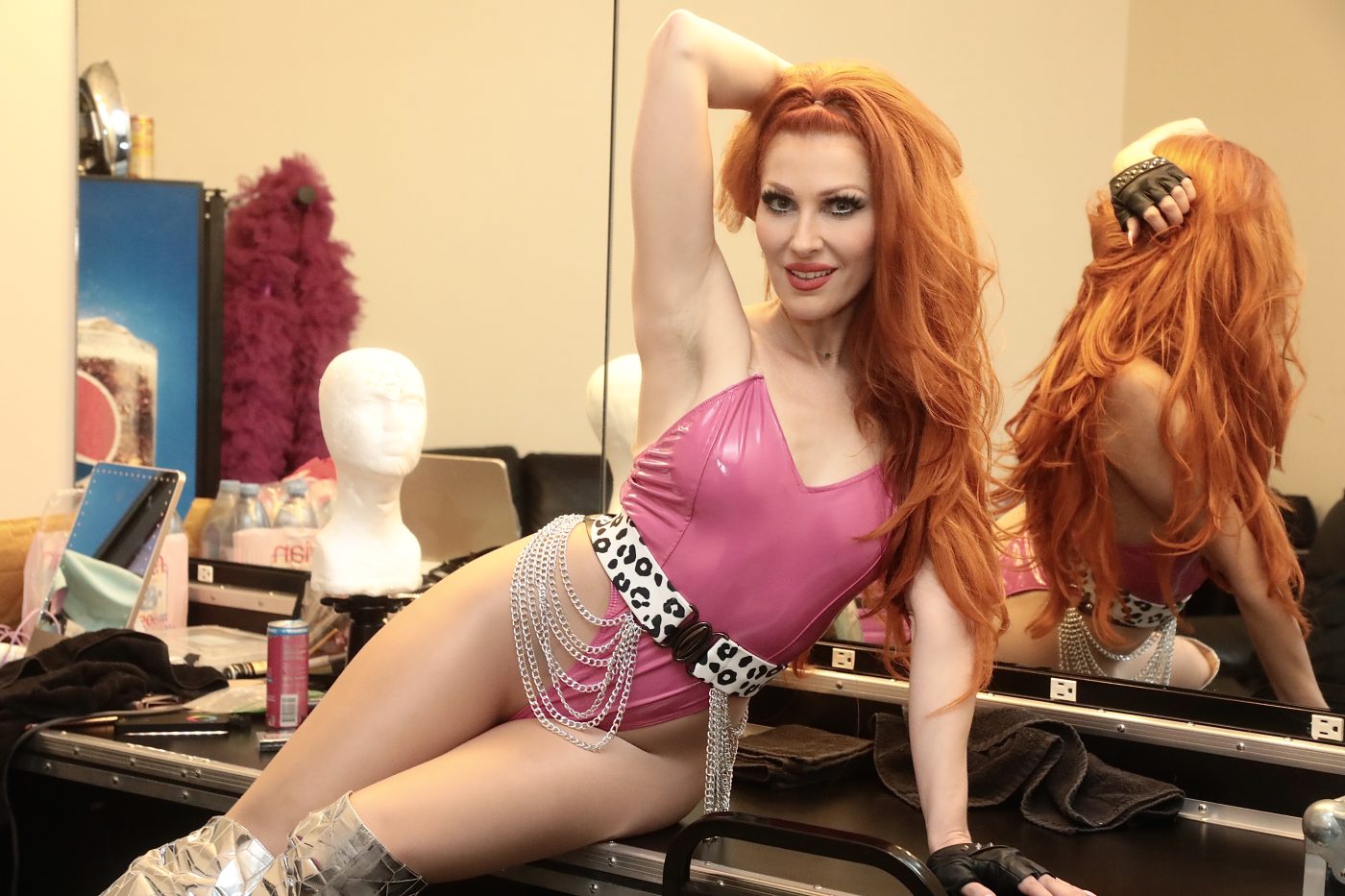
Bonnie McKee is one bad bitch. She’s fucking fabulous. And, more importantly, she knows how to write a fucking song.
If you know Bonnie McKee only as the woman behind some of pop music’s biggest hits, you might miss just how much of an artist she is herself. But standing inside The Pageant this past weekend, watching her command the stage, it became pretty clear: Bonnie McKee doesn’t need anyone else’s name attached to a song to prove she belongs on that stage.
McKee opened the Sunday show for The Midnight, and I was genuinely curious to see how the St. Louis crowd would respond to her. The answer came quickly. She owned the room.
There was confidence in the performance, but there was also something else—an artist who has spent years figuring out exactly who she is, what she wants to say and, perhaps most importantly, who gets to make those decisions.
I caught up with Bonnie McKee at The Pageant.
McKee was only a teenager when she signed with Reprise Records and released her debut album, Trouble, in 2004. The songs were written when she was just 14 to 16 years old. Looking back, she doesn’t romanticize those early years.
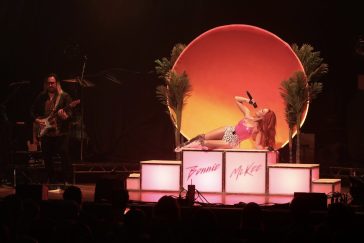
Bonnie McKee. Photo credit: Thomas Blue
“I was a kid. I wrote all of the songs on that album between the ages of 14 and 16.”
At that point, McKee says, she wasn’t being developed as the songwriter the world would eventually come to know. She was simply an artist.
“I learned a lot about the pitfalls of the music industry,” she told me. “I think I learned what not to do.”
And she certainly learned.
Over the years that followed, McKee would become one of the most recognizable songwriting forces in modern pop, working alongside artists including Katy Perry, Britney Spears, Rita Ora, Kesha, Cher, Taio Cruz, Kelly Clarkson, Christina Aguilera, Adam Lambert, and collaborating with Max Martin.
But “getting there wasn’t exactly a straight line.”
McKee originally recorded Hot City in 2013 and 2014. The album was eventually shelved, revised and finally released independently in 2024.
“The musical landscape had changed dramatically.”
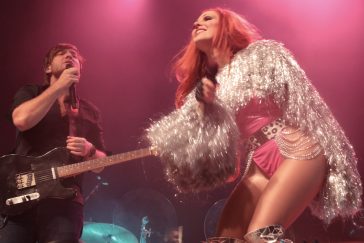
Bonnie McKee opening for The Midnight. Photo credit: Thomas Blue
McKee had spent years riding the wave of what she described as the “recession pop” era. Then came Lorde—and suddenly the rules were different.
“All of a sudden all of this big, maximalist pop music that I had written for the Hot City album was no longer what was popular.”
The label wanted her to change direction.
Her response was essentially: I’m not Lorde.
“I was like, ‘Well, I’m not Lorde. That’s not who I am.’”
And that sentence may say more about McKee’s career than almost anything else. Because eventually, she stopped trying to fit into somebody else’s idea of what Bonnie McKee should sound like.
That journey eventually led to Bombastic, the 2015 EP she released independently after leaving her label.
When I asked whether independence was part of the reason for the project, she didn’t hesitate.
“Bombastic was written out of rage.”
For McKee, putting music out independently was still relatively unusual at the time. There wasn’t the same infrastructure for independent artists that exists today.
She doesn’t claim she started a revolution. But she did prove something to herself: she could do it.
Then there is “Heaven Is a Gay Bar.”
One of the most unexpected—and most fun—parts of McKee’s current musical world is her collaboration with Zee Machine on “Heaven Is a Gay Bar.”
The title alone demands attention.
McKee didn’t have to think twice when Zee brought her the concept.
“As soon as he told me the concept, I was like, ‘This is brilliant.’”
She helped write the chorus and bridge and contributed the second verse.
And her explanation for why the song resonated with her was even better.
“If I want to go out and have a good time, I’m going to the gay bar. That is the place where I feel like myself.”
For McKee, the song isn’t simply a joke built around a provocative title. It’s about the freedom and comfort she associates with queer spaces.
And honestly, after watching her perform this past weekend, I can see exactly why that energy connects with her.
During the pandemic, McKee found another outlet for her creativity. She wrote, directed, edited, scored and starred in April Kills the Vibe, a short film drawing from deeply personal experiences involving trauma, sexual assault, alcoholism and slut-shaming.
McKee wanted material for an acting reel, wasn’t connecting with the scenes her acting coach was giving her, and decided to write something herself. What happened next surprised even her. The film went on to receive 53 awards at film festivals.
“I never expected it to turn into what it was.”
That experience also opened another creative door. McKee told me she’s now working on a full screenplay for a television show.
There was no way I was going to talk to Bonnie McKee about songwriting without bringing up Max Martin. Her answer was immediate. “Max Martin is still my hero.” Even after working with him, McKee says she still gets starstruck. And while she has spent years contributing to some of pop’s defining songs, accepting her own place in that history hasn’t always come easily.
“For a long time I had imposter syndrome.”
But time has a funny way of changing perspective.
As the songs have continued to live, stream, get played and become part of people’s lives, McKee has started looking back differently.
“Maybe I did do something right,” she said. “Maybe I did contribute.”
Yes, Bonnie. You did. By the time Bonnie McKee walked onto The Pageant stage, none of that history mattered as much as what was happening in front of us.
She wasn’t the teenager from “Trouble.”
She wasn’t simply the songwriter behind somebody else’s hit.
She was Bonnie McKee.
And the crowd got to experience that firsthand.
She delivered a set that felt energetic, unapologetic and completely hers. There was no question she knew exactly how to work a room—and watching the audience respond was one of the most enjoyable parts of the night.
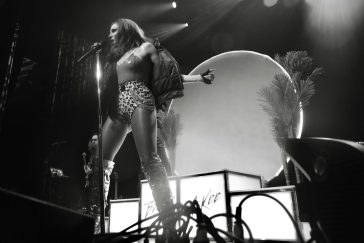
Bonnie McKee. Photo credit: Thomas Blue
McKee is still writing. She’s mentoring younger artists like Sophie Powers, working with artists such as Zee Machine and Caroline Kingsbury, and keeping the door open to whatever comes next.
She’s also still wrestling with the same question artists have faced forever: how much control are you willing to surrender for the machinery and money of a record label?
Her answer isn’t simple. “It’s really, really hard to be independent.”
But neither is giving up control.
“Every dollar that I make goes back into the art,” she told me.
And maybe that’s the best way to understand Bonnie McKee in 2026. She knows exactly what the industry can give you. She also knows exactly what it can take away.
At The Pageant, she looked like an artist who has finally figured out what she’s willing to keep.