Long before St. Louis had an organized LGBTQ motorcycle scene, before women riders had a place in groups such as Dykes on Bikes, Betty D. Neeley was already riding.
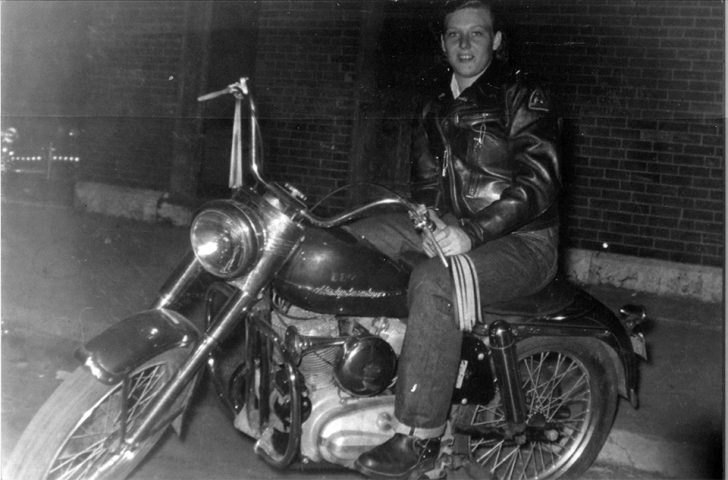
Neeley, turning 90 this month, began riding motorcycles in 1949, at an age when a teenage girl taking to the streets on a motorcycle was anything but conventional. Her early years as a rider predated the LGBTQ motorcycle clubs that would eventually become part of St. Louis queer history—and even the language and community structures that would give women like her a place within that history.
“I rode with a whole group of guys, 29 of ’em,” Neeley recalled in a 2020 interview with Out In STL’s Elizabeth Van Winkle. Her introduction to motorcycles came at the Polar Bar on Vandeventer, a gathering place for motorcycle enthusiasts.
“I talked this guy into letting me ride his bike. He said, ‘Have you ever rode before?’ and I said, ‘No, but I know I can do it. If you just let me, I know I can do it.’”
She was 15.
Without a license, Neeley spent the next year riding through the back alleys of St. Louis.
“Yeah, I was one of those kids,” she said.
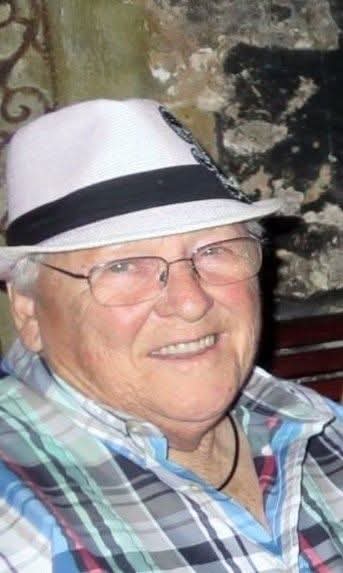
Betty Neeley. Facebook
What makes Neeley’s story particularly remarkable is how early it falls on the timeline of both St. Louis motorcycle culture and LGBTQ community history. She remembers few women riders during her early years, and virtually no visible LGBTQIA motorcycle community.
Her experience was shaped by a motorcycle culture in which women were frequently relegated to the role of a male rider’s “old lady”—or, more bluntly, “property-of.” The chauvinistic terminology, Neeley noted, remains in use in some motorcycle clubs today.
“I don’t recall ever riding with other women or seeing many other LGBTQIA riders,” she said.
By the time she was riding less frequently, the beginnings of organized queer motorcycle culture were emerging in St. Louis. Neeley remembers the men’s motorcycle groups that existed around 1974, although even then the scene could be difficult to decipher.
“There was a men’s motorcycle group around then, I remember,” she said, “but when I’d go to meet up with them at their hangout, there were never any bikes lined up out front. Everybody just looked like they were bikers.”
Her own riding career was essentially over by then. But Neeley’s connection to LGBTQ history was far from finished.
In fact, one of her most important contributions came not on a motorcycle but behind a long table at PrideFest.
Finding the Women in the Archives
Neeley volunteered at the LGBT center on Manchester Avenue, where she became involved in an effort to search for and preserve historical artifacts.
She quickly noticed a problem familiar to anyone who has ever tried to reconstruct marginalized history: the women were missing.
“They had shit for women,” Neeley recalled. “So I took care of that.”
At PrideFest, around 2014, Neeley and several others assembled what she remembers as a 60-foot-long exhibit called “Herstory.” It was devoted entirely to women and their contributions to St. Louis LGBTQ history.
The project wasn’t simply about putting old photographs and artifacts on display. For Neeley, preserving history meant reconnecting people with their own stories—and sometimes revealing histories that even the people involved didn’t know existed.
One particularly memorable encounter involved a woman who had come to PrideFest with her son and grandchildren.
Neeley recognized the significance of her family story and jokingly asked her, “So you got that turkey baster kid with you?!”
He was, she believed, the first known child conceived through donor insemination in St. Louis.
Then Neeley was able to show him something extraordinary: a photograph of the woman who had brought him into St. Louis as a baby, transported in a cooler on her motorcycle.
“I got to say to this young man, ‘Hey, I’ve got a picture of the woman who brought you into town in the cooler on her bike in this book! This is you in the cooler on her bike!’”
It was exactly the kind of connection Neeley believed history was supposed to make possible.
Before the Bars, There Were the Runs
The history Neeley was preserving extended into another important chapter of LGBTQ life: the emergence of gay motorcycle clubs.
For generations of queer people, motorcycle clubs offered something that was difficult to find elsewhere—a way to meet, socialize and form community with other LGBTQ people.
In the early days, the motorcycle scene was closely connected to what would become known as the Old Guard leather and SM community. Clubhouses and motorcycle “runs” became important gathering places, eventually helping lay the groundwork for the leather bars and social institutions that would become fixtures of queer nightlife.
For people who lived through those years, these weren’t simply recreational organizations. They were communities.
And that is what Neeley worries has been lost.
“I think the young people have no connection to any community much,” she said. “That’s what I see. I feel so bad that they will never know the camaraderie that older generations have had with each other.”
That concern gives Neeley’s work preserving “Herstory” an importance beyond nostalgia. She understood that LGBTQ history can disappear remarkably quickly when nobody takes responsibility for documenting it.
The woman who started riding motorcycles at 15, navigating St. Louis back alleys before she was old enough to legally ride, eventually became a keeper of the stories of women who might otherwise have vanished from the historical record.
Her motorcycle years came before the clubs. Her activism continued after them. She was with Team St. Louis for 40 years, she’s been active with SAGE and PROMO.
And somewhere between those two chapters is a lesson Neeley has spent decades demonstrating: community isn’t simply something you inherit. Somebody has to build it—and somebody has to remember it.
Betty invites you to celebrate her 90th from 1:00 to 5:00 p.m. at Just John this Saturday.