Just a few weeks ago, Missouri lawmakers met in Jefferson City to discuss the passing of a recent bill that places significant limitations on transgender individuals.
Around that same time in St. Louis, another conversation was happening as a result of that bill: How do we maintain the safety of our transgender youth?
This conversation was part of a much larger discussion held by Emmett Williams, Festival Curation and Education director for Cinema St. Louis, regarding the Trans Youth Art Sale that will be held during this year’s QFest. Presented by Cinema St. Louis and returning June 12-21 for its 19th year, this year’s QFest will be held at the Hi-Pointe Theatre, and the Trans Youth Art Sale will take place in the lobby. QFest brings the best in bold and resilient storytelling in LGBTQ+ cinema and culture; the art sale is the place for Queer people to literally show their work.
Hosting a festival in a deep red state like Missouri doesn’t come without its challenges however, and Williams emphasizes the importance of creating not only a safe space for festival goers, but a safe space for the young artists who will have their art featured in the sale.
“One of my favorite events of the year occurs during QFest and that’s our Trans Youth Art Sale,” he says. “We invite eight Trans youth to sell their art in our lobby, and we ask the community to come out and support these incredible young people. It breaks my heart that we even have to think about their safety, but that is something in my mind and a conversation that we have internally.”
Of course, Williams isn’t the only one that wishes to create a safe space for these kids. Event Coordinator Leo Luttrell is helping organize the art sale and is also very intentional in maintaining a safe space. Highlighting Trans artists is an important part of what Luttrell wishes to accomplish with this partnership, which will be the second year being held during QFest.
From My Dear Watson. Courtesy of QFest St. Louis
Against the Trans-constrictive legislation and rhetoric attacking Trans individuals, it is absolutely necessary to amplify young Queer voices. “Art has been used as a form of protest since the beginning of time,” says Lutrell, “but we see it a lot now. It’s no secret that the government wants us to disappear, but that only makes us push back harder in ways we know, like art.”
Luttrell urges Queer youth not to give up or give in. “Keep going,” they say. “Please keep going and creating — if not for yourself, for the community. We need as many people as we can have to keep fighting and show that we exist. Any art you create matters.”
The festival theme for 2026 is OUT, LOUD. This theme is reflective of visibility, resilience and joy at a moment when living openly can still feel like an act of courage.
A secondary theme also seems to be Anniversary, as the festival opens with the 10th anniversary screening of the Oscar-winning film Moonlight, and closes with the 25th anniversary of Y Tu Mamá También. It doesn’t seem coincidental that both of these Queer features demonstrate narratives from diverse storylines, with Moonlight’s predominantly Black cast and Y Tu Mamá También being a Spanish-speaking film illustrating specifically Queer identity across Mexico.
Williams is clear-minded about building a program that is diverse and rich in culture, showcasing a wide specrum of identities from within the community.
“My goal is always to make sure everyone sees themselves on our screens,” he says. “That’s why QFest matters so much right now: We’re in a strange time when it can feel like parts of the world don’t just resist queer representation, but question whether LGBTQ+ people should exist at all.
“We’ll always screen great films first, but there’s also that voice pushing me to make sure our local LGBTQ+ community knows we see them, that they have a home at the Hi-Pointe, and that we’ll do everything we can to keep that space visible and welcoming.”
In 2026, with hostile legislators amassing in the statehouse, “The very existence of the festival is a sign of resistance,” Williams says. “So every film we screen, from the dozens of shorts from all over the world to our documentaries to our award-winning features, feel like part of the narrative.”
This year’s QFest is rich with representation. One bright highlight will be the Shorts Program which, thanks to the festival’s Gay-It-Forward program, will be free for all viewers.
“These twenty-seven narrative and documentary films from all over the world really capture the breadth of what QFest is about,” Williams explains. “You’ll see different voices, different styles, different lived experiences, all in one place. It’s one of the easiest ways to discover new filmmakers and see stories you might not encounter otherwise.”
This sentiment speaks to the globalization of the festival, allowing for the richness of LGBTQ+ communities in and around the St. Louis area to embrace diverse groups of individuals from all over.
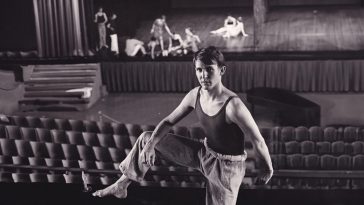
Scene from Beautiful Boy. Courtesy of QFest St. Louis
Accompanying the Shorts Program are a variety of other films, including the documentaries Barefoot Boy, a cathartic exploration of the life of choreographer Bill Evans; Mary Oliver: Saved by the Beauty of the World, an illustration of the life behind the private yet explicitly Queer poet Mary Oliver; and Nova ’78, a fascinating collection of recently restored footage from the infamous Nova Convention of 1978 in which never-before-seen footage of Frank Zappa, Patti Smith and Brion Gysin among many other individuals pay tribute to Queer “artist from the future” William S. Burroughs.
Perhaps one of the most relevant titles is the The Dads, a detailed look into a group of fathers who fight for the freedom of their Trans and Gender Expansive kids, struggling with the reality of the choice they find themselves up against: freedom or family? The film upends the conventional image of parents as opponents of their unconventional
children’s identities.
P$RN STAR University functions as a how-to guide to break into the adult entertainment industry from Andy Lee, one of the industry’s finest. Lee challenges the societal norms and attitudes towards the world of adult entertainment and further pushes the envelope as the film follows Lee on a journey to fund a university exclusively for those wishing to create adult content. The film offers a sharp and funny look at the modern implications of this ancient profession while emphasizing themes of masculinity and reinvention.
The festival will also host a new type of event, something dissimilar to the slate of films that are part of the traditional programming. QFest has partnered with Closet Space, a Queer sapphic reality dating show that will be taped live in front of audience participants. The one-of-a-kind experience brings an entirely new level of engagement as the audience becomes part of the event — which Williams assures will be “hilarious and fun and entertaining.” Two documentary features will also screen as part of the programming, Lesbians in Boystown and Free Beer Tomorrow, two films that explore the often overlooked narrative of heroic lesbianism.
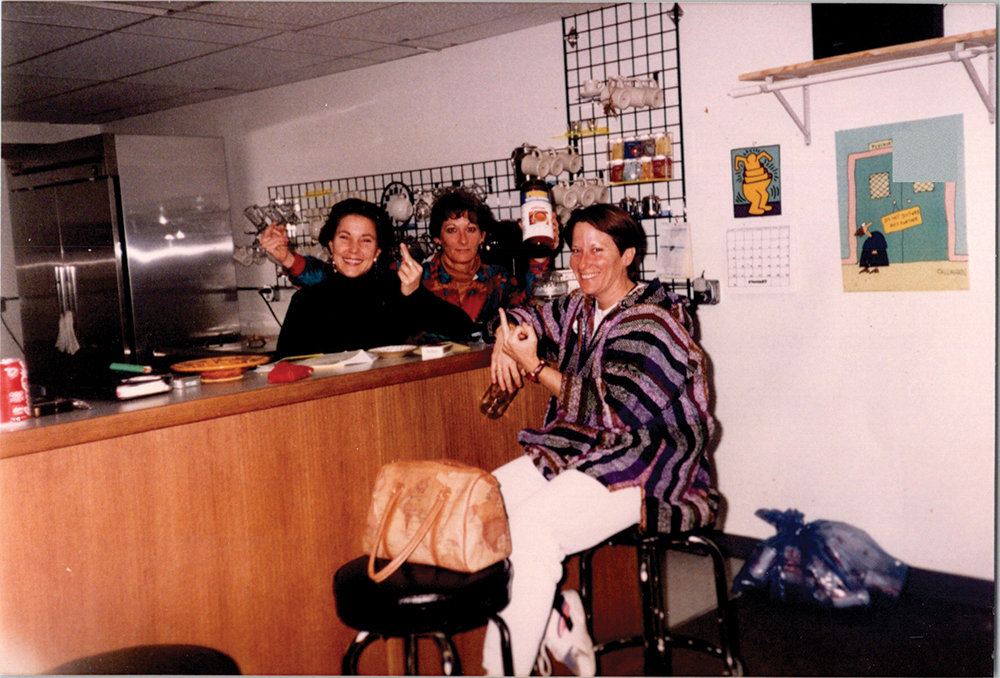
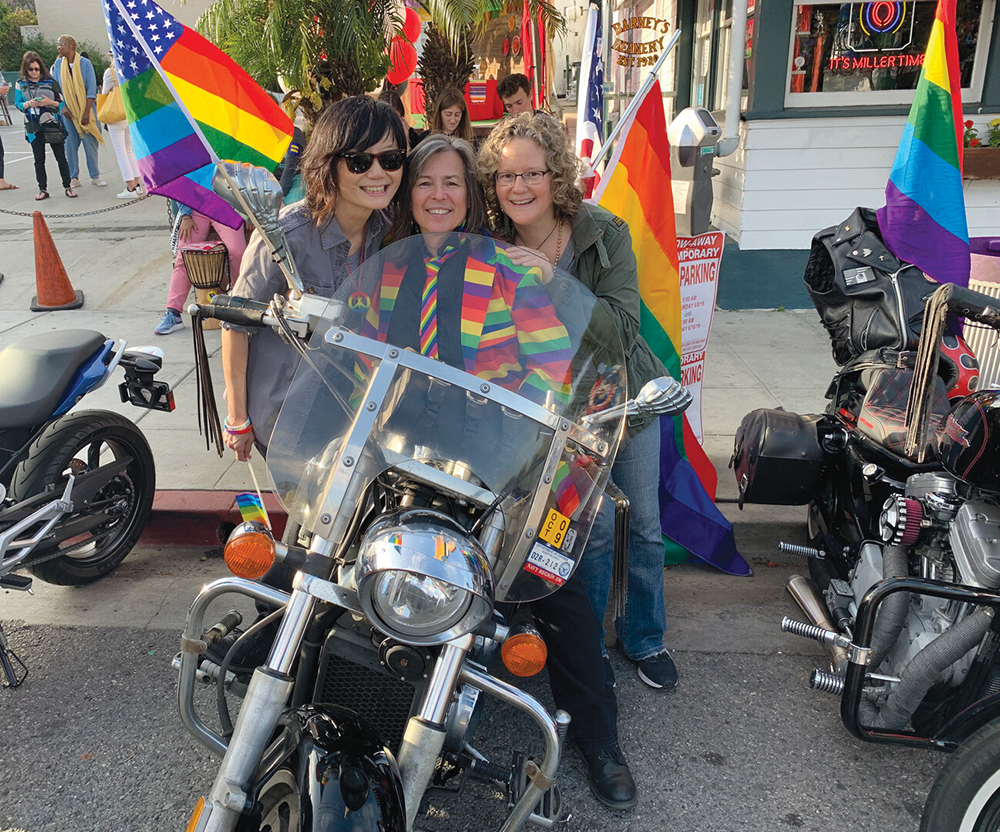
In addition to directing Lesbians in Boystown, Betsy Kalin is also a film professor currently residing in Florida while maintaining strong ties to St. Louis and Missouri — two extremely conservative and undeniably red states.
“I don’t feel like there’s much of a difference living in a predominantly red state,” says Kalin. “Florida may be more of the testing ground for harmful legislation which then travels to Missouri, but LGBTQ+ people in both states end up needing to work to overturn these policies and fight for human rights and preserving our democracy.”
Compared to people in more left-leaning states, “I think we have an important perspective that comes from living in red states and not being in a bubble,” they say. “We are members of communities where we interact with people who don’t share our viewpoint. We have the opportunity to advocate for our rights by being who we are in daily life and having conversations with each other.”
Those living in states with less aggressively restrictive legislators are neither better nor less responsible for pushing back on the national trend against gay freedoms. “I think people in blue states need to recognize this is critical work in building support and changing minds, and they should do what they can to assist us.”
Beyond the theater, Kalin notes that, though their own experience in the classroom hasn’t included any specific anti- Queer pressure, they certainly have seen their fair share of Foucaultian policing, where other instructors feel the political pressure in erasing elements of teaching Queer cinema. “I know other faculty in the state who are not so fortunate,” they aver. “Colleagues have been told explicitly what to teach, what not to teach, and classes and programs have been threatened and cancelled. We see that daily academic freedom is under attack all across the country as is education itself.”
Clearly, in 2026, QFest is more urgently needed in St. Louis than ever. As political forces shrink the spaces around us, we are required to embolden our voices. The OUT, LOUD theme is particularly relevant and timely: Our region is home to so many beautiful cultures and inclusive LGBTQ+ communities — and thus it is especially important to continue practicing resilience and rebellion.
That is exaclty why this festival means so much. It is an entire space dedicated to celebrating the film, the art, the identities, and the experiences that are so beautifully written within our Queer culture, and it refuses to submit to threats against our existence.
That is: No matter where we live, we all need to be both OUT and LOUD right now!