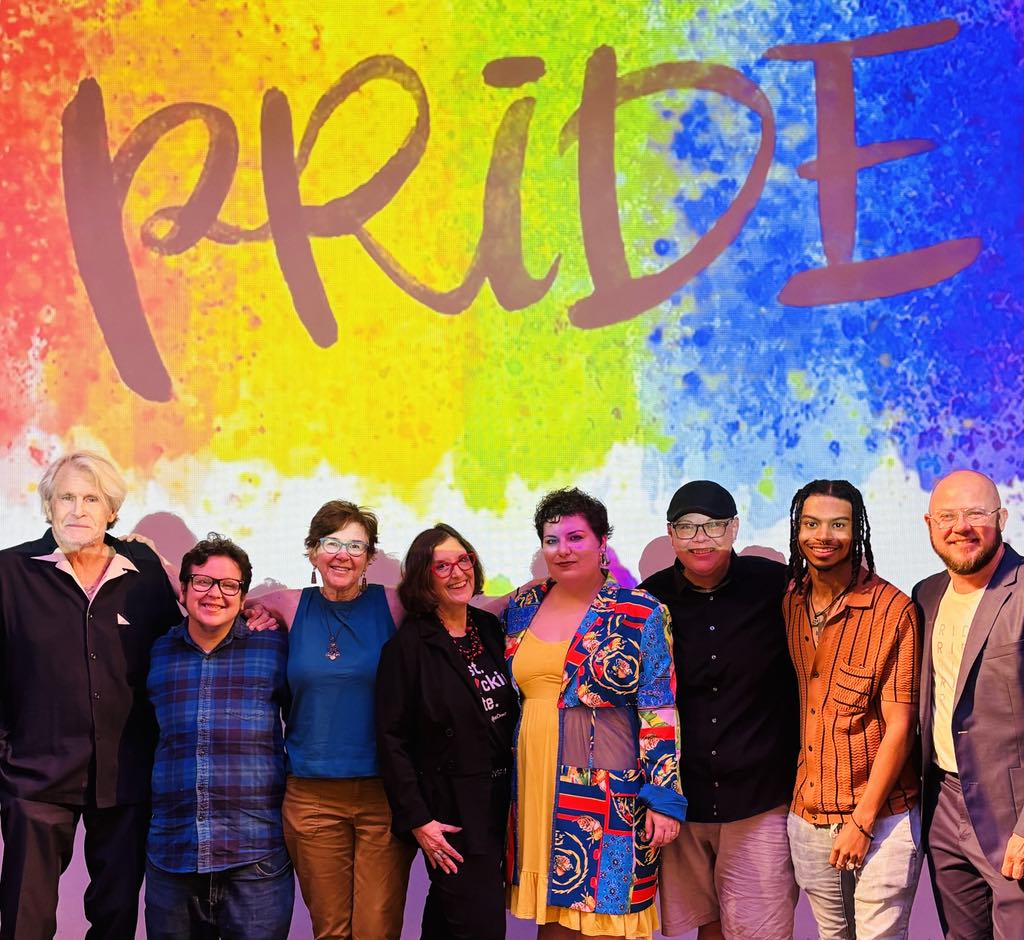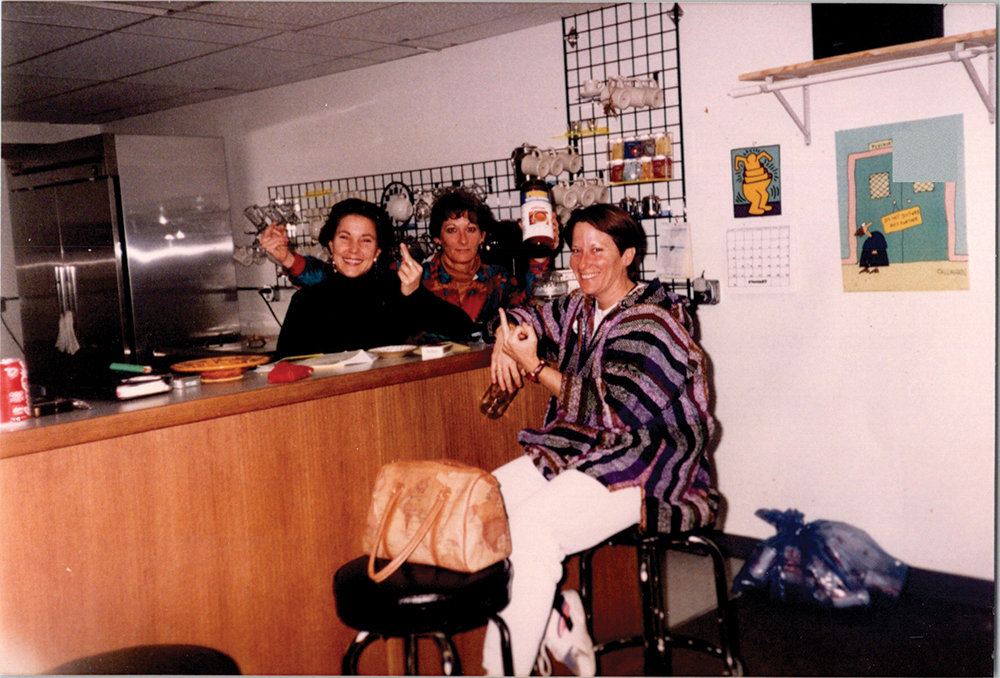
I often look back on my younger lesbian days and think about the spaces we so desperately needed — places for sober living, genuine connection and simple relaxation. Spaces where there was no pressure to perform or be anything other than your authentic self. When I reflect on those times, one place immediately comes to mind: MoKaBe’s Coffeehouse. Mo Costello, Kathy Carmody and Becky Brown were the original owners of the adorable coffee shop.
The name “MoKaBe’s” is derived from the first two letters of each of their names. That place went through many changes over the years. The first location was built in Kirkwood, near where the three were raised, in 1992. I remember the blood, sweat and tears that went into building that safe haven. Back then, our young lesbian community showed up in the most beautiful ways, painting walls, moving furniture, and doing whatever it took to get the doors open. They weren’t just building a coffee shop; they were building a sanctuary.
Unfortunately, Kirkwood wasn’t quite ready for the kind of community that filled those rooms — especially those who spilled out onto the front walkway and (shudder) hugged one another.
“We stupidly signed a one-year lease, because we didn’t know what we were doing,” Carmody says. “The landlord said people were complaining about the crowd we were attracting. Some said we must be selling drugs. Mo was disgusted. We were at that location for one year and four months.”
So they did what resilient people do: They picked up and moved.
“Moving MoKaBes to South City was the best decision we ever made,” says Carmody now. “We are surrounded by cool people, a supportive neighborhood and beautiful Tower Grove Park across the street!”
The next chapter began at Arsenal and South Grand in 1994. For me, that place became home. In fact, it was such an important part of my life that it influenced where I bought my own house. It also inspired me to venture into owning a coffee shop myself.
MoKaBe’s had an energy you could feel the moment you walked in. The air was thick with espresso, cigarette smoke in earlier days, and giant lattes piled high with whipped cream. It started as a small space but somehow managed to hold live music, a pool table, games and countless conversations that stretched late into the night.
And the brunch — oh, the brunch. It was some of the best you could ever eat. The menu welcomed everyone: incredible veggie and vegan options sitting right alongside hearty meals for the carnivore crowd. It was a place where everyone could sit at the same table.
You could walk in alone, pull up a chair, and leave with ten new friends. It’s where I met some of the most amazing people — people I still hug to this day.
As the business grew, so did the space. But the spirit of the place never changed. The moment you walked through the door, you knew it was truly inclusive. You might see a homeless woman wearing a wig sitting beside a loud straight man from AA at the bar. Everyone was welcome to share stories, laugh, debate and educate newcomers. It was the only place I’ve ever worked where it never felt like work. It felt like building community — together.
For the lesbians, it was something more: It was our sanctuary.
With rainbow flags blowing in the wind outside and spontaneous after hours gatherings that sometimes even the owners didn’t know about, it truly felt like family. It wasn’t just a business to us. It was family.
If you sat on one of those barstools long enough you might even earn a drink named after you. Back then, people ran tabs and paid them on payday. There were actual pay phones on the wall, and if they were all being used you were forced to talk to the humans next to you. Imagine that.
We played together. We worked together. Life felt simpler in some ways — yet incredibly hard in others. Coming-out stories flowed freely across those tables, and through them, we realized how many of us carried trauma from the moment we opened that closet door.
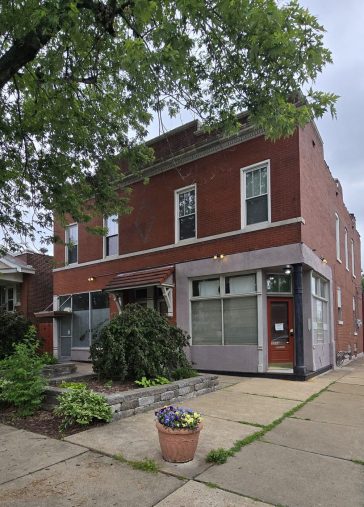
Steps Alano
Not far from MoKaBe’s is the St. Louis Steps Alano Club, a 501(c)(3) nonprofit organization dedicated to supporting LGBTQ+ individuals and their allies. Night after night, we served people who were fighting battles with sex and love addiction, alcohol, narcotics, codependency, and so many other struggles our community faces.
Eventually, I had to walk into those rooms myself. After a long relationship where I had truly enabled someone I loved, I found myself standing at that door. You learn quickly in those spaces — especially from the gay men who will lovingly tell you the truth: “You’re no victim, baby.”
Pulling that door handle and walking in alone was one of the hardest things I’ve ever done. Standing up and saying, “Hi, my name is Rena, and I’m codependent,” felt terrifying.
But that space shaped and changed my life.
Doing the healing work is so important — and it’s not easy. Facing the wounded child inside yourself while standing there as a grown adult lesbian, owning your story and speaking it out loud, might be one of the most frightening things you can do. But it’s also one of the most healing.
To this day, I hardly drink because of the work I did in those programs. That’s not a judgment on anyone who enjoys an adult beverage — it was simply the reality I had to face for myself.
I thank the gay stars for places like these. In moments when I felt isolated, depressed, or lost, they helped me find my people again.
And now, once again, I’ve found that feeling at The Drip Coffee House — a lesbian-queer-owned coffee shop nine blocks south of MoKaBe’s, at Potomac and Grand.
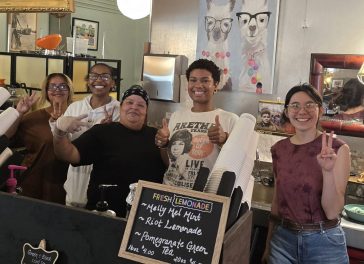
Left to right: Angel, Little Ash, (Big) Ash, Cydney, Kay working at The Drip. Photo credit: Chris Andoe
As I’ve aged and changed, I’ve searched for a place where I could walk in alone and immediately feel energy radiating through the building. At The Drip, the moment I step through the gold steel door and climb the small steps inside, I’m met with something familiar — a sense of belonging.
Every time I enter, I hear the familiar words: “Welcome, family.”
I don’t know exactly why that matters so much to me, but it does. Being acknowledged, greeted with a smile, and made comfortable simply by someone’s presence is powerful. That’s the kind of energy I try to create in my own
community work and events.
Like MoKaBe’s, The Drip reminds me that sometimes we simply need to smile more — to bring warmth into rooms where people may be silently struggling through this complicated thing called life.
These spaces have introduced me to incredible people. Coming out, admitting our struggles, building connections and recognizing the inner child in all of us who is still asking for love and understanding — that is what makes me adore this community even more.
Thirty-two years of being a lesbian have taught me a few valuable truths:
A good cup of coffee and an honest emotional conversation can change lives.
Vulnerability builds real friendships.
And doing the hard inner work is absolutely necessary.
Spaces like these still exist today, and they remain incredibly valuable to our lesbian, queer, and gay community.
From my heart to yours — much love to the spaces that continue to hold us, heal us, and bring us together.
Keep rising above.
Rena Noonan is with the St. Louis Lesbian Queer Society.