There is a fantasy people often attach to ballroom acknowledgment.
People imagine the moment your name is called, the room erupts, your peers celebrate you unanimously, and suddenly years of sacrifice feel validated all at once. They imagine it as a clean and beautiful ending to a long journey. A crowning moment. A fairytale.
My experience with acknowledgment in ballroom was never that simple.
None of my moments of elevation were storybook moments. None came without tension, complication, resistance, politics, emotion, or contradiction attached to them. But looking back now, I realize every single one of those moments shaped me into the person I would eventually become. Every obstacle strengthened me. Every disappointment refined me. Every betrayal forced me to grow thicker skin while still fighting to maintain softness somewhere underneath it all.
It made me resilient.
It made me persistent.
It made me someone who refused to give up even when giving up would have been easier.
And maybe that is the real story behind becoming an IKON.
Ballroom, Identity, and Becoming
Ballroom is one of the most beautiful things I have ever experienced. It is artistry. It is fashion. It is performance. It is resistance. It is chosen family. It is creativity born from survival underneath lights, commentary, and applause.
For many queer people, especially Black and Brown queer people, ballroom has never simply been about trophies or categories. It has been about visibility. About survival. About expression. About creating worlds for ourselves when society often refused to make room for us.
Ballroom gave people permission to become.
And in many ways, it gave me permission to become too.
I found confidence there.
I found creativity there.
I found purpose there.
I found community there.
I traveled the country because of ballroom. I met extraordinary people because of ballroom. I watched people discover themselves through fashion, performance, dance, and expression in ways that transformed their lives forever.
But ballroom is also deeply human.
And because it is human, it can also be messy, political, painful, competitive, healing, inspiring, and at times destructive.
There are people who enter ballroom searching for family.
People searching for identity.
People searching for safety.
People searching for visibility.
People searching for love.
And there are also people searching for power.
Ballroom is full of trauma on many different levels. Hurt people often enter spaces looking to heal, but sometimes people who have been hurt also repeat the same harm onto others. Sometimes the trauma people experience outside of ballroom quietly follows them into ballroom itself.
And over time, I realized something difficult: just because someone is hurting does not mean they should not be held accountable for the harm they cause.
At its best, ballroom can feel like an alternative to the cruelty of the world outside.
At its worst, it can mirror the very same systems we claim to escape.
I have watched politics damage relationships.
I have watched money change motivations.
I have watched ego overpower integrity.
I have watched people become consumed by status, proximity to power, and validation.
And honestly, as ballroom has grown, gained visibility, and generated more money and influence, some of the intimacy and purity that once made parts of the culture feel sacred have shifted too.
But even with all of that, I still saw beauty worth protecting.
Carrying the Weight
I took pride in trying to navigate ballroom differently. Not perfectly, because I am fully human and have made mistakes, but with integrity. I never indulged in many of the things people often framed as “part of the culture.” I worked hard. I stayed committed to my vision. I tried to maintain morality even in spaces where morality often felt negotiable.
And honestly, that was not always rewarded.
There were moments where my back felt completely against the wall. Moments where I felt unsupported, underestimated, isolated, or actively resisted. In ballroom, I often felt like I was either loved intensely or disliked ferociously. There rarely seemed to be an in-between.
Some people embraced me wholeheartedly.
Others seemed to resent my existence entirely.
And over time, I realized something difficult. Sometimes people need your work, your creativity, your labor, and your leadership while simultaneously wishing you were not the person attached to it.
That realization changes you.
Heavy is the head that wears the crown, but what people often fail to discuss is the emotional weight that comes with constantly being expected to carry others while pretending you do not need support yourself.
When you consistently produce, lead, organize, mentor, create, and survive, people stop seeing the labor behind it. They stop seeing the exhaustion. They stop seeing the humanity.
They assume strength means you no longer require grace.
People begin placing impossible expectations on you:
to keep giving,
to keep showing up,
to keep building,
to keep fixing things,
to keep carrying people emotionally,
to remain composed,
to never break,
to never admit you are tired.
And if you finally say you are overwhelmed, suddenly your humanity becomes disappointing to people who benefited from your strength.
There were moments where I felt emotionally crushed beneath those expectations.
Many people do not know that ballroom deeply impacted my mental health. The pursuit of validation, the pressure of leadership, the constant criticism, the betrayals, the bullying, and the emotional intensity of navigating the culture pushed me into some of the darkest periods of my life. I was diagnosed with major depressive disorder. There were moments where I questioned my worth entirely. Moments where I genuinely did not know if I wanted to continue living.
What makes life complicated is that healing sometimes comes from unexpected places. Ironically, one of the people who helped save my life during one of those darkest moments was someone I have had an incredibly complicated relationship with throughout my ballroom journey.
That experience taught me something important: people are rarely entirely good or entirely bad.
Ballroom is rarely entirely beautiful or entirely toxic.
Life itself exists in gray areas.
And so does legacy.
Building Something Bigger Than Myself
One of the greatest joys of my ballroom journey was realizing I could help create spaces that reflected a different possibility for what ballroom could feel like.
Over time, my work expanded far beyond simply walking categories.
I executive produced Tens Across the Board, a documentary centered on the Tens Experience, now known as Ballroom Together, a movement rooted in fellowship, artistry, visibility, empowerment, and community. What began as intimate gatherings, mini balls, performances, and shared experiences evolved into something much larger than I ever imagined. The documentary eventually appeared in film festivals in Atlanta, Washington D.C., London, and beyond.
What we created was bigger than ballroom competition alone.
It was community.
People gathered together, performed together, ate together, laughed together, traveled together, and healed together. We built spaces that allowed people to feel glamorous and celebrated while still feeling safe enough to remain human.
I wanted ballroom to feel expansive.
Not just competitive, but transformative.
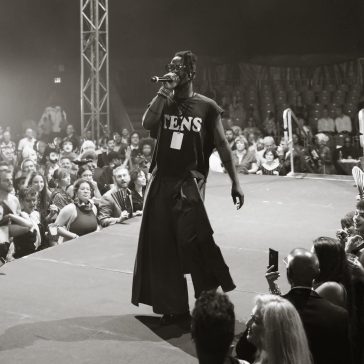
Through Ballroom Together, I helped bring ballroom into colleges and educational spaces across multiple states, using the culture as a lens to discuss confidence, identity, creativity, self-esteem, and self-expression with students. I coordinated ballroom and music experiences for ALTBALL, helping bring ballroom underneath a circus tent in one of the Midwest’s largest fashion productions.
I appeared on local television, PBS specials, news segments, and public platforms discussing ballroom and the work we were building. I helped introduce many people throughout the Midwest to ballroom culture for the first time. I helped create opportunities for dancers, models, and performers, some of whom would later become respected leaders, legends, and icons themselves in both mainstream and Kiki ballroom scenes.
I received proclamations and acknowledgments from city and government leaders, including recognition from Mayor Tishaura Jones and a United States congressional commendation. My work through Ballroom Together also helped lead to recognition as one of the “50 Most Influential Creatives and Curators” through the KRE8 Honors.
But honestly, the accomplishments themselves are not the thing I value most.
What I value most are the people.
The people who gained confidence.
The people who felt seen.
The people who experienced ballroom for the first time through our work.
The people who found opportunities they may never have had otherwise.
The people who survived because somebody answered the phone during a mental health crisis.
The people who realized they could dream beyond survival.
Some of the people I helped cultivate would eventually become legends, icons, house leaders, educators, artists, and professionals themselves. And while their accomplishments belong fully to them, I remain proud that I helped create environments where people could see more for themselves.
I wanted people to know there was another way to exist within ballroom without completely losing themselves to destruction, exploitation, or toxicity.
And honestly, I think some people resisted that vision because it challenged long-standing beliefs about what ballroom was “supposed” to be.
But I continued anyway.
Becoming an IKON
When I finally reached IKON status, spelled intentionally with a “K” because of the journey it represents for me personally, something shifted inside of me.
I realized the title itself did not create me.
I had already become the person I was fighting to become.
The acknowledgment mattered.
Being seen mattered.
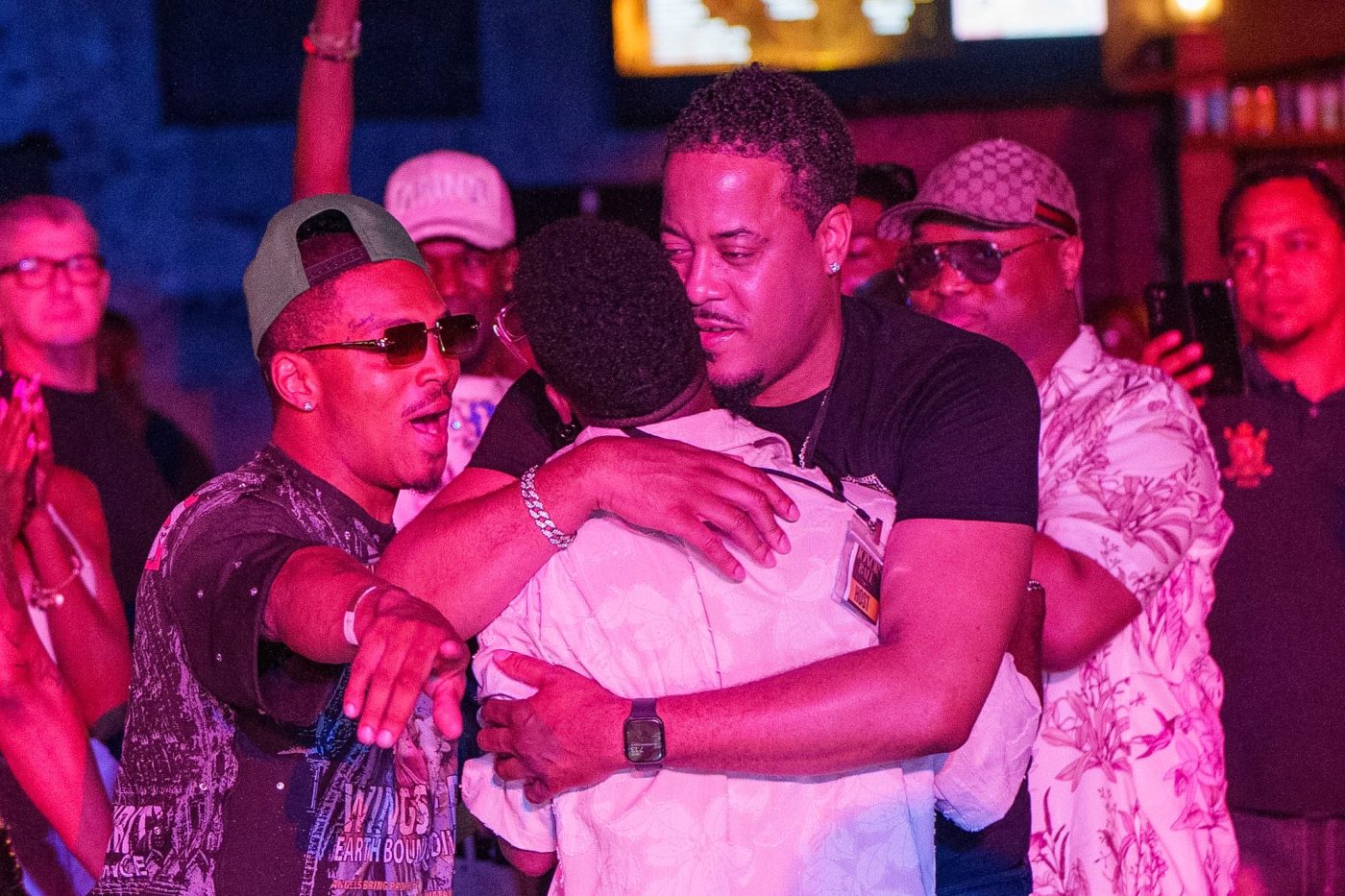
Feeling embraced by peers in ways I had not experienced before mattered.
But I also understood something deeper:
no title could ever create unanimous agreement.
There will always be people who disagree.
People who minimize your contributions.
People who refuse to acknowledge your impact.
People who project their own frustrations, insecurities, politics, or biases onto your journey.
And eventually, I made peace with that.
Because the true work was never the title itself.
The true work was surviving long enough to become the person behind it.
The real accomplishment was continuing despite opposition.
Continuing despite heartbreak.
Continuing despite betrayal.
Continuing despite exhaustion.
Continuing despite mental health struggles.
Continuing despite moments where I genuinely questioned whether I was worthy of existing at all.
And perhaps most importantly, continuing without completely abandoning my integrity in the process.
Pride, Legacy, and What Remains
And despite everything, I am still grateful for ballroom.
Grateful for the people who loved me when I struggled to love myself.
Grateful for the stages, the laughter, the late nights, the performances, the fashion, the artistry, the fellowship, and the memories that helped shape my life.
Grateful for every person who trusted me enough to build something beautiful together.
Ballroom gave me language for parts of myself I did not yet fully understand. It gave me confidence. It gave me purpose. It gave me a community to fight for, even when fighting for it sometimes came at a personal cost.
Most importantly, it taught me that legacy is not simply about titles or status. Legacy is about what you leave behind in people.
It is the confidence you help build in someone who once felt invisible.
It is the opportunities you create for people before they fully believe in themselves.
It is the reminder that queer people, Black and Brown people, trans people, femme people, and marginalized people deserve spaces where they can feel seen, celebrated, glamorous, creative, safe, and alive.
When I think about becoming an IKON now, I think less about power and more about responsibility.
I think about the younger version of myself who simply wanted to belong somewhere.
I think about the people coming after me who deserve healthier spaces, deeper conversations, more honesty, more compassion, and more room to be human.
And I think about the fact that despite every obstacle, every criticism, every moment of exhaustion, and every moment where I questioned myself, I am still here.
Still creating.
Still believing.
Still loving ballroom.
Still believing there is another way.
And maybe that, more than anything else, is what Pride has always meant to me.
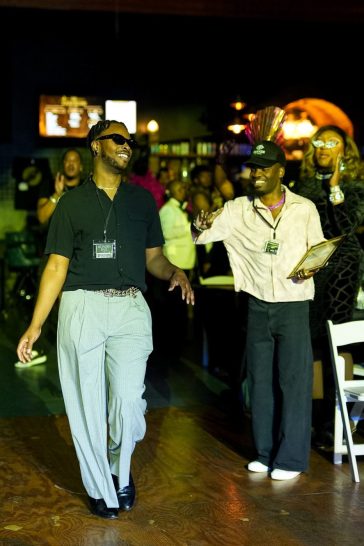
Photography by Grand Martell Pictured : legendary Arrison Kincaid