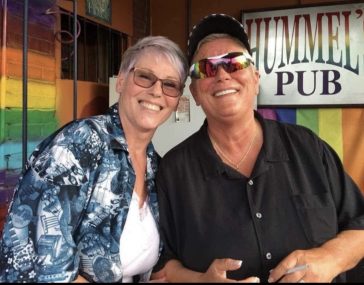
It’s always been a big dream of mine to connect people. So when I came out of a relationship last year and realized I didn’t have a strong lesbian community, I decided to change that. I took over a 500-member Facebook page called Lou Ladies—founded by the wonderful Mel Nelson—and transformed it into a more accessible, searchable space: The St. Louis Lesbian Queer Society.
My vision for growing the community was simple: host events and encourage others to do the same. Thanks to that effort—and to an incredible group of people—we’ve grown to more than 2,800 members of the lesbian and queer family. Running this page has kept me grounded in what matters most to me: my community and my city. It hasn’t always been easy, but it’s given me purpose, boundaries, and the chance to meet people doing truly meaningful work.
South City has been my home since my teens. When I first came out, I remember those late-night 30-minute drives over the South Kingshighway bridges. Back then, things weren’t as inclusive, and The Grove was centered heavily around gay male culture. It wasn’t unusual to see lines of us outside doors marked with rainbow flags—waiting to pay a cover just to enter spaces that felt like ours.
People weren’t afraid to label bars as “gay” or “lesbian,” which feels almost ironic now, considering how much fear we carried in the ’90s about our safety. And yet, in 2026, that fear still exists. We don’t always label spaces the same way anymore, even as the need for them remains.
Inside those walls, we danced. We built connections. We found each other. The streets outside might have been dim, but inside, the lights were bright—and those spaces mattered. They still do.
These days, I rarely walk The Grove. Many of us “older lesbians”—or just “the gays,” as we used to say—knew it well. But both the neighborhood and the community have changed. Lesbian bars have faded, replaced by restaurants and upscale apartments. And sometimes, focusing too much on what was can blind you to what is.
And what is can be surprisingly wonderful.
Courtesy of Platypus
Teaching an Old Butch New Things
My girlfriend Kelly recently introduced me to Platypus. As someone who spends a lot of time building community, you’d think I would have already known about it—or about its owner, Meredith Berry, a well-known mixologist in our scene. But that’s the thing: even in a connected world, we don’t actually know everyone.
Established in 2021, Platypus has quietly become a vibrant, queer-friendly home for so many in our community.
Meeting Meredith was like sampling one of her cocktails—bold, balanced, and unexpectedly comforting. She’s wildly talented, but more than that, she understands something deeper: a bar isn’t just a business. It’s a space. A feeling. A place people return to because they see themselves reflected there.
So I went to see it for myself.
I parked a few blocks away—because my big butch truck isn’t exactly city-friendly—and walked. That’s part of the experience. You show up. You support. You don’t sweat the small stuff.
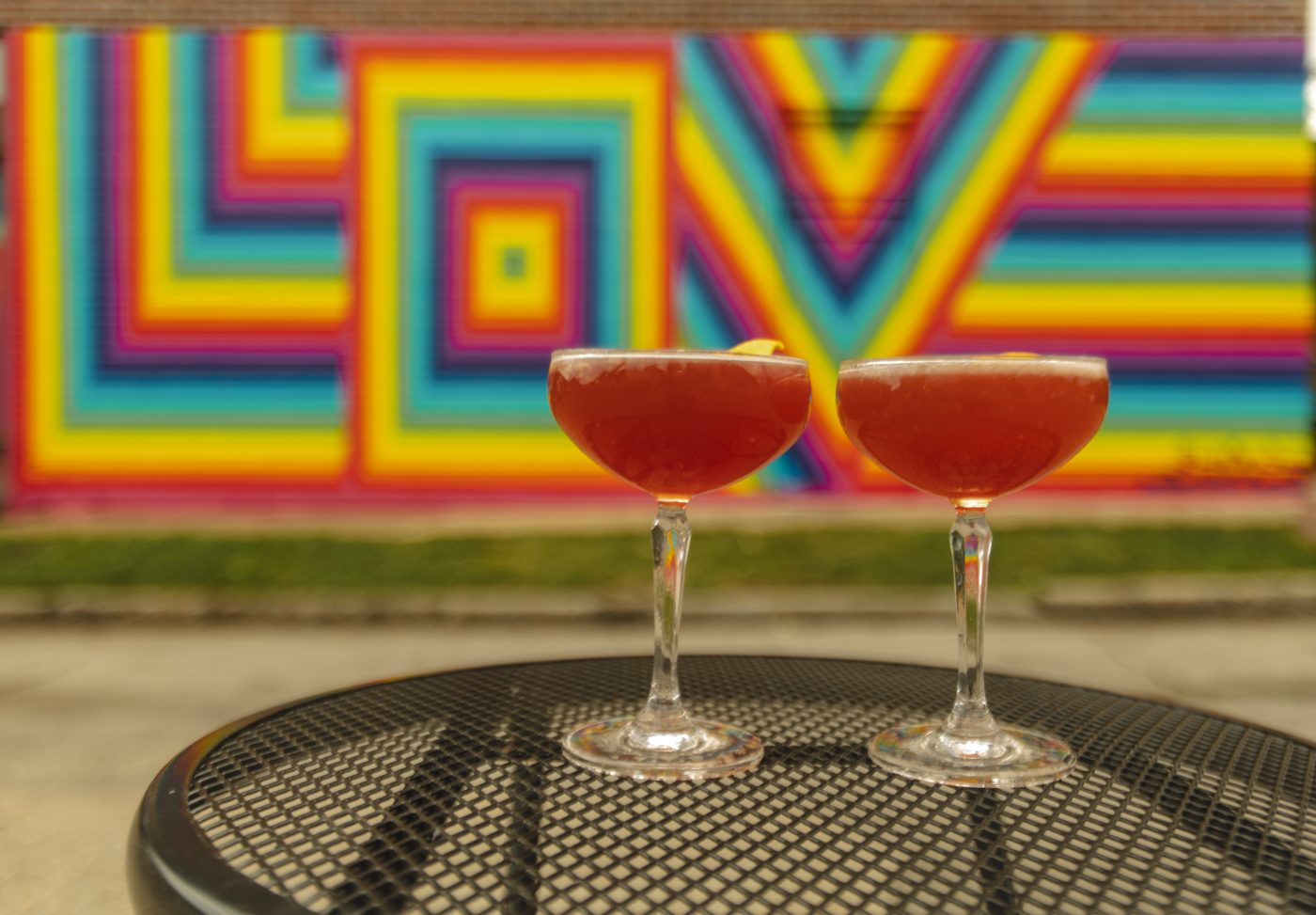
As I approached, a massive rainbow mural stretched across the building. Before I even touched the door, I knew: these were my people.
Inside, I was greeted with a warmth that matched the artwork outside. It made me pause and think—how had I walked past this place before without really seeing it?
I ordered a cold grapefruit draft beer—perfect for a humid St. Louis day—and listened as people talked about how “small” our community is. How “everyone knows everyone.”
That hasn’t been my experience.
Every day, I meet people doing extraordinary things—building spaces, creating art, holding this community together in ways we don’t always notice until we stumble into them.
Meredith isn’t just a bar owner. She’s a nationally recognized mixologist who brought her craft to a wider audience on Drink Masters. And while I’m not much of a drinker, I can appreciate what she’s built. These aren’t just cocktails—they’re experiences. The kind that make you slow down, pay attention, and enjoy something fully.
Bridging Generations
Platypus hosts Queer Town Underground every third Wednesday—a night where the patio fills, the dance floor comes alive, and the energy is undeniable. And still, I found myself wishing I hadn’t just discovered it by chance.
I’ll admit, I had hesitations about attending. I wasn’t sure if someone like me—an “older lesbian”—would fit in. I’ve had to learn new language, new ways of understanding identity. That “plus” at the end of LGBTQ+ matters. It evolves.
And then there’s the word “queer.”
In my day, it wasn’t something we claimed. It was something used against us. It carried weight. Pain. Rejection.
But language evolves.
Today, “queer” has been reclaimed by many. It represents fluidity, resistance, identity, and freedom. For some, it’s empowering. For others, it still stings. And what I’ve come to understand is that both of those truths can exist at the same time.
Labels help us find each other. They help us define ourselves. But beyond any label, what matters most is how we show up—with kindness, compassion, and a willingness to connect.
We also can’t forget the generations who came before us—the ones who fought so we didn’t have to live in silence. I remember being told as a freshman in high school that if you were gay, you would get AIDS and die. That fear shaped us. Some of us hid. Some were sent away to be “fixed.” Many of us built lives in the shadows.
But we survived.
And because we survived, we built something more.
What I’ve learned through community-building is that we still have so much to learn—from each other, and especially from younger generations. I once needed older mentors. Their spaces helped shape me. They kept me going. And now, it’s our turn to do the same.
The divide between generations doesn’t serve us. If we want real change, we have to move forward as a community—together.
Show Up
In 2023, I attended one of my first Queer Town events at The Royale. The patio buzzed with energy—laughter, connection, familiarity. It was organized by Elena Sampson, with DJ Jillian Firns helping lead the experience.
It felt rare. It felt open. It felt like community.
In 2024, Queer Town Underground found its home at Platypus—and it fits. Because what Meredith and her collaborators are building isn’t just a bar or an event. It’s a bridge—a place where generations, identities, and experiences intersect. A place where we gather, connect, and exist together.
But spaces like this don’t survive on intention alone.
They need us.
So I’m asking something directly of our community: show up.
Platypus is facing financial challenges, and one night a month isn’t enough to sustain a space like this. If we want places like this to exist, we have to support them—consistently. That means showing up, spending money, bringing friends, and recognizing the value of what’s being created.
Because Platypus isn’t just a bar.
It’s a place where we connect. Where we laugh. Where we feel something real. Where we belong.
What’s happening in our LGBTQ+ community in St. Louis isn’t small. It’s layered. It’s generational. It’s still unfolding.
And maybe that’s the point.
Maybe we’re not meant to know everyone. Maybe we’re meant to keep discovering each other—again and again—across dance floors, murals, and time.
Because spaces like this are proof.
That we’re still here.
That we’re still creating.
That we’re still finding our way back to each other.
And that’s worth showing up for.
“This is a love letter to the bridge we’re trying to build between generations. We are honored to be part of the story.” — Meredith Berry
Platypus
4501 Manchester Ave
St. Louis, MO 63110
Rena Noonan
St. Louis Lesbian Queer Society
Butch in the Streets