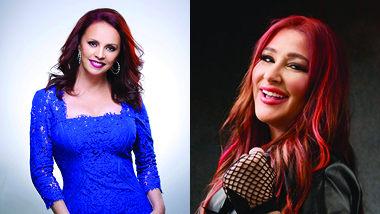
There’s something beautifully defiant about pop nostalgia—especially the kind born under fluorescent mall lights, carried on cassette tapes, and lived out in handwritten fan letters. Few artists embody that era quite like Tiffany.
On April 18, 2026, Tiffany brings that legacy—and a whole lot of lived-in authenticity—to River City Casino, sharing the stage with fellow pop icon Sheena Easton. It’s part of her “All This Time” tour, a title that feels less like a retrospective and more like a wink across time: she’s still here, still evolving, and still very much in conversation with the fans who grew up with her—and the ones just discovering her now.
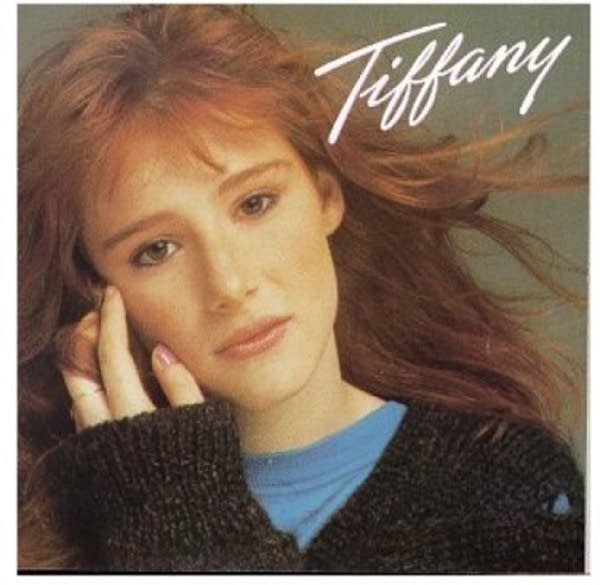
Tiffany’s debut album made her the youngest female artist at the time to achieve a #1 album.
For the St. Louis region, this stop hits differently. It carries a little local lore, a little chaos, and just enough teenage ingenuity to feel legendary.
Back in 1987 – 1988, long before streaming and social media turned fandom into a thumb exercise, MCA Records partnered with radio stations across the country to run voting contests to bring Tiffany to the winning schools and malls. Schools across the metro area mailed in entries—actual envelopes, stamps, anticipation—for the chance to win a live concert in their own gym. The prize? Tiffany as the headliner, with The Jets opening.
It sounds like the plot of a movie you’d stream on a rainy Sunday, but it was real. And like any good story, it came with a twist.
According to my sources at Collinsville High School, Granite City was initially declared the winner, only for organizers to discover that some entries included pennies tucked inside—tiny, hopeful attempts to tip the scale. After a recount (and perhaps a few raised eyebrows), the victory shifted to Collinsville, where Fletcher Gymnasium briefly became the center of the pop universe.
That moment captures something essential about the era. Fandom wasn’t passive. It was physical. You showed up, you mailed in, you invested—sometimes literally. And Tiffany met that energy head-on. Her mall tours weren’t a gimmick; they were a revolution in accessibility, bringing pop stardom directly to the people who needed it most.
For many LGBTQIA+ fans, especially those growing up in spaces where self-expression felt limited, that access mattered. It wasn’t always about explicit representation. It was about the feeling—the ache in a lyric, the release of a chorus, the quiet understanding that you weren’t the only one trying to figure yourself out. Tiffany’s music, like so much pop of that era, created space to feel seen without having to explain why.
That emotional thread still runs through her performances today. On the “All This Time” tour, she’s expected to revisit deeper cuts like “Hold an Old Friend’s Hand,” “Oh Jackie,” “Radio Romance,” “We’re Both Thinking of Her”, and “Drop the Bomb,” while effortlessly weaving in the songs that became cultural shorthand: “I Think We’re Alone Now,” “Could’ve Been,” and “I Saw Him Standing There.” These aren’t just nostalgic callbacks—they’re emotional landmarks, the kind that sneak up on you mid-chorus and suddenly you’re 15 again, staring at your reflection and wondering who you’ll become.
Sharing the stage with Sheena Easton only sharpens the moment. Both artists have navigated decades in an industry that isn’t always kind to longevity, particularly for women, and their continued presence feels less like a throwback and more like a quiet triumph. In 2026, this pairing reads as continuity rather than nostalgia—proof that reinvention doesn’t erase the past, it builds on it.
There’s also something undeniably queer about the whole experience—the drama, the emotion, the devotion, the way a song can hold a memory so tightly it refuses to fade. Nights like this become more than concerts; they’re intersections of identity and memory, where past and present versions of ourselves meet somewhere between the first note and the final encore.
From a high school gym in Collinsville to a casino stage in St. Louis, the arc of this story isn’t just about a pop star. It’s about connection, about showing up, about the ways music embeds itself into our lives and refuses to let go. Somewhere in the crowd, there may be someone who remembers mailing in that contest entry back in 1988—maybe even slipping in a penny for luck.
And when the lights drop, and the music kicks in, it won’t just feel like a concert. It’ll feel like stepping back into a moment that never really left—just waiting for the right song to bring it all rushing back.