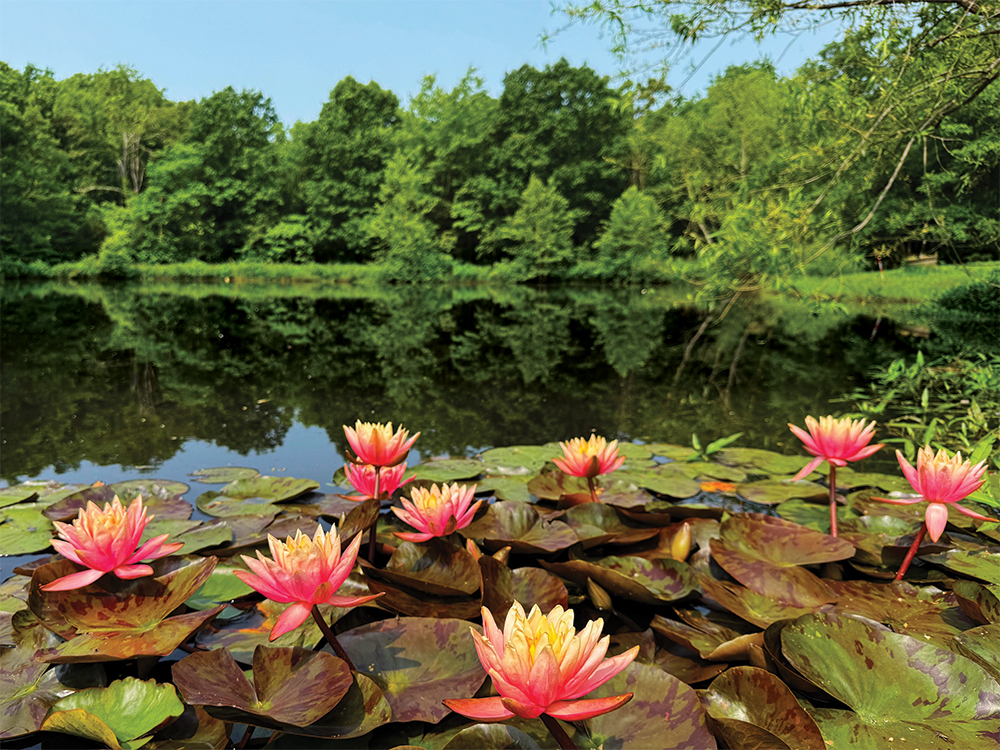
Picture it: Sicily 1922” … but really it was more like, “Picture it: Denny’s 2021,” when I started down the road of exhibitionistic horticulture with an aquatic bend. I was at a regular weekly breakfast of retirees and one of the regulars was a board member in the St. Louis Water Garden Society. Without too much arm twisting he convinced me to join. I am a gardener at heart and had a small lily pond with a few cattails and goldfish, plus a small waterlily, so I was primed for the evolution.
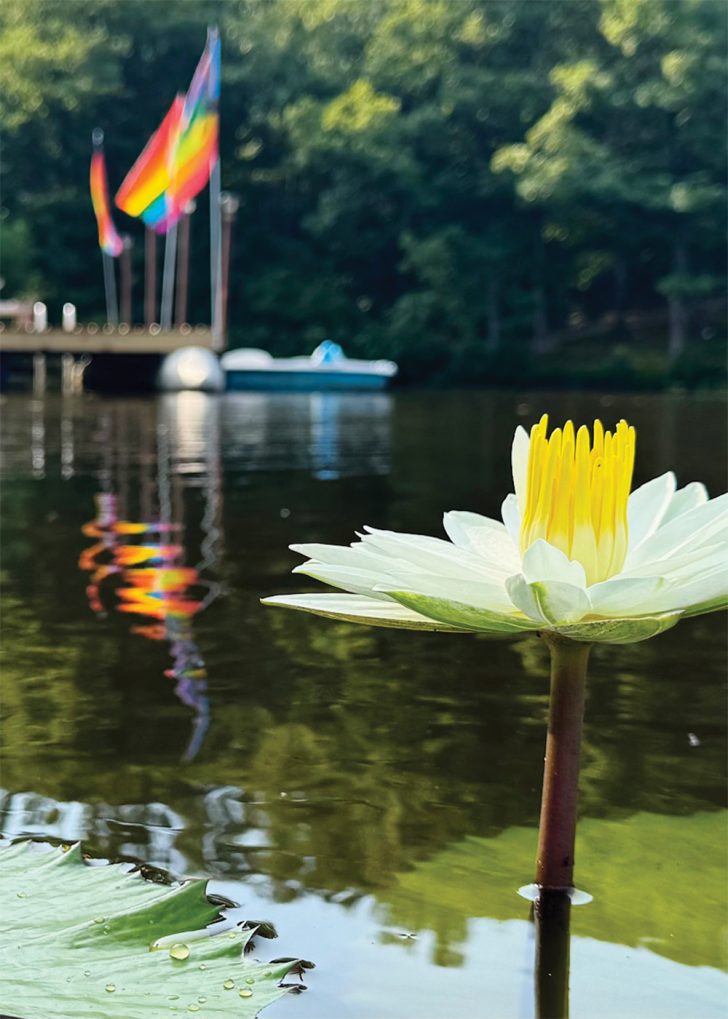
The waterlilies at SIRenity Farms are an integral part of the experience. Photo credit: Gregory Heck
What intrigued me most in his solicitation was the opportunity to volunteer for the Society’s civic project, which encompassed planting and maintaining the aquatics, principally waterlilies, at the Jewel Box in Forest Park. My home pond was tiny and, in reality, hindered by the shade of large trees. But the Jewel Box pools were expansive and offered “vast” growing areas to play with far beyond what I could experience while living in a home environment.
Volunteering comprised dividing hardy waterlilies in the spring and planting tropical waterlilies and other tender aquatics that are shipped from a nursery in Florida, once the water had warmed. Then maintenance mode through the rest of the growing season: removing spent leaves and flowers and otherwise managing the growth with some fertilizer and trimming.
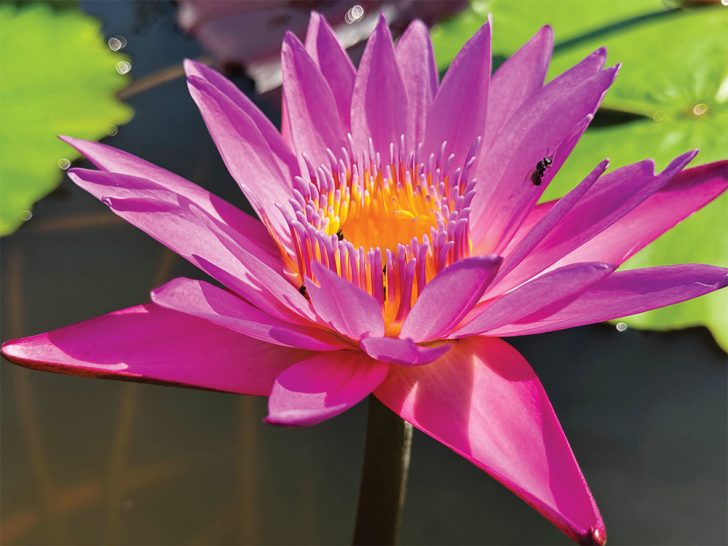
Photo credit: Gregory Heck
With the help of experienced members, the learning curve on the plants and methods was not difficult in this setting. Gradually, I felt inspired and emboldened to bring more intentional design and purpose to the display pools: Why couldn’t we do more? As a result, we’ve added plant labels and informational content via QR codes to engage visitors with an interest to learn a bit more about the plants and animals in the displays. And the nature of the plants themselves is more curated, with species representation from around the world and special interest displays such as edible aquatics like Gorgon plants, rice, lotus, taro and more: Beauty plus content.
Meanwhile, SIRenity Farms, a gay campground, opened near Sullivan, Missouri in 2019. It was a great place to be outdoors and enjoy some pool time, plus a strong sense of community there augmented the draw for me. A large natural pond sits in the heart of the campground, and after a bit of contemplation, it seemed like a great venue to add a few waterlilies and bring some additional vibrance to the scene.
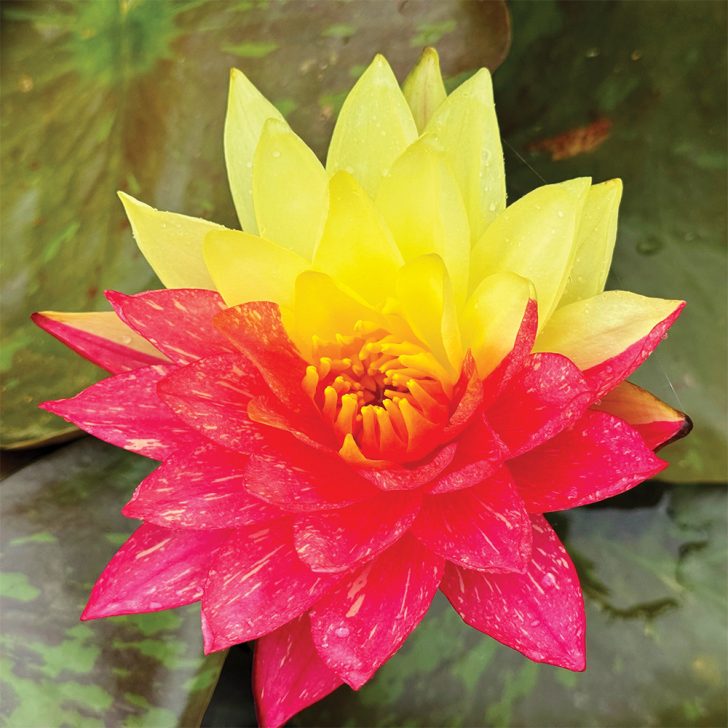
Photo credit: Gregory Heck
The owners, Dennis and Michael, were quite receptive to the notion, so in the later summer of 2023, I began populating the shoreline around the dock with hardy waterlilies: statement plants that can withstand our freezing winters and return in the spring with a vengeance to begin blooming in April.
Once the water warms by the beginning of June, fresh topical waterlilies are planted, bringing an even wider palette of colors and patterned lily pads. Growing the waterlilies in a natural environment like the campground (versus pots in concrete pools at the Jewel Box) has created new learning opportunities for myself in how the plants live to their fullest potential without some of the restrictions of more artificial cultivation.
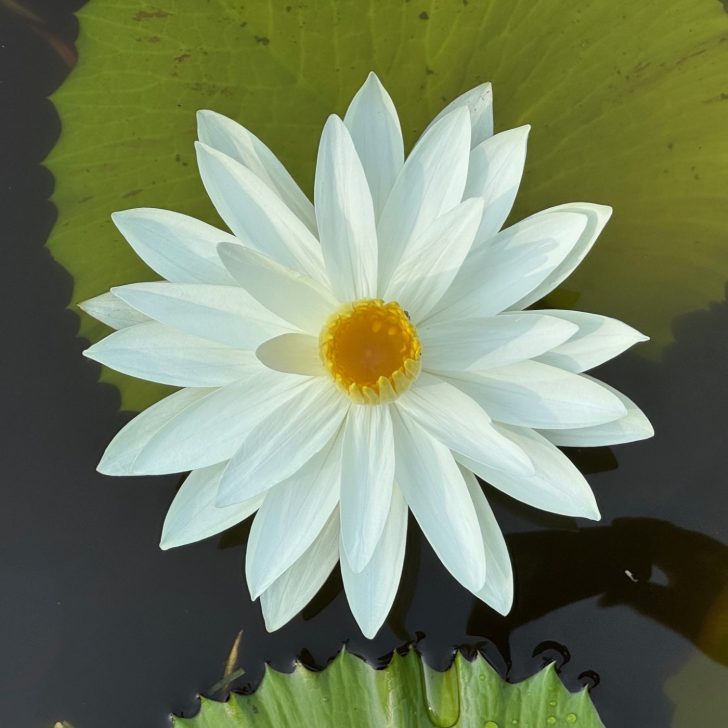
Photo credit: Gregory Heck
The net result is a cascade of colors as the blooms open mid-morning (only to close later afternoon each day). And while most guests are there to socialize, this feature brings a little something extra for the eye and soul.
The array of colors brings me to Joeseph Bory Latour-Marliac, born in 1830 and founder of Establissements Botaniques Latour-Marliac in 1875. This horticulturist who sold aquatic plants in France is largely credited with bringing color to hardy waterlilies. The native species found in temperate climates like the US and Europe in the later 1800s were essentially all white. His innovative breeding programs introduced colors from exotic, presumably tropical hybridizations (he didn’t leave detailed records) that in Paris floral exhibitions helped him achieved a measure of notoriety.
In fact, Claude Monet himself was so taken by Latour-Marliac’s beautiful creations that he populated his own water garden at Giverny with the plants that went on to become signature features in the paintings of the well-known Impressionist.
Latour-Marliac’s nursery still exists, and on its website, you can view scans of Monet’s original plant orders. Many long-standing varieties in this hobby have been handed down as cuttings for decades or more. Latour-Marliac’s are no exception. I’ve made a point to plant a couple of his original varieties at SIRenity Farms to pay homage and invite conversation for those who want to scratch below the glossy surface of dazzling aquatic eye candy.
Waterlilies represent one confluence of important elements in my life. In and of themselves, there is nothing earth shattering about them. But there is beauty and depth of content everywhere. There is history. And there are ways to connect with individuals and community using whatever passion as a vehicle for engagement.