Imagine not having Facebook, TikTok or the internet for information and the gift of instant connection – nor a single podcast or social media channel to broadcast your voice and reach other people like you outside your immediate hometown.
If you have friends, relatives, lovers and neighbors who are now our beloved LGBTQ community elders, have you ever wondered what those of us with cassette recorders and gray hair endured – and survived – to get to today?
A lot has changed in the last few decades, and as a whole we aren’t the legally prohibited, marginalized community that we were in the 1990s. That said, today trans people are under fire, and our fight continues.
But for those of us who were privileged, random, fabulous and ordinary back in the day, do we even remember anymore how much fucking courage it took growing up, just to be and become ourselves, knowing what we were up against? And how infrequently, in our most vulnerable screams for support and assurance, our parents, churches, teachers and classmates were able to help us?
With little to no guidance about coming out, no public LGBTQ culture or visible role models, no books or movies or magazines documenting queer history or representing us in the media – unless it was to mock and belittle us – what was it really like growing up queer 20, 30 or 40 years ago?
Let’s go back to that time for a moment. That time when you learned that having sex with a partner of the same gender when you turned 18 could be a literal felony. Or that, until 1985, you could be arrested in the city of St. Louis for not wearing at least three articles of clothing associated with your assigned sex at birth. Your high school or your own parents could kick you out onto the street if you were open about your gayness or queerness. Your college scholarship could be rescinded if your sexuality or gender identity was disclosed or discovered. A landlord, restaurant or hospital could legally flat-out refuse to serve you.
Your local newspaper could print your home address if you were caught going to a gay bar, holding your lover’s hand in public, or having consensual sex in the privacy of your own bedroom. You cowered in fear that your employer could fire you simply for coming out – or even suspecting that you were anything other than straight, and therefore could presume you were a child molester or HIV-positive. A judge’s gavel could determine the fate of your will, estate or even your future children. Outrageously, even a funeral home could refuse to take your body if they learned that you had been gay.
In the mid-1990s, at age 16 and sheltered by my youth, background and circumstances, against the odds I somehow not only came out as gay to my parents, but nine months later, after years of isolation and bullying, inadvertently became one of the three original co-hosts of The Gay ’90s – a groundbreaking teen talk-radio show in St. Louis believed to have been the first teen talk-radio show in U.S. broadcast history run by and for LGBTQ teenagers.
How the hell did this happen, and why did so many things change so quickly?
I probably would have never wound up on air, or done any of the things I’m most proud of, if I’d known why I was so socially awkward and relentlessly punished for it. We now say someone like me is “on the spectrum,” but back then, autism meant Rain Man, a child who couldn’t speak, or a person with few friends or accomplishments.
The part about having few friends was true in my case.
By the time I was 15, my parents knew I couldn’t take much more of the bullying, harassment and rejection. My grades suffered as much as my self esteem. Volcanically, in early February 1995, I told my parents about my sexual orientation, declared that I was not going to put up with the bigotry and bullshit, and relieved them of the self-blame for not knowing how to protect or guide me. They knew that, from that point forward, they had to follow my explosive lead or I would refuse to return to finish my sophomore year.
They also knew that being gay and being out was surely going to be even more alienating. The fear of HIV was everywhere. I had never stepped foot in a gay bar, and Ellen wouldn’t come out on “The Puppy Episode” for almost two years.
So when a warm welcome from the St. Louis chapter of PFLAG (Parents, Families and Friends of Lesbians and Gays) ushered my family and me into a world of acceptance, inclusion and eventually advocacy, they gave us a feeling we had not yet experienced in the media, in our neighborhood or in our synagogue congregation.
Like Glinda or my fairy godmother, these wise and generous volunteers pointed me toward the next step: the organization Growing American Youth, or GAY, the closest thing to a church or normal high school life I’ve ever experienced.
My father drove me to my first meeting. He was nervous but hopeful that this youth group for LGBTQ teens might help me get out of my shell.
I was already out of the closet, but had no clue what to wear. Nor how to become what I was never taught to dare.
Nor, it turns out, how shockingly fast GAY was going to help us all evolve.
We were the brave ones, and we didn’t know it. In the musty basement of the old Metropolitan Community Church on Dolman Street, we each found something to look forward to at GAY meetups and savored the precious queer joy of Thursday evenings. As LGBTQ teens, we simply wanted to meet and make real friends with young people like us.
My parents could not believe the speed of my transformation.
Over the summer of 1995, I met countless young people from across the St. Louis region, from both sides of the river and from all walks of life. I made fond memories getting to know and hanging out with Mike, Jason, Patti, Brent, Shauna, Kris, Sherry, Arnetta, Brian and Charles, while appreciating the presence and leadership of co-facilitators Eddie, Bill and Diane.
We made up for the lack of support we had never received from our peers, formed powerful friendships that still nourish us to this day, and flourished in ways we are still finding new ways to appreciate.
But then, during one random group meeting in late July, we met a guest speaker whose invitation changed the course of the GAY organization, the entire St. Louis region and my own personal life for years to come.
Amy Doll was the founder and co-host of Out & Open, a groundbreaking and popular KDHX talk-radio show for St. Louis’ gay and lesbian community of that era. She shared how much our young voices and perspectives meant to her, and told us she wanted to be the supportive mentor she never had as a young lesbian growing up in Wisconsin.
At GAY we were coming together for friendship and support, and we were also learning about LGBTQ history, planning social events, talent shows and parties, and exploring how to become activists who could contribute to the community. But it had never occurred to me that a lesbian or gay person could have a microphone or a recording studio. Or publish their own newspaper. Or own their own bookstore.
I was touched by Amy’s kindness and impressed by her ability to be an on-air representative – a literal voice for the community and guiding light for the adults we would one day become. So when she asked if we would like to come on the air as guests on a future episode, I was the first to raise my hand.
In the moment, I didn’t realize that whoever appeared on the air with Amy would be outing themselves to the entire metro region.
When I first started coming to GAY, I hadn’t realized how atypical and supportive my parents were. I soon learned that several members were no longer living with their birth parents because they had been kicked out after coming out and left to fend for themselves. The majority of group members were not out to their families, schools or classmates.
While pleased that I was willing and eager to volunteer, Amy assertively asked whether any other GAY members – especially young women – would be interested in joining me as her guests.
“So, like, we’re just going on your show talking about what it’s like being a gay or lesbian teenager?” I asked.
“Oh, much more than that!” Amy responded. “Talk about your hobbies, your goals, your dreams, your ambitions. I want the adults in the gay community to know that if you as teenagers are comfortable talking about your lives on the air, everyone who listens and calls into our show can learn from you – that you can live a good life and not be afraid to be out to your friends, family and co-workers.”
My partners in crime, Mike and Shauna, raised their hands and decided to leap into the unknown with Amy, myself and Linda Serafini, Amy’s awesome Out & Open co-host.
Weeks later, the next thing I remember is stepping out of the KDHX recording studio at 3504 Magnolia and seeing my father beaming with pride.
“Adam, you don’t know yet the importance of what you just did,” he gushed. “You were phenomenal! I can’t believe it – you’re such a natural on the air. Even Mike and Shauna. Where did you learn to do that?”
I must have said I got it from Mom’s side of the family, because I remember him blowing a raspberry at me in the car. And I most definitely deserved it.
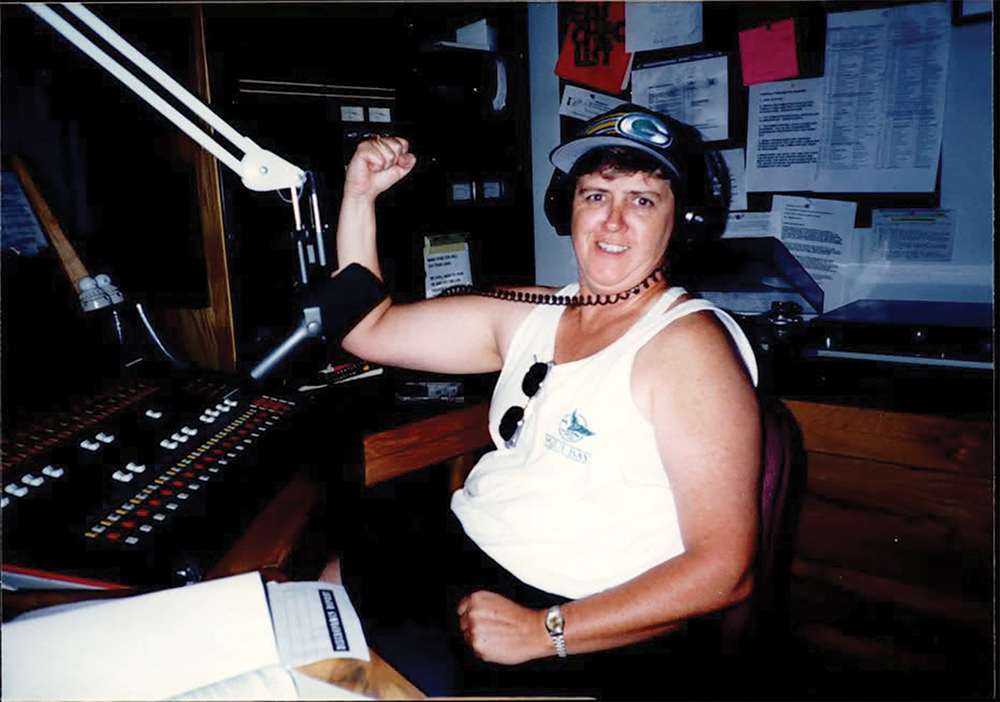
“Look,” Amy said soon after, at a muggy September group meeting. “I know that you weren’t expecting this, but you three got so much feedback from listeners calling in that my manager, Dennis Cronin-Doyle, wants to invite all three of you back to do a 15-minute segment of Out & Open, just for teens. Are you interested?”
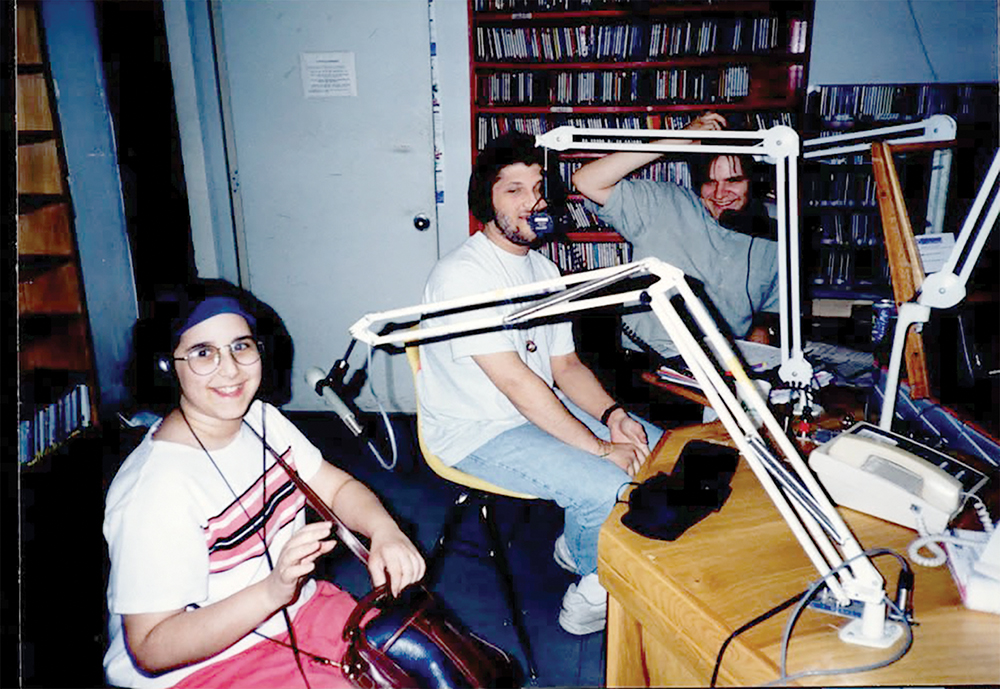
Mike was in. Shauna was in. And since there was no way I was going to pass this up, what eventually became The Gay ’90s launched in October 1995 to surprising accolades and aplomb.
Fifteen minutes turned into a half-hour and eventually a full-hour show, airing the first and third Fridays of every month. Our two-year run concluded in late 1997 and featured nearly a dozen rotating co-hosts and guest speakers.
Where steeping ourselves in queer culture and activities had been our focus before, now the radio show, and preparing for our segments, became an obsession for us. We spoke about coming out to one’s parents, preventing LGBTQ teen suicide, learning LGBTQ history, getting involved in queer youth-friendly activities, planning for your future, dating, queer-affirming safer-sex education, advocating for your health, developing leadership skills as a queer young adult, going to prom with a same-sex date, choosing a queer youth-friendly college, making community spaces more diverse and inclusive, lobbying schools and counselors for LGBTQ-inclusive curricula, and reviewing countless queer youth-affirming books, movies and other media.
A January 1996 Associated Press write-up of our show was picked up by LGBTQ media outlets coast to coast. The then-president of the National Lesbian and Gay Journalist Association said in his interview for our media profile that he couldn’t recall a call-in talk-radio show like ours ever having been done before by teenagers.
San Francisco didn’t have one. Chicago didn’t have one. Even New York in the 1990s didn’t have one.
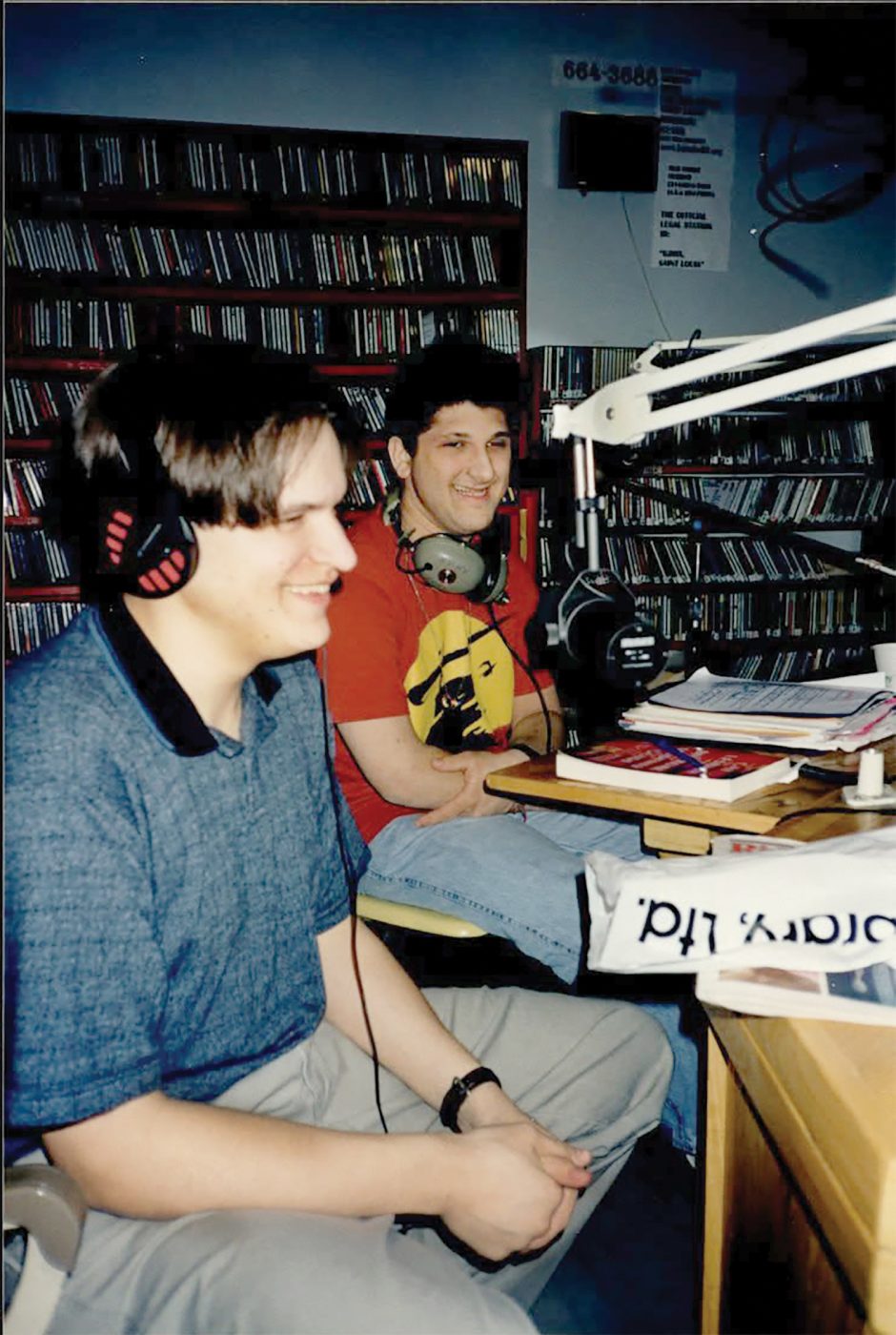
But through our voices, choices, hard work and Amy’s bold assistance, somehow, St. Louis had one. Over the years, I’ve searched on my own through news articles, journalism, and media archives. I have not been able to find any historical precedent for our show and accidental time capsule we created.
Though my obsessions pushed my elementary, middle and high school classmates away from getting to know me, paradoxically those very same obsessions allowed me to get to know myself.
Imagine making history – and an amazingly queer life – because of it.