As Missouri lawmakers continue to introduce legislation targeting “adult cabaret performances,” two bills—Senate Bill 1476 and Senate Bill 1164—have drawn particular attention for their potential impact on drag. While neither bill explicitly bans drag, together they create a legal framework that could significantly restrict where and how drag performances take place across the state.
SB 1476: Criminalizing Certain Performances
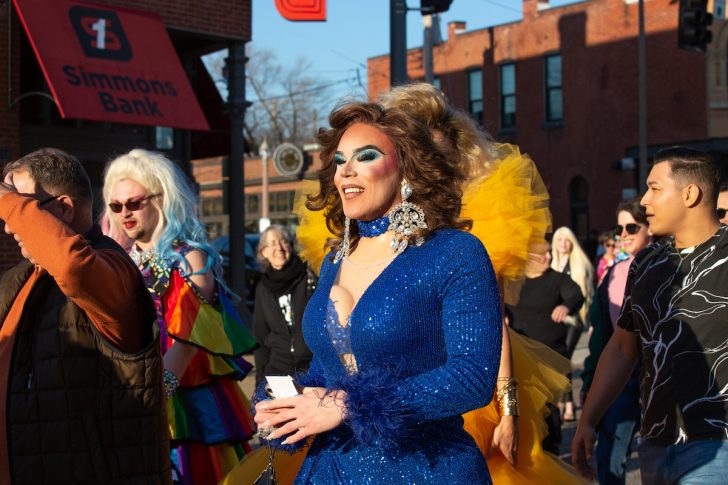
At the It’s All Drag solidarity march, protesters took to the streets to protest anti-LGBTQ legislation like drag bans. | Braden McMakin
Senate Bill 1476 focuses on criminal enforcement. The bill defines an “adult cabaret performance” as entertainment that appeals to a “prurient interest” and explicitly includes “male or female impersonators” within that definition—a category that encompasses drag performers.
Under the proposed law, it would be illegal to perform such entertainment on public property or in any location where minors could reasonably be present. A first violation would be charged as a Class A misdemeanor, with subsequent offenses escalating to felony charges.
In practical terms, the bill introduces substantial legal risk for drag performers and event organizers. Public-facing events—such as Pride festivals, drag brunches, or community performances—could fall under scrutiny if authorities determine that the content meets the bill’s definition. Because the standard hinges on subjective interpretations of what constitutes “prurient” material, enforcement could vary widely.
SB 1164: Opening the Door to Civil Lawsuits
While SB 1476 relies on criminal penalties, Senate Bill 1164 takes a different approach by expanding civil liability. The bill allows private individuals to bring lawsuits against venues, promoters, or others connected to “adult cabaret performances.”
This mechanism effectively deputizes members of the public to enforce the law through litigation. Even in cases where criminal charges are not pursued, venues could still face costly lawsuits, creating a powerful disincentive to host drag events.
For business owners, the implications are significant. The threat of litigation may impact insurance coverage, leasing agreements, and overall willingness to book performances that could be perceived as legally risky.
A Two-Pronged Framework
Taken together, SB 1476 and SB 1164 establish a dual system of enforcement:
Criminal penalties for performers and organizers under SB 1476
Civil liability for venues and associated parties under SB 1164
This combination amplifies the overall impact. Performers face potential prosecution, while venues face both legal exposure and financial risk—even absent a criminal case.
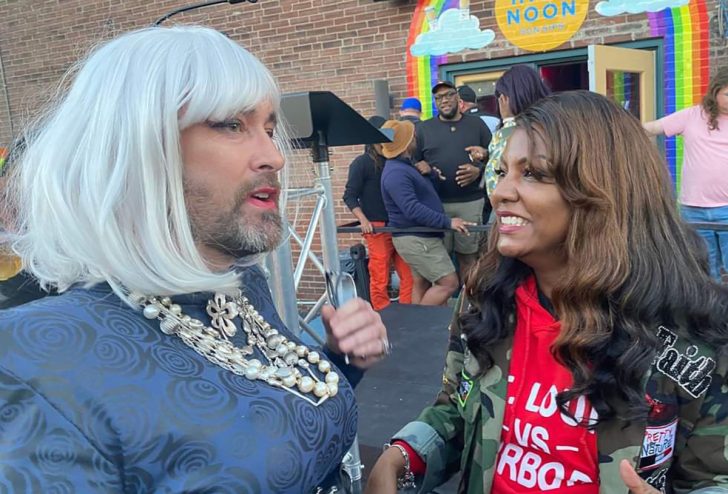
Chris Andoe speaking with Mayor Tishaura Jones at the solidarity march that Prism and Out in STL organized in March 2023. | COURTESY PHOTO
What This Means for Drag in Missouri
If enacted, these bills would not eliminate drag performances outright. Instead, they would likely confine them to strictly controlled, adult-only environments where access by minors can be effectively prevented.
The broader effect could be a chilling one. Faced with overlapping legal risks, some venues may opt to stop hosting drag events altogether. Others may impose tighter restrictions, limiting the accessibility and visibility of performances that have long been part of Missouri’s LGBTQ+ cultural landscape.
Legal Questions Ahead
Both bills rely on legal concepts rooted in obscenity law, particularly the notion of “prurient interest.” That standard has historically been subject to constitutional scrutiny, especially when applied to expressive conduct.
As similar laws in other states have shown, any enacted restrictions would likely face challenges under the First Amendment. Courts will ultimately play a key role in determining how far states can go in regulating performances that blend entertainment, identity, and artistic expression.
For now, SB 1476 and SB 1164 represent a significant moment in Missouri’s ongoing debate over public expression, community standards, and the future of drag.
Maxi Glamour’s Call to Action
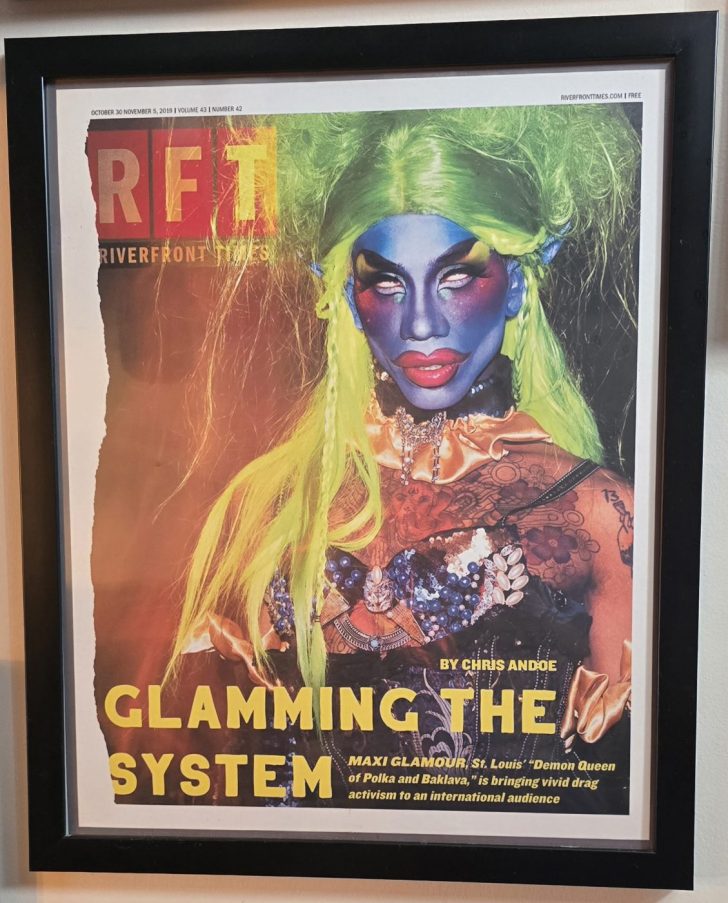
Maxi Glamour’s RFT cover
Activist, artist and performer Maxi Glamour, who was instrumental in stopping the last proposed drag ban in 2023, issued the following statement:
Drag artists have become commodified signifiers of the Queer community, used to represent our vibrancy, our glamour, and our ability to shine after enduring so much. We are the photo ops at parties, the entertainment for brunches and bars, the spectacle people consume when it is convenient. But behind that consumption is a harsh reality: many drag artists live in deeply precarious conditions, pouring everything into their craft while struggling to survive.
At a time when the state of Missouri is playing fascist hardball and stripping away rights piece by piece, the City of St. Louis cannot afford to be passive. Urban legislators must show real commitment to protecting this vital sector of the Queer community. Drag artists are pillars of the community. Once they come for the pillars, the whole structure begins to fall. Protect the pillars of the Queer community. Protect drag!
Out In STL will continue following this story.